Edifier MR4.5 vs MR4: Is the Upgrade Worth It?
Choose MR4.5 for Bluetooth, XLR and room controls, or MR4 for a smaller, simpler wired desk. Here is what the extra hardware changes.
Research-based comparison
Recommendations are checked against product documentation, availability, comparative evidence, and clearly disclosed hands-on work where it exists.
Quick picks
The short answer, with the trade-offBest for mixed wired and wireless sources
Edifier MR4.5 (black)
White MR4.5 variant
Edifier MR4.5 (white)
Best for a simple wired creator desk
Edifier MR4
Trade-off: No Bluetooth, XLR or app controls
On this page
- Quick answer
- Edifier MR4.5 vs MR4 comparison
- Who should buy the Edifier MR4.5?
- Who should buy the Edifier MR4?
- MR4.5 is an input upgrade first
- Room controls: useful tools, not automatic correction
- Cabinet size is the hidden cost
- What the power and response figures do not prove
- Neither model is a one-cable computer speaker
- Price and value
- Alternatives
- Frequently asked questions
- Final recommendation
- Sources and methodology
Buy the Edifier MR4.5 if you will use Bluetooth, balanced XLR, app-based room controls, or the extra published output. Buy the MR4 for a normal wired desk where balanced TRS, RCA and front AUX already cover every source.
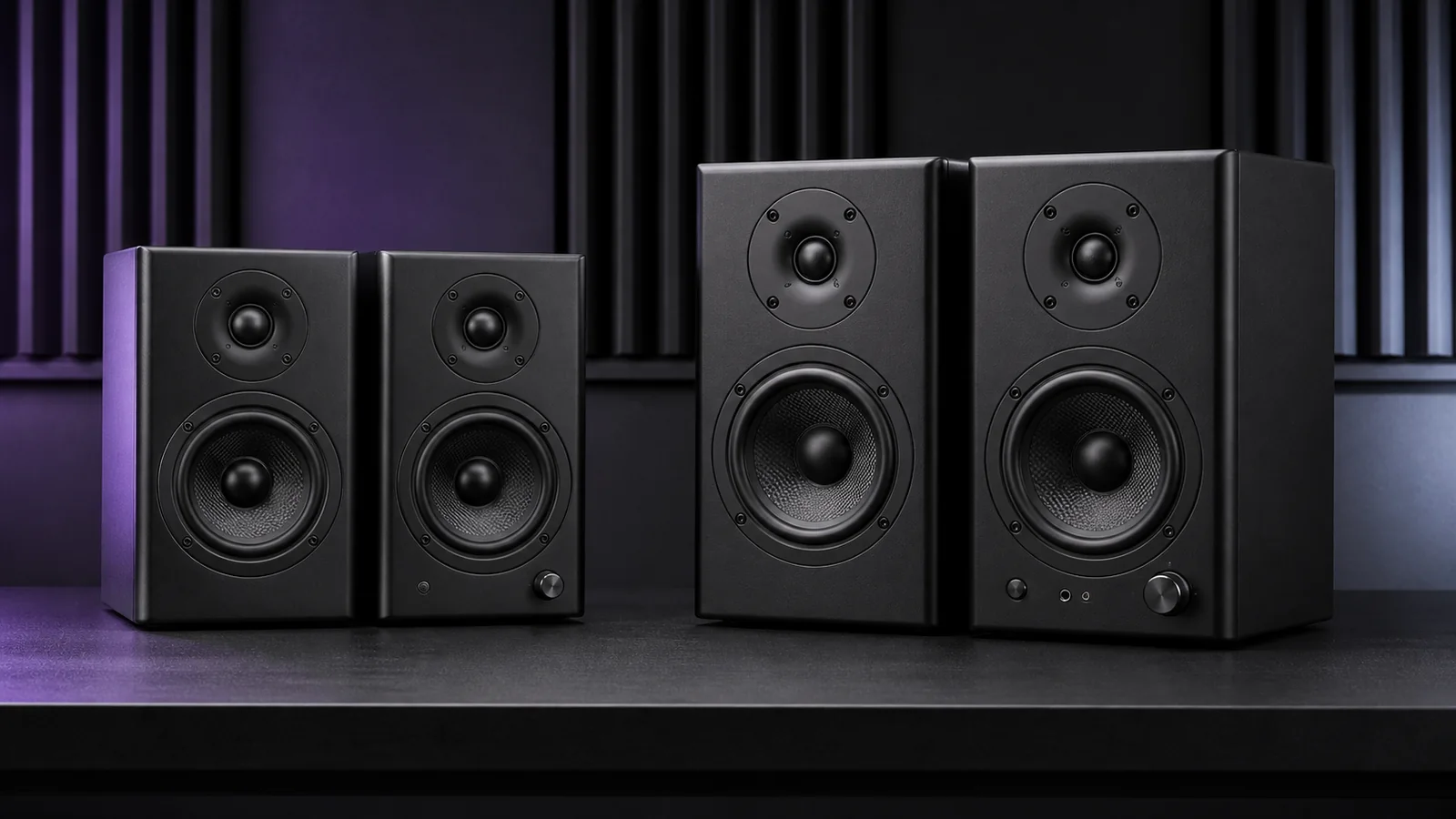
The MR4.5 is a substantial feature upgrade, not a minor revision. It adds a larger 4.5-inch mid-bass driver, 80W total published RMS output, Bluetooth 6.0 with LDAC and multipoint, XLR inputs, the Edifier ConneX app and deeper cabinets. The MR4 is smaller, lighter and much simpler.
That specification gap does not prove that MR4.5 sounds better. SolderMag has not completed a controlled, level-matched listening test, acoustic measurements, Bluetooth-latency testing or long-term reliability work on either pair. This comparison uses current Edifier documentation, exact US product identity and the setup consequences buyers can check before ordering.
Quick answer
Choose MR4.5 when the speakers need to serve an audio interface, phone and second computer without another receiver or switch. Its XLR and TRS inputs suit balanced sources, while Bluetooth multipoint can keep two wireless devices connected. The app adds low-cut, acoustic-space and desktop-compensation controls for awkward placement.
Choose MR4 when one wired computer, interface or mixer is the whole system. It keeps balanced TRS, RCA, front AUX, a front headphone socket and physical monitor/music modes. Paying for MR4.5 makes little sense if Bluetooth, XLR and app controls will stay unused.
Skip both if you need USB audio, optical input, HDMI ARC, a remote or a dedicated subwoofer output. Neither current specification lists those connections.
Edifier MR4.5 vs MR4 comparison
| Decision | Edifier MR4.5 | Edifier MR4 | Buying consequence |
|---|---|---|---|
| Speaker design | 2-way, bi-amplified | 2-way, bi-amplified | Both remain two-way powered monitor systems |
| Mid-bass driver | 4.5 inches | 4 inches | MR4.5 uses the larger driver; that is not a measured bass verdict |
| Tweeter | 1-inch silk dome | 1-inch silk dome | Same published diameter, different surrounding design |
| Published total output | 80W RMS | 42W RMS | MR4.5 has more paper headroom; no matched loudness test is claimed |
| Published response | 50Hz–40kHz | 60Hz–20kHz | Edifier does not publish one shared tolerance here, so this is not a sound-quality score |
| Balanced inputs | XLR and 6.35mm TRS | 6.35mm TRS | MR4.5 works with either common balanced connector |
| Other inputs | RCA, front AUX, Bluetooth 6.0 | RCA, front AUX | Only MR4.5 accepts wireless sources |
| Bluetooth codecs | LDAC and SBC | No Bluetooth listed | LDAC needs a compatible source and does not prove low latency |
| App controls | ConneX EQ and room settings | None listed | MR4.5 offers more setup adjustment |
| Powered cabinet | 140 × 244 × 229mm | 140 × 228 × 197.5mm | MR4.5 is the same width but taller and 31.5mm deeper |
| Pair weight | 6.63kg | 4.5kg | MR4.5 needs a sturdier, deeper desk |
| Headphone output | Front 3.5mm | Front 3.5mm | Both can hand the analog path to headphones |
| USB / optical / sub out | None listed | None listed | Neither is a direct digital or simple 2.1 system |
Who should buy the Edifier MR4.5?
Buy MR4.5 if:
- Bluetooth is part of the normal workflow;
- an interface or mixer already uses balanced XLR cables;
- the speakers must switch between wired and wireless sources;
- two phones, tablets or computers should remain paired;
- app-based low-cut and placement controls solve a real room problem;
- the desk has room for cabinets up to 229mm deep before cables;
- higher published output is useful for a larger desk or listening distance.
The MR4.5 makes the most sense when several of those points apply. Buying it only because 80 is a larger number than 42 ignores the space and cost that come with the extra hardware.
Edifier MR4.5
Choose it when Bluetooth, XLR and room controls replace other boxes or solve a real setup problem.
Why it works
- Balanced XLR and TRS inputs
- Bluetooth 6.0 with LDAC and multipoint
- ConneX room and EQ controls
Main trade-off
- Deeper and heavier than MR4
- No USB, optical or dedicated subwoofer output
- Costs more to justify when features go unused
Who should buy the Edifier MR4?
Buy MR4 if:
- the speakers will stay on one computer, interface or mixer;
- balanced TRS is already the preferred connection;
- Bluetooth and app controls are unnecessary;
- the desk is shallow or already crowded;
- simple physical monitor and music modes are useful;
- the saving can pay for stands, isolation pads or a better source.
The MR4 remains the more rational starting point for a compact creator desk. Its missing wireless features are not a problem when one interface stays connected, and the shallower cabinets are easier to position around a monitor.
Edifier MR4
The sensible choice when balanced TRS and analog inputs cover the whole job.
Why it works
- Balanced TRS plus RCA and front AUX
- Smaller and lighter cabinets
- Front headphone socket
Main trade-off
- No Bluetooth, XLR or app controls
- Lower published output
- No USB, optical or dedicated subwoofer output
MR4.5 is an input upgrade first
The cleanest reason to buy MR4.5 is connectivity.
Both pairs accept balanced 6.35mm TRS, unbalanced RCA and a front 3.5mm AUX source. Both also provide a front headphone output. That covers an audio interface, mixer, desktop computer with an analog output and ordinary line-level devices.
MR4.5 adds balanced XLR. This is useful when the interface already has XLR monitor outputs, when longer balanced cable runs are easier with locking connectors, or when the TRS outputs are needed elsewhere. XLR does not automatically sound better than a correctly implemented short balanced TRS connection.
MR4.5 also adds Bluetooth 6.0 with SBC, LDAC and multipoint connection. Edifier says two devices can remain connected. That is convenient for a work-computer-and-phone desk, but it should not be treated as the timing-sensitive path. Codec support does not establish end-to-end delay, and SolderMag has not measured this model's latency.
Use a wired input for recording, instruments, games, lip-synced video work and any other task where delay matters.
Room controls: useful tools, not automatic correction
MR4 has rear high- and low-frequency trim plus a front control that switches between monitor and music modes. It is a simple physical system that works without an app.
MR4.5 also provides rear high and low controls. The ConneX app adds:
- a selectable low cut-off and slope;
- acoustic-space compensation for wall or corner placement;
- desktop control for a reflective work surface;
- custom EQ and preset sound modes;
- firmware access and playback controls.
These controls can reduce a known placement problem. They do not measure the room, build a correction filter for the listening position or replace basic speaker placement.
Start with the speakers at equal distances from the listener, keep the tweeters near ear height, and avoid putting one cabinet in a corner while the other sits in open space. Change one control only after identifying a specific problem.
Cabinet size is the hidden cost
MR4.5 and MR4 are both 140mm wide, so a front-view comparison understates the difference. The powered MR4.5 cabinet is 244mm tall and 229mm deep. The powered MR4 is 228mm tall and 197.5mm deep.
That extra 31.5mm of depth matters on a shallow desk. Cables and rear controls need more room again. If the cabinet is pushed against a wall, the app's acoustic-space control may help with tonal balance, but it does not create physical clearance or eliminate every boundary effect.
The MR4.5 pair weighs 6.63kg, compared with 4.5kg for MR4. Check the desk, shelf or stands before ordering. A large monitor arm, desktop PC and microphone boom may already consume the available load and surface area.
Before buying either pair:
- Measure clear width and depth on both sides of the display.
- Allow room for rear cables and adjustment knobs.
- Keep left and right placement as symmetrical as possible.
- Raise or angle the tweeters toward ear height.
- Use stable stands or pads if the desk resonates.
- Confirm the powered-to-passive speaker cable can follow the planned route.
A monitor arm can free more usable space than squeezing larger speakers around wide factory monitor feet.
What the power and response figures do not prove
Edifier lists MR4.5 at 80W total RMS and MR4 at 42W. It lists MR4.5 from 50Hz to 40kHz and MR4 from 60Hz to 20kHz.
Those figures support a narrow conclusion: MR4.5 is the higher-output model with a larger driver and wider manufacturer-stated range. They do not show response tolerance, off-axis behaviour, distortion at a given level, maximum clean output, port noise or performance at one shared listening distance.
Do not assume MR4.5 replaces a subwoofer because the published range starts at 50Hz. Do not assume MR4 is unsuitable for editing because its published range ends at 20kHz. A fair sound verdict would need comparable measurements and level-matched listening in the same position.
The responsible buying rule is simpler:
- choose MR4.5 for features, placement controls and extra published headroom;
- choose MR4 for a smaller analog system;
- do not pay for an unverified sound-quality promise.
Neither model is a one-cable computer speaker
MR4.5 adds Bluetooth but still does not list USB audio. MR4 is also analog-only. A USB-only laptop needs a compatible audio interface, DAC, dock or adapter.
That extra box can change the value calculation. If direct USB-C audio is more important than balanced XLR or TRS, the Audioengine A2+ Next Gen review covers a smaller digital alternative. Kanto ORA is another compact USB-C option with a managed subwoofer path.
Neither Edifier model lists optical input, HDMI ARC or a remote, so both are poor fits for a television-first system. The MR4 vs R1280DBs comparison explains the easier Edifier route when optical, coaxial, remote control and a subwoofer output matter.
Price and value
Ignore fixed prices in old reviews. Compare the exact products, colours and sellers when you buy, then ask which extra hardware each option avoids.
MR4.5 is worth paying for when Bluetooth removes a receiver, XLR matches the existing interface, and app controls help a difficult desk position. It is poor value when it is bought as a status upgrade for a wired desk that cannot place the larger cabinets properly.
MR4 is the better value when one analog source handles everything. Spending the difference on stable stands, isolation pads, an interface or basic room treatment can improve the complete setup more than unused features.
We would choose MR4.5 for a mixed-source creator desk where its broader input and adjustment paths solve real problems. We would choose MR4 for a normal home-office desk and keep the system simple.
Alternatives
Edifier MR3: choose the smaller current Edifier when Bluetooth and app controls matter but MR4.5 is too deep or expensive. It uses a 3.5-inch mid-low driver and lower published output. Our MR3 vs MR4 comparison covers the compact decision.
Edifier MR5: the larger step-up when a three-way design and more published output justify substantially bigger cabinets. Our MR4.5 vs MR5 comparison isolates that choice; read the MR5 vs MR4 comparison when the older baseline model is also under consideration.
Edifier R1280DBs: the easier mixed-use speaker when optical, coaxial, a remote and a dedicated subwoofer output matter more than balanced inputs.
Audioengine A2+ Next Gen: a smaller premium pair with USB-C audio and Bluetooth. Choose it when direct digital computer audio and shallow placement matter more than balanced monitor connections.
Creative Pebble Pro: the compact budget choice for calls, video and casual listening. It gives up the cabinet volume and balanced inputs of both Edifiers. The Pebble Pro review explains its separate power-mode requirements and fixed-cable limits.
Our best computer speakers guide keeps the wider category in one decision tree, from tiny USB speakers to larger powered monitors.
Frequently asked questions
Is Edifier MR4.5 better than MR4?
MR4.5 is more capable on paper: it adds Bluetooth, XLR, app controls, a larger driver and higher published output. MR4 is smaller, simpler and likely the better value when every source is wired. SolderMag has not measured or level-matched them, so this comparison does not name an overall sound-quality winner.
Is MR4.5 worth the upgrade?
It is worth considering when Bluetooth, balanced XLR, room controls or extra output solve a real problem. It is difficult to justify when MR4 already plays loudly enough at close range and one analog source handles everything.
Does Edifier MR4.5 have Bluetooth?
Yes. Edifier lists Bluetooth 6.0, SBC, LDAC and multipoint connection for two devices. A compatible source is required for LDAC, and codec support is not a model-specific latency result.
Does Edifier MR4 have Bluetooth?
No Bluetooth receiver is listed in the current MR4 specification. It accepts balanced TRS, RCA and front AUX inputs.
Can MR4.5 or MR4 connect directly over USB?
No. Neither current specification lists USB audio. A USB-only computer needs a compatible interface, DAC, dock or adapter with an appropriate analog output.
Can I add a subwoofer to MR4.5 or MR4?
Neither model lists a dedicated subwoofer output. Integration may be possible upstream through an interface, monitor controller or subwoofer with suitable pass-through connections, but it is not a simple plug-in 2.1 path.
Which one is better for music production?
MR4.5 provides XLR, TRS and more placement controls. MR4 still provides balanced TRS and may be enough for a small editing desk. Accuracy depends on placement, room behaviour and measured performance, which this research-based comparison has not established.
Final recommendation
Buy the Edifier MR4.5 when you will use its Bluetooth, XLR and room-control features and have measured enough depth for the larger cabinets. It is the more adaptable system, not automatically the better-sounding one.
Buy the Edifier MR4 for a straightforward wired desk. It keeps the balanced connection and front controls that matter for a simple interface-based setup, while avoiding the cost and bulk of features you may never use.
The deciding question is not which specification sheet has bigger numbers. It is whether MR4.5 replaces other hardware and can be placed properly.
Sources and methodology
- Edifier official MR4.5 US product page and specifications for drivers, output, response, inputs, Bluetooth, controls, dimensions, weight and current colour variants.
- Edifier official MR4 product page and specifications for drivers, output, response, inputs, controls, dimensions and weight.
- Edifier official MR4 user manual for setup, inputs and monitor/music mode operation.
- Edifier official downloads and ConneX support for current app support.
- Amazon Creators API exact-product validation for Edifier MR4.5 black
B0H2VQ581Y, MR4.5 whiteB0H2VKDF9F, and MR4 blackB09FXG9BLRin the US marketplace with SolderMag's configuredsoldermag-20Associate tag.
This page compares documented hardware, inputs, controls, size and buyer scenarios. It does not make matched sound, bass-extension, distortion, maximum-output, Bluetooth-latency, build-quality or long-term reliability claims.
As an Amazon Associate I earn from qualifying purchases.