Best Action Cameras (2026): GoPro, DJI, and Insta360 Picked Honestly
GoPro is no longer the only answer. DJI Action and Insta360 caught up, and in some categories pulled ahead. Here are the action cameras worth buying in 2026, and the use cases that decide between them.
Research-based buying guide
Recommendations are checked against product documentation, availability, comparative evidence, and clearly disclosed hands-on work where it exists.
Quick picks
The short answer, with the trade-offBest overall
GoPro HERO13 Black
Best mount and accessory ecosystem in the category
Trade-off: Vertical/portrait shooting workflows are second-class to landscape
Best for vlogging
DJI Osmo Action 5 Pro
Trade-off: Smaller accessory and mount ecosystem than GoPro
Best for 360 / reframing
Insta360 X4
Best pocket-size
Insta360 GO 3S
For a decade, "action camera" meant GoPro and you bought a GoPro. The competition was either a clone with worse software or a niche product that did 360° video.
That changed around 2022 when DJI released the Osmo Action 3 and seriously challenged GoPro on stabilization, then again in 2024 when Insta360 X4 made 360° capture genuinely usable for non-360° content (you film everything and reframe in post). By 2026 the category is a real three-horse race, and the best camera depends on what you actually shoot.
This guide is short on purpose. Five cameras worth buying, including the one to skip if you only film yourself walking around a city, and the one to buy if you are mounting it on a snowboard.
This guide is research-based. SolderMag has not completed matched hands-on stabilization, battery, low-light or audio testing across every camera listed. Recommendations are based on current manufacturer documentation, comparative analysis and recurring buyer feedback; performance claims that need direct verification are identified as such.
SolderMag Take: pick the camera by what you mount it on
Action cameras get sold on resolution and frame rate. They get used or abandoned based on whether they fit the way you actually film.
- Helmet, chest, drone, surfboard, fixed mount: GoPro HERO13 or DJI Action 5 Pro. Both are bombproof, both have great stabilization, both have the mount ecosystems built around them.
- Pointed at your own face while you talk (vlogging): DJI Action 5 Pro with magnetic mic. The front-facing screen and audio quality matter more than the headline 4K spec.
- Casual handheld plus the option to "shoot now, frame later": Insta360 X4. 360° capture means you never miss the action.
- Smallest possible camera, lifestyle vlogging, kids' POV: Insta360 GO 3S. Fits on a hat brim, weighs 39g.
- Underwater, deep dive, technical use: GoPro HERO13 with the protective housing. Native to 33ft, housing rated to 196ft.
Before you compare specs, decide what you mount it on. Spec differences disappear in the noise compared to the wrong form factor.
Best action cameras at a glance
- GoPro HERO13 Black: the safe choice. Best ecosystem of mounts and accessories. Improving on stabilization, battery, and night quality vs the HERO12.
- DJI Osmo Action 5 Pro: the better vlogger. OLED front + back screens, better audio, slightly better low light. Less mount ecosystem outside DJI.
- Insta360 X4: different category — 360° camera. Reframe in post. Steeper learning curve, completely changes how you think about shooting.
- Insta360 GO 3S: thumb-sized, magnetic, one-button shooting. For lifestyle and kid POV. Image quality is below the bigger cameras.
- DJI Osmo Action 4: worth considering when it is meaningfully cheaper than the Action 5 Pro and budget matters more than having the current model.
What actually matters in an action camera
1) Stabilization
The single most important spec. Without it, footage is unwatchable.
- GoPro HyperSmooth 6.0 (HERO13): excellent. Locks horizons, eats vibration, no rolling shutter problems.
- DJI RockSteady 3.0 + HorizonSteady (Action 5 Pro): equal to GoPro's. HorizonSteady locks horizon to true level even when you spin 360°.
- Insta360 FlowState (X4): genuinely best of the three. The trade-off is the larger camera body.
- Older entry-level models (HERO11 base, Action 4): visibly worse stabilization. Pass.
For most filming, all three flagships are more than sufficient. The differences only matter for extreme sports (mountain biking trails, rally racing) where the gap shows up.
2) Video resolution and frame rate
A useful hierarchy:
- 5.3K 60fps (HERO13 Black): future-proofing if you crop heavily in post. Massive files.
- 4K 120fps (HERO13, Action 5 Pro): the sweet spot. Slow-mo without dropping resolution.
- 4K 60fps (most cameras at this price): perfectly fine for 99% of YouTube content.
- 2.7K 240fps (HERO13): real super slow-mo for action moments. Lower res but the speed is the point.
5.3K is marketing for most users. 4K 120fps is the right target.
3) Audio
Every action camera struggles with audio because the mic is small and exposed. The fix is an external mic.
- Built-in stereo mics with wind reduction: all flagships handle calm conditions. None handle wind well.
- Magnetic external mic mount + DJI Mic 2 / Mic Mini: DJI Action 5 Pro pairs natively with DJI's wireless lavalier mics. Genuine professional audio with one-button setup.
- Media Mod for GoPro: adds a directional shotgun mic and mic input. Bulkier, works.
- Onboard cleanup in post: every modern action camera has noise reduction; it's adequate, not great.
If you are vlogging with your own voice as the primary track, an external mic is non-negotiable. The Action 5 Pro's native pairing with DJI Mic 2 is a meaningful workflow advantage over GoPro's add-on mod approach.
4) Front screen for vlogging
If you film yourself, the front screen matters more than anything else:
- DJI Osmo Action 5 Pro: OLED 1.46" front screen, full color, framing-perfect.
- GoPro HERO13: 1.4" front color screen, smaller and lower-res than DJI's but functional.
- Insta360 X4: 2.5" rear screen, no front screen (you don't need one — it's a 360° camera).
- Insta360 GO 3S: no screen at all. You frame via your phone.
For vlogging, the DJI front screen is the best on the market.
5) Battery life
All three flagships are roughly similar in real shooting:
- GoPro HERO13: 70 min at 5.3K 30fps with stabilization. Battery upgraded over HERO12.
- DJI Osmo Action 5 Pro: 240-min battery in spec, 80-100 min real-world at 4K 60fps with screen on.
- Insta360 X4: 135 min real-world at 5.7K 30fps.
In practice, plan to carry 2-3 batteries for any serious shoot. Battery hot-swapping is fast on all three.
6) Waterproofing
- GoPro HERO13: native to 33ft (10m). Optional dive housing to 196ft (60m).
- DJI Action 5 Pro: native to 65ft (20m). No housing needed for most diving.
- Insta360 X4: native to 33ft. Optional dive case.
- Insta360 GO 3S: 16ft (5m).
For swimming and snorkeling, all of them work. For real diving past 20m, the Action 5 Pro wins without an additional housing.
The picks
Best overall: GoPro HERO13 Black
Who it's for: anyone who wants the safest pick with the largest mount/accessory ecosystem and is filming for action sports, drone cinematography, or general adventure.
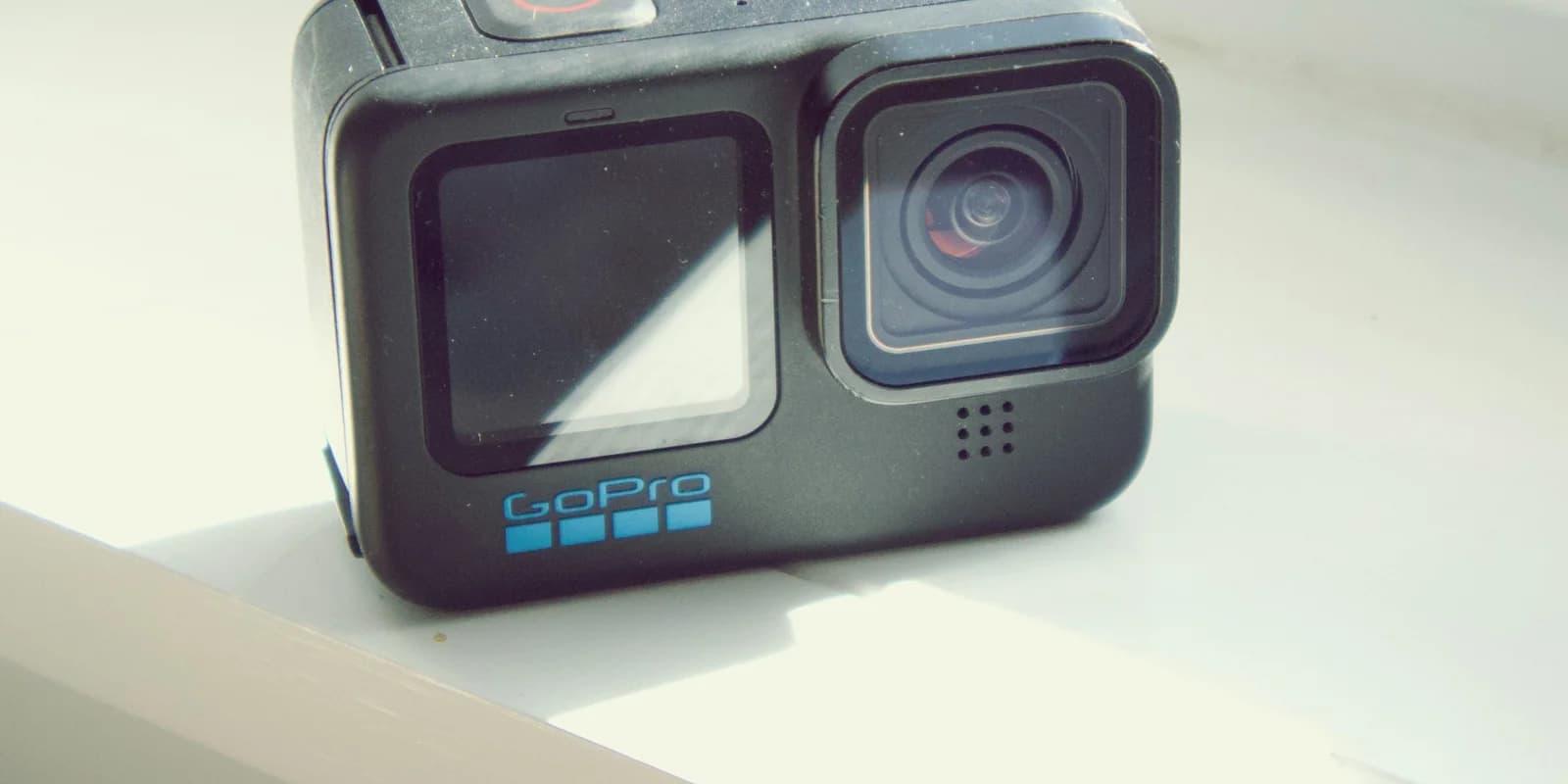
The HERO13 is GoPro's best camera. HyperSmooth 6.0 stabilization, 5.3K 60fps recording, magnetic mounting fingers (much faster than the old screw mount), and the ecosystem of helmets, chest harnesses, board mounts, and dog harnesses that no competitor matches.
The improvements over HERO12 are incremental: better battery (the new "Enduro" upgrade is built-in not optional), better low-light, faster mode switching. None of it is revolutionary, but there is no obvious flaw to point at.
The catch: vertical video framing is good but not as polished as DJI's Action 5 Pro's portrait modes for TikTok/Reels. If you film exclusively for vertical platforms, look at DJI.
GoPro HERO13 Black
Why it works
- Best mount and accessory ecosystem in the category
- 5.3K 60fps with HyperSmooth 6.0 stabilization
- Magnetic mount fingers replace old screw mount, faster swaps
Main trade-off
- Vertical/portrait shooting workflows are second-class to landscape
- Subscription needed for full cloud features
Best for vlogging: DJI Osmo Action 5 Pro
Who it's for: content creators who film themselves talking, especially for YouTube/Instagram/TikTok where the front screen and audio quality matter.
The Action 5 Pro is DJI's most refined action camera and arguably the best vlogging camera under $400. The OLED front screen makes self-framing trivial, the magnetic quick-release lets you swap mounts in seconds, and the native pairing with DJI's Mic 2 system gives you broadcast-quality audio without an external recorder.
Battery life is a step ahead of the HERO13 (240 min spec vs 110 min, 80-100 min real-world vs 70 min). Low light is meaningfully better than HERO13 thanks to a larger sensor. Vertical video modes are best-in-class.
The accessory ecosystem is smaller than GoPro's. If you want DJI for ground sports, this is correct. If you want a head-cam mount, GoPro still has more options.
DJI Osmo Action 5 Pro
Why it works
- OLED front screen, best in category for self-framing
- Native wireless pairing with DJI Mic 2 / Mic Mini
- Better low-light performance than HERO13
Main trade-off
- Smaller accessory and mount ecosystem than GoPro
- DJI app is less polished than GoPro Quik for casual users
Best for 360 / reframing: Insta360 X4
Who it's for: people who don't want to think about framing while shooting and prefer to handle composition entirely in post.
The X4 is a different beast. It records everything around it (full 360°) and you decide in post which direction to "point" the camera. This means you never miss the action, you can swap angles dynamically, and you can use the same clip three different ways.
The flip side is a steeper workflow. Editing 360° footage requires Insta360's Studio app or Premiere Pro plugins. Output resolution is lower than dedicated single-direction cameras (a 5.7K 360° camera produces ~1080p when reframed to a flat 16:9). And the camera body is larger.
For lifestyle creators who shoot once and edit a lot, this is the right call. For action shooters who want plug-and-play 4K, it isn't.
Insta360 X4 360 Camera
Why it works
- Captures 360 around the camera, reframe any angle in post
- 5.7K 360 recording, 4K reframed to flat output
- FlowState stabilization is best-in-class
Main trade-off
- Steeper editing workflow than flat cameras
- Larger physical size, harder to mount in tight spaces
Best pocket-size: Insta360 GO 3S
Who it's for: people who want the smallest possible camera for casual lifestyle shots, kid POV, or any situation where a full-size action cam is too much.
The GO 3S is genuinely tiny: 39 grams, magnetic, sticks to a hat or clothing without any rig. It pairs with a small Action Pod (basically a dock with a flip screen) for framing and remote viewing.
Image quality is a step below the flagships. 4K is fine in good light, struggles in shade. Battery is 38 minutes per charge. Audio is just okay. None of that matters if the alternative is "no camera with me." For lifestyle, kid POV, and travel where a GoPro is too obvious, this is genuinely useful.
Skip it if you want one camera for serious action sports. It is purpose-built for casual.
Insta360 GO 3S Action Camera
Why it works
- Tiny 39g body, magnetic mounting, fits anywhere
- Action Pod dock adds flip screen and extends battery
- Hands-free first-person shooting with no rig
Main trade-off
- Image quality is a step below flagship action cams
- 38-min battery is the shortest of any camera in this guide
Budget pick: DJI Osmo Action 4
Who it's for: people who want flagship-tier stabilization and image quality without paying flagship prices.
The Action 4 remains worth comparing when discounted. It shares several practical strengths with the Action 5 Pro, including a magnetic mounting system, DJI wireless-microphone support and a 1/1.3-inch sensor. The newer model adds meaningful battery, display and internal-storage improvements.
Choose the Action 4 only when the price gap is large enough to justify buying the older model. It is a sensible second body or entry point, but not automatically better value.
Setup tips that matter
- Buy a 256GB high-endurance microSD card. SanDisk High Endurance, Samsung PRO Endurance. The standard "Ultra" cards corrupt under continuous 4K writing.
- Carry 3 batteries. All flagships eat batteries faster in cold weather. Bring spares to avoid the "full day's hike, dead camera" experience.
- Always test your mount before the activity. A loose mount on a mountain bike trail eats your camera. Tighten, jiggle, then ride a slow lap before you commit to the real run.
- Set frame rate before you leave. 4K 60fps is the right default for everything except slow-motion (4K 120fps or 2.7K 240fps). Don't change settings in the field unless you're sure.
- Format the SD card after every shoot once you've offloaded the footage. Reduces filesystem corruption over time.
Buying checklist
- What am I mounting it on? Drives form factor and ecosystem.
- Vlogging or third-person filming? Vlog → DJI. Third-person → GoPro.
- Single direction or 360 reframing workflow? 360 → Insta360 X4.
- How much underwater? Past 20m → DJI Action 5 Pro native or GoPro with housing.
- Audio important? External mic is essential. DJI Action 5 Pro has the easiest workflow.
Red flags to avoid
- No-brand "4K action cameras" under $80. Interpolated 4K, plastic mounts, dead within a year. Save the money.
- Cameras requiring proprietary memory cards. Some discount brands sell "their" card at 5x markup. Standard microSD only.
- No app support or reviews older than 18 months. Action cam software is critical and abandoned firmware is a deal-breaker.
- GoPro models older than HERO11. Stabilization gap is too large to justify even at deep discounts.
- Off-brand "360 cameras" under $200. The 360-degree stitching and stabilization is the hard problem and only Insta360, GoPro, and Ricoh have solved it well.
Sources and methodology
- Manufacturer specifications for sensor size, frame rates, stabilization algorithms, and battery capacity.
- Long-running community feedback from r/gopro, r/DJI_Osmo, and r/Insta360 on real-world reliability and firmware issues.
- Published independent comparisons used to check stabilization, battery and audio claims; SolderMag has not reproduced those tests across every pick.
Related reading
- Best Drawing Tablets (2026): the post-production half of the content creator workflow.
- Best USB-C Power Banks (2026): the field-charging companion every action cam owner needs.
- Best Portable SSDs (2026): for offloading 4K footage on the road.
- Best Mini PCs (2026): the editing side once footage is home.