Best Smart Thermostats (2026): Ecobee, Nest, and the Ones Actually Worth Wiring In
A smart thermostat is the rare home upgrade that pays itself back in a year or two, if you pick the right one. Here are the ones worth installing in 2026 and the ones to skip.
Editorial evidence review
Recommendations are checked against product documentation, availability, comparative evidence, and clearly disclosed hands-on work where it exists.
Quick picks
The short answer, with the trade-offBest overall
ecobee Smart Thermostat Premium
Ships with a remote room sensor in the box
Trade-off: Most expensive option in this shortlist
Best for Apple Home / HomeKit
ecobee Smart Thermostat Premium
Trade-off: Most expensive option in this shortlist

Best for Google Home
Google Nest Learning Thermostat
Trade-off: Does not ship with a C-wire workaround
Best value
Amazon Smart Thermostat
Trade-off: No remote sensor support at all
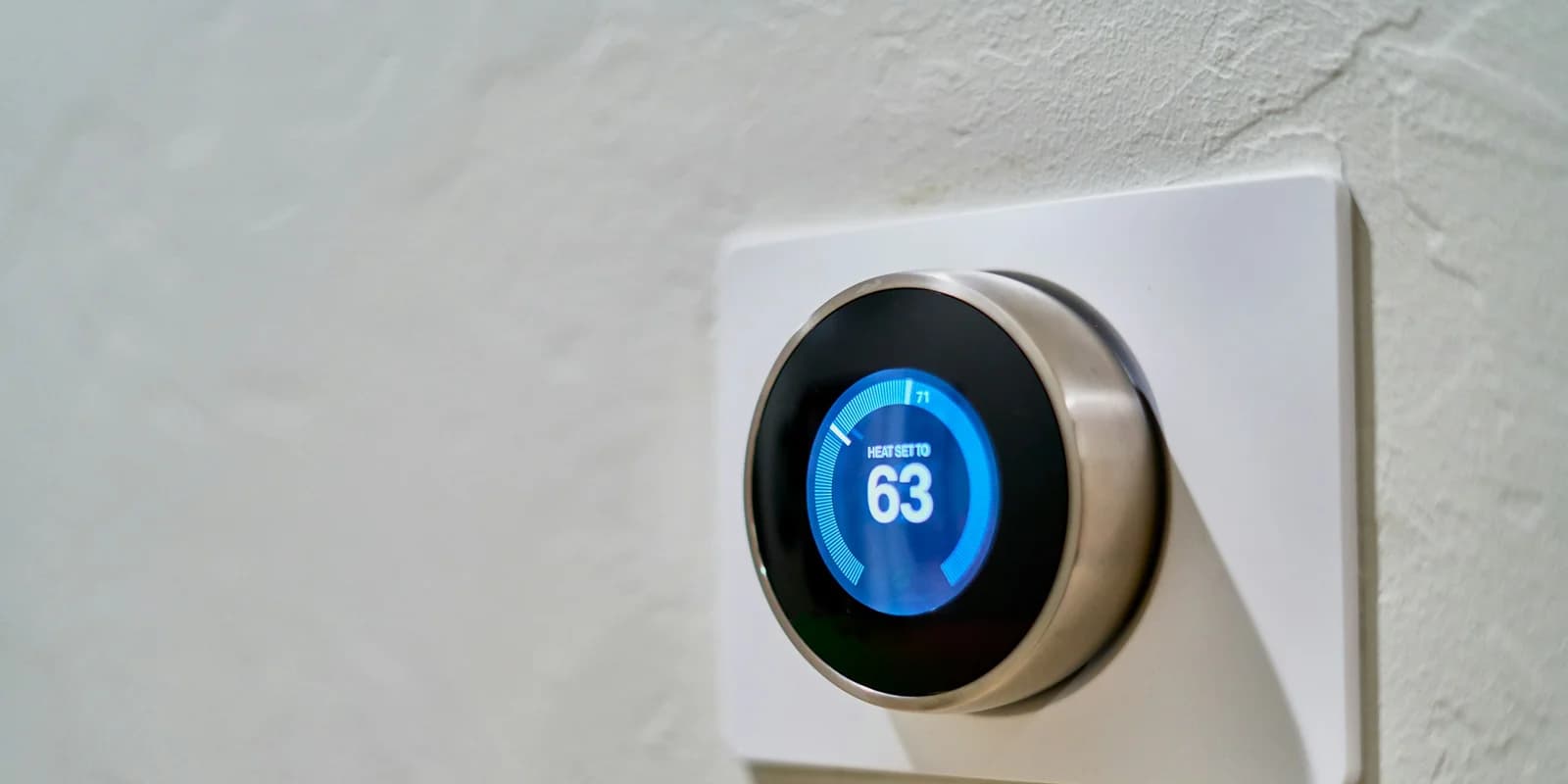
Every few years, someone from your family group chat announces they installed a smart thermostat and now they save fifty dollars a month on heating. Half the time they are right. Half the time the thing is just nicer to look at than the beige 2003 Honeywell it replaced.
The difference between those two outcomes is almost entirely about which model you buy and whether it actually talks to your HVAC system.
This guide is the short version of that decision. Four thermostats worth buying in 2026, one to skip, and the five-minute wiring check that decides everything else.
SolderMag Take: the C-wire check is the whole story
Before you pick a thermostat, go look at your current one. Pop the cover off. If there is a wire in the terminal labelled C (common), you can install any smart thermostat on the market. Done.
If there is no C-wire, your options narrow fast:
- The ecobee Premium ships with a Power Extender Kit (PEK) that adds a C-wire equivalent. Works in almost every furnace setup.
- The Nest Learning Thermostat sometimes works without a C-wire by stealing power from other terminals. Sometimes it does not, and you end up with a thermostat that reboots five times a day.
- The Amazon Smart Thermostat needs a C-wire. If you do not have one, this is not the thermostat for you.
A pro electrician will add a C-wire for around $100-200. In many regions your utility will do it free as part of a smart-thermostat rebate. Call them before you buy anything.
This one step decides 90% of the satisfaction people get from their smart thermostat. Installing the wrong one on the wrong HVAC is the number-one complaint on every subreddit in this category.
Best smart thermostats at a glance
- HomeKit house, hands-off scheduling: ecobee Premium. Native Apple Home + remote sensors that measure the room you are actually in.
- All-in on Google: Nest Learning Thermostat. Best looking, real learning behaviour, deep Google Home integration.
- Tight budget, C-wire present: Amazon Smart Thermostat. Boring, reliable, $80.
- Want remote sensors without spending Premium money: ecobee Smart Thermostat Enhanced. Same sensor ecosystem, smaller screen, no air quality.
- Heat pump house: any of the above handle heat pumps, but confirm with your exact model. Legacy thermostats often do not.
What actually matters in a smart thermostat
1) Compatibility
Check two things:
- HVAC type: gas furnace + central AC is the easy case. Heat pumps, multi-stage systems, and radiant heat get pickier. Every thermostat's product page has a compatibility checker. Use it.
- C-wire: covered above. This is the make-or-break one.
Do both checks before you read reviews. A perfect thermostat is useless if it will not talk to your furnace.
2) Remote sensors
A thermostat on your hallway wall measures the temperature in your hallway. That is not where you sleep, work, or watch TV.
Remote sensors (battery-powered pucks you put in other rooms) let the thermostat average across occupied rooms or prioritize a specific room. This is the single upgrade that makes a smart thermostat feel genuinely smart.
- ecobee ships one sensor in the box with the Premium and Enhanced.
- Nest needs the separate Nest Temperature Sensor (no motion detection, just temperature).
- Amazon Smart Thermostat does not support remote sensors at all. This is its biggest limitation.
If you have bedrooms far from the thermostat, a model without sensor support is a downgrade disguised as a save.
3) Scheduling and learning
Two camps:
- Manual scheduling (ecobee, Amazon, Honeywell): you tell it when you want it warm. It obeys. You edit.
- Learning (Nest): it watches your manual adjustments for a week or two and builds a schedule from what you actually did.
Nest's learning worked genuinely well once, got worse with a few firmware updates, and is now decent again. The useful bit is less the learning and more the Home/Away automation pulled from your phone's presence.
If you hate fiddling with apps, Nest wins. If you want exact control and predictable behaviour, ecobee wins.
4) Ecosystem
- Apple Home / HomeKit: ecobee (all current models), Nest (via third-party bridges only, which is annoying), Honeywell T9 (yes).
- Google Home: Nest (native), ecobee (works, slightly second-class), Amazon Smart Thermostat (works well), Honeywell (works).
- Amazon Alexa: all of them work well.
- Matter: ecobee supports Matter natively on recent firmware. Nest is rolling it out slowly. This is where the industry is going; Matter support is a mild tiebreaker.
If your home is already committed to one ecosystem, lean toward the thermostat that treats it as a first-class citizen rather than one that half-supports it via workarounds.
5) Energy reports and actual savings
Every manufacturer claims 10-26% heating/cooling savings. Real-world savings vary from 0% to about 15%, driven mostly by how bad your old thermostat was.
If your previous thermostat was a dumb programmable that you actually programmed, expect minimal savings from the upgrade. The thermostat is not magic.
If it was a dumb thermostat set to a single temperature 24/7, you could see real savings (10%+), mostly from the automatic Away mode dialing back temperature when nobody is home.
The energy reports in the apps are fine. ecobee's are genuinely useful. Nest's are more of a sales pitch. None of them replace actually looking at your bill.
The picks
Best overall: ecobee Smart Thermostat Premium
Who it's for: anyone who wants the thermostat most likely to Just Work across Apple, Google, Alexa, and Matter, with remote sensors, a C-wire workaround, and a good app.
The Premium is the most complete smart thermostat on the market in 2026. Ships with a remote sensor in the box, supports Matter, includes the PEK power adapter so you can install without a C-wire, has a built-in air quality monitor (particulates, CO2 equivalent, VOCs), and works natively with Apple Home, Google Home, and Alexa without any middleware.
The air quality sensor is a legitimate upgrade if you have pets, cook a lot, or live somewhere with seasonal smoke. It also doubles as a room-level Siri Shortcut trigger if you are HomeKit-heavy.
The only real knock is price. At around $250, it is the most expensive thermostat in this list. You can spend less and get most of the benefit with the Enhanced model (no air quality, smaller screen, same sensor support).
Best for Google Home: Google Nest Learning Thermostat
Who it's for: Google Home households, aesthetic minimalists, and people who would rather the thermostat set its own schedule.
The Nest Learning Thermostat is the prettiest thing in this category, and by a margin. The brass or stainless ring, the live weather widget, the Farsight display that shows the temperature from across the room. It is the one thermostat that people notice on the wall and ask about.
Functionally, Home/Away Assist (it uses your phone's location to auto-away) is the feature that pays for itself. The learning is fine. The Google Home integration is first-class. HomeKit support requires a third-party bridge, which works but is an ongoing tax.
The catch is installation. No C-wire workaround in the box. On systems without a C-wire, Nest will try to steal power and you may end up with random reboots, HVAC short cycling, or a thermostat that refuses to cool past a certain outdoor temperature. If you do not have a C-wire, either get one installed or buy the ecobee.

Google Nest Learning Thermostat
Why it works
- Best aesthetic of any smart thermostat on the market
- Home/Away Assist via phone presence works well
- Farsight display readable from across the room
Main trade-off
- Does not ship with a C-wire workaround
- HomeKit only via third-party bridges
Best value: Amazon Smart Thermostat
Who it's for: Alexa households with a C-wire who want the cheapest thermostat that is not embarrassing.
At around $80, the Amazon Smart Thermostat is half the price of the next-cheapest competent option. It uses the same Honeywell-licensed core as the old Honeywell Lyric, skins it in a minimal touchscreen, and ties it to Alexa. That is basically the pitch.
It lacks remote sensors, which is its biggest limitation for larger homes. It needs a C-wire, which is its biggest practical limitation. But if both of those are not an issue for you, you get 80% of the ecobee Premium experience for a third of the price.
Do not buy this if you are not committed to the Alexa ecosystem. Google Home support exists but is second-class. HomeKit support does not exist.
Amazon Smart Thermostat
Why it works
- Under $100 for a legitimate smart thermostat
- Works well with Alexa routines and hands-free control
- Simple, boring, reliable scheduling
Main trade-off
- No remote sensor support at all
- Requires a C-wire, no workaround in the box
Best multi-zone setup: Honeywell Home T9 with Smart Sensor
Who it's for: larger homes with bedrooms far from the main thermostat, on a budget below the ecobee Premium.
The T9 has been Honeywell's answer to the ecobee for a few years now. The core thermostat is competent, the app is fine, and the Smart Room Sensors detect both temperature and occupancy, which is actually a step above ecobee's motion-only detection for sensor-based prioritization.
Apple Home is supported (this is the one caveat the Nest cannot match without bridges), Google is supported, Alexa is supported. No Matter on current firmware.
Sensor pricing is decent. A T9 plus three sensors is under the price of an ecobee Premium, and you end up with better coverage for a 4-bedroom house. The thermostat itself looks bland and the app UI is dated, but it does the job.
Honeywell Home T9 Smart Thermostat with Room Sensor
Why it works
- Room sensors include both temperature and occupancy detection
- Native Apple Home + Google Home + Alexa support
- Cheaper per-sensor than ecobee for multi-room homes
Main trade-off
- App and hardware feel a generation behind ecobee
- No Matter support yet
Installation tips that matter
- Photograph your old wiring before removing anything. Labels fall off. Wires look identical. A phone photo is your rollback plan.
- Flip the breaker, do not just turn the HVAC off at the panel. Thermostats are 24V, but wiring behind the wall can surprise you.
- Label each wire with masking tape before disconnecting. Not with the letter on the old thermostat. With the letter on the new one. Sometimes they differ.
- Test every mode after installing. Heat on, then off. Cool on, then off. Fan on, then auto. A mis-wired thermostat that works fine in heating can fry a compressor when you switch to cooling in summer.
- If your system has more than one stage, read the install manual. Two-stage systems need the W2 wire connected. Single-stage installations that miss this still work, just badly.
If any of this feels out of your depth: most manufacturers offer professional installation through Amazon Home Services or equivalent for $100-150. Unless you like crimping wires, this is cheap insurance.
Smart thermostat buying checklist
- Do I have a C-wire? Check before anything else. Decides half the short-list.
- HVAC type? Gas/AC easy, heat pump check spec sheet, radiant check twice.
- Ecosystem? Pick the thermostat that natively supports your existing smart-home hub, not the one with the prettiest marketing.
- Do I need remote sensors? If your bedrooms are far from the thermostat, yes. Amazon's thermostat is then off the list.
- Utility rebates? Many US utilities rebate $50-100 for Energy Star-certified smart thermostats. Check before ordering.
Red flags to avoid
- "Works with Alexa via Hub" in the specs. That means no native Matter/Thread, you need a bridge, and it is a second-class citizen.
- No C-wire workaround mentioned, and no C-wire at home. Walk away.
- Thermostats under $50 on Amazon that are not from Amazon. Wi-Fi-only, no HomeKit, no Google, no real support. Fine for rentals, dangerous for long-term comfort.
- "Learning" thermostats that require a subscription. Almost always a sign that the core product is weak and the vendor is trying to monetize it twice.
- HVAC-maker branded thermostats that lock you to their ecosystem. Trane, Carrier, Lennox all sell smart thermostats that work only with their HVAC. They break when you move house and bring the thermostat. Prefer ecosystem-neutral (ecobee, Nest, Honeywell, Amazon).
Smart thermostat vs alternatives
Smart thermostat vs dumb programmable: if you actually program a dumb thermostat and follow it, the smart upgrade saves only modest energy. Convenience is the main win.
Smart thermostat vs zoning: a single smart thermostat cannot fix a house where one room is always too hot. You need multiple zones, or at least a smart thermostat with room sensors that prioritize the occupied room (ecobee, Honeywell T9).
Smart thermostat vs smart vents: smart vents (Flair, Keen) add per-room control on top of a single-zone HVAC. They work but are fiddly. A good sensor-equipped smart thermostat solves most of the same problem for less money.
Sources and methodology
- Manufacturer compatibility documentation for HVAC systems, including heat pump, multi-stage, and radiant installations.
- Energy Star certified product database for rebate eligibility and efficiency claims.
- Peer-reviewed home energy studies on programmable-thermostat savings, which cap most real-world savings from scheduling alone at around 10%.
- Long-running community feedback from r/homeautomation, r/homeimprovement, and HVAC technician forums on installation pitfalls and C-wire workarounds.
- Hands-on experience installing and living with ecobee Premium, Nest Learning, and the Amazon Smart Thermostat across both furnace + AC and heat-pump homes.
- Pricing and availability sampled on Amazon in April 2026. Affiliate links go to the current listing; prices change constantly.
Related reading
- Best Smart Plugs (2026): the other cheap upgrade that actually moves your bill.
- Best Smart Speakers (2026): the voice front-end most people control their thermostat with.
- Complete Smart Home Setup (2026): full build guides at different budget levels.
- Best Air Purifiers (2026): pairs naturally with a thermostat that reports air quality.