Best Office Chairs (2026): Ergonomic Picks From Budget to Herman Miller
Eight-hour desk days are won or lost in the chair. Here are the office chairs actually worth buying in 2026 — flagship, mid-range, and budget — with honest notes on which one matches which back.
Editorial evidence review
Recommendations are checked against product documentation, availability, comparative evidence, and clearly disclosed hands-on work where it exists.
Quick picks
The short answer, with the trade-off

Best premium alternative
Steelcase Leap V2

Best mid-range
HON Ignition 2.0 Mid-Back

Best modern mesh
Flexispot C7 Premium

Best under $350
Sihoo Doro C300
On this page
- SolderMag Take: buy the cheapest chair that fixes the specific problem
- Best office chairs at a glance
- What actually matters in an office chair
- The picks
- Setup matters more than the chair itself
- Office chair buying checklist
- Office chair red flags
- Buying new vs refurbished flagships
- Sources and methodology
- Related reading
The chair is the piece of your desk setup that touches you for eight hours a day. A bad one compounds across weeks into the thing your physio actually bills you for.
Most "ergonomic" chairs on Amazon are the same mesh-back template with different logos. A handful are genuine workstation tools that will outlast three laptops. The gap between those two categories is where most home office budgets go to die.
This guide skips the spec-sheet theatre and groups the office chairs worth buying in 2026 by what your back, budget, and patience can actually use.
SolderMag Take: buy the cheapest chair that fixes the specific problem
Office chairs fail the same way keyboards do. People buy the most impressive-looking thing they can afford, then realise the expensive mesh back is solving the wrong problem for their body.
The wins come from matching the chair to the specific issue:
- Lower back aches by mid-afternoon: you need real lumbar support that adjusts up/down and forward, not a lump of foam sewn into the back.
- Numb legs or pressure under the thighs: you need seat depth adjustment more than you need a mesh back.
- Shoulders and neck tensing up on calls: you need 4D armrests (height, width, pivot, depth) so your elbows actually rest.
- You slump forward by 3pm: you need synchronised tilt, not just a recline lever — so the seat follows the back when you lean.
- You run hot: mesh back, not foam, full stop.
Everyone with back pain wants to buy the Aeron. The Aeron is great. But if what you actually need is seat depth adjustment, a $320 Sihoo with proper depth slide beats a $1,400 Aeron on the only metric that matters to your hips.
Best office chairs at a glance
- Want the default "buy it and stop researching" answer with a 12-year warranty: Herman Miller Aeron.
- Want Aeron-level build quality with a conventional foam seat instead of mesh: Steelcase Leap V2.
- Want 80% of the benefit at 25% of the price: HON Ignition 2.0 (Wirecutter's long-running pick for a reason).
- Want a modern mesh chair with adjustable everything and a footrest option: Flexispot C7 Premium.
- On a budget but refuse to buy a worse chair that lasts two years: Sihoo Doro C300.
What actually matters in an office chair
1) Lumbar support that moves, not just "exists"
Every chair claims lumbar support. The ones worth buying have:
- Height adjustment — so the bulge lines up with your lower back (usually 2–4 inches above the seat), not a factory default built for an average torso.
- Depth/firmness adjustment — so you can dial in how much it pushes.
- Dynamic response — the lumbar pad moves with the backrest when you recline, instead of leaving your spine unsupported mid-recline.
A fixed foam lump at a fixed height is not lumbar support. It is a couch cushion with marketing attached.
2) Seat depth adjustment
The forgotten ergonomic feature. Seat depth sets how far the front of the cushion is from the back of your knees.
- Too long (seat too deep) → pressure behind the knees → numb legs.
- Too short → no thigh support → hips do all the work and fatigue in an hour.
- Correct → roughly two-to-three-finger gap between the back of your knees and the seat edge.
If you are under 5'7" or over 6'2", seat depth is the single feature most likely to make or break any chair. Herman Miller solves it with sizes (A/B/C). Everyone else solves it with a slider on the seat pan. A chair with no depth adjustment and no size options is a gamble on your body matching theirs.
3) Armrests (4D vs 3D vs "height only")
Armrests exist so your shoulders can relax. That requires the armrest to be directly under your elbow when your hand is on the keyboard. Which in turn requires it to adjust in four directions:
- Height (vertical)
- Width (inward/outward)
- Depth (forward/back)
- Pivot (angle inward)
4D armrests do all four. 3D usually drops pivot. "Height only" means you will unconsciously slump to match whatever angle the factory picked.
On cheaper chairs the armrests are the first thing to wobble after a year. Check user reviews specifically for the word "wobble" before buying under $300.
4) Tilt mechanism
"It reclines" is not a useful spec. There are three real tilt systems:
- Knee tilt (cheapest): the pivot point is under your knees. Feels like the chair is trying to launch you.
- Synchronised tilt (Aeron, Leap, most sub-$500 decent chairs): the seat tilts back about half as fast as the back reclines. Keeps your eye line roughly on your screen when you lean.
- "Liveback" / glide systems (Steelcase Leap, Flexispot C7): the backrest changes shape as you move, maintaining lumbar contact through the full recline. This is the feature you feel most obviously during video calls.
For eight-hour days, synchronised tilt is the minimum. Anything less and you will recline less often, which is the opposite of what your back wants.
5) Materials and how long it lasts
Office chair lifespans vary wildly:
- Good mesh (Aeron Pellicle, Leap 3D Microknit): 10–15 years, no sag.
- Cheap mesh (sub-$200 chairs): stretches out in 12–18 months, starts cradling instead of supporting.
- Good foam (Leap, Ignition 2.0): 7–10 years before the cushion compacts.
- Cheap foam: 2–3 years before you feel the seat base through the fabric.
The price gap between a "decent" chair and a "great" chair is real, but the price gap between a "bad" chair and a "decent" chair is much bigger in your body. See The Real Cost of a Cheap Office Chair for why cheap chairs are expensive over three years.
The picks
Best overall: Herman Miller Aeron
Who it's for: anyone ready to buy one chair and not think about it again for a decade.
The Aeron is the office chair other office chairs get compared to, and for good reason. The Pellicle mesh does not sag, the 8Z tilt mechanism is the cleanest synchronised recline on the market, and the size system (A, B, C) means a 5'3" person and a 6'4" person can both get a chair that actually fits them — which is rare at any price. The PostureFit SL lumbar kidney hits the right spot without feeling like a fist in your back.
The honest catches: it is expensive, there is no headrest (Herman Miller's philosophy is that if you need a headrest you are reclined too far for work), and the fully-loaded variant with adjustable everything costs noticeably more than the mid-trim. Buy Size B unless you are at the edges of the height range. The 12-year warranty is real; people are still using Aerons from 1998.
Herman Miller Aeron Ergonomic Chair — Size B, Graphite
Why it works
- Pellicle mesh runs cool and does not stretch out over a decade
- 8Z synchronised tilt tracks your eye line through recline
- Size A/B/C system means the chair actually fits your body
Main trade-off
- Expensive, especially the fully-loaded variant
- No headrest option (by design)
Best premium alternative: Steelcase Leap V2
Who it's for: people who want Aeron build quality but prefer a foam seat, or who need LiveBack's dynamic spine support because they move a lot in the chair.
The Leap V2 is the chair you pick when you have tried the Aeron and want a foam cushion instead of mesh. LiveBack technology flexes the backrest to match your spine as you move, which is more noticeable than any spec sheet makes it sound — you can feel the back change shape when you lean forward to read something. Natural Glide keeps your sightline locked while you recline, and the 4D arms are the best in the category.
It runs warmer than the Aeron (foam, not mesh) and costs roughly the same, so pick based on whether you want breathability or cushion. The assembly is slightly involved. If you can find one refurbished from a reputable seller, Leap V2s hold up for a decade and you will save meaningful money.
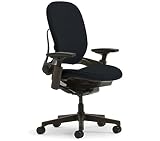
Steelcase Leap V2 (Black Fabric)
Why it works
- LiveBack technology flexes with your spine through full range of motion
- Natural Glide keeps eye line steady during recline
- Best-in-class 4D armrests with long adjustment range
Main trade-off
- Foam runs warmer than mesh-back chairs
- New list price is steep; look at refurbished for best value
Best mid-range: HON Ignition 2.0
Who it's for: the "I want 80% of the Aeron for 25% of the price" buyer. Also Wirecutter's long-running default pick, and it has earned the spot.
The Ignition 2.0 is genuinely adjustable — synchro-tilt, adjustable lumbar panel, height-and-width-adjustable arms, pneumatic seat height, seat-slide on some trims. It is not as refined as the Aeron (the armrests are plastic, the tilt mechanism is noticeably clunkier), but every ergonomic feature you actually need is present, working, and under warranty.
Two things to know: the seat cushion is firm, which is a pro for long days and a con if you prefer a softer feel. And at this price point, assembly quality from Amazon warehouses is variable — expect to tighten bolts before your first real use. HON offers a limited lifetime warranty on the structural parts, which is unusual at this price.
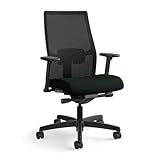
HON Ignition 2.0 Mid-Back Task Chair (Black)
Why it works
- Proper synchro-tilt and adjustable lumbar at a mid-range price
- Height- and width-adjustable arms that stay put after a year
- Limited lifetime warranty on structural components
Main trade-off
- Plastic armrests feel utilitarian next to Aeron or Leap
- Firm cushion — great for posture, divisive for comfort preferences
Best modern mesh: Flexispot C7 Premium
Who it's for: people who want every adjustment knob a premium chair has, in a modern mesh design, at a mid-tier price — and who like the option of a pull-out footrest for deep reclines.
The C7 Premium is the chair Flexispot designed specifically to compete with the Aeron/Leap for 40% of the money. It has 3D armrests, dynamic lumbar, synchro-tilt, adjustable headrest, and a retractable footrest on some configurations. The build quality is a clear step up from sub-$300 Amazon chairs — the base is steel, the armrests do not wobble out of the box, and the mesh has a proper tension frame.
Caveats: the headrest is mandatory and not everyone wants one. The warranty is shorter than the flagships (five years on the frame). And the "Premium" name is doing some work — there are cheaper C7 variants on Amazon with fewer adjustments that are easy to confuse with this one at a glance. Double-check the listing says "Premium" with 3D armrests before you click buy.

Flexispot C7 Premium Ergonomic Office Chair (Mesh, Black)
Why it works
- Every major adjustment a premium chair has, for roughly 40% of the price
- 3D armrests actually stay put, steel base, tensioned mesh back
- Retractable footrest option on some configurations
Main trade-off
- Headrest is built-in — not optional
- Five-year frame warranty vs 12 on Herman Miller / Steelcase
Best under $350: Sihoo Doro C300
Who it's for: the budget-conscious buyer who refuses to end up with a $150 chair that sags in a year, and the renter who does not want to ship a Herman Miller across state lines.
Sihoo has become the default Amazon recommendation for a reason. The Doro C300 runs around $300, has 3D armrests, dynamic lumbar that actually adjusts, a seat depth slider, synchro-tilt, and a mesh back with a usable frame. Reviewed against chairs twice the price, it loses on material quality and long-term durability — but it wins the comparison against every other chair in its own price band by a wide margin.
The catch: Sihoo runs several variants of the "Doro C300" — standard, Pro, Pro V2, with/without footrest. Features and prices change across them. For the core value proposition (ergonomic adjustments at a budget price), the standard C300 linked here is the best balance. Skip the Pro upgrades unless you specifically want the footrest.
Warranty is three years on the frame. Expect to replace the chair in five-to-seven years, not fifteen. But over those years you are paying roughly a quarter of what an Aeron costs, and actually sitting in something ergonomic.

Sihoo Doro C300 Ergonomic Office Chair (Black)
Why it works
- Ergonomic feature set of a $600 chair at around $300
- Adjustable lumbar that actually moves up, down, and in
- Seat depth slider — rare at this price
Main trade-off
- Materials and build will not match a decade-long chair
- Multiple C300 variants on Amazon — check 'standard' model carefully
Setup matters more than the chair itself
A $1,500 chair at the wrong desk height still produces pain. Before you spend anything, check:
- Seat height: feet flat on the floor, knees at roughly 90 degrees, thighs parallel to the floor. If your desk forces the chair too high, buy a footrest before you blame the chair.
- Desk height: elbows at roughly 90–110 degrees with shoulders relaxed. A desk two inches too high will make any chair feel wrong.
- Screen height: top of the monitor at or slightly below eye level. Laptop-on-a-desk forces neck flexion no chair can fix. Pair the chair with a monitor arm or a standing desk if you are using a laptop as your main display.
- Keyboard position: at elbow height, ideally on a flat-or-slightly-negative tilt. Pair with an ergonomic keyboard if your shoulders creep toward your ears by afternoon.
An Aeron at a kitchen table will still wreck your neck. The chair is one leg of a three-leg stool.
Office chair buying checklist
Before you add to cart:
- What specifically hurts? Lower back, neck, hips, legs. Each points to a different feature — do not buy more chair than you need.
- How tall are you? Under 5'4" or over 6'2", prioritise chairs with size options (Aeron A/B/C) or a serious seat depth slider.
- Foam or mesh? Mesh for heat, longevity, and a firmer feel. Foam for cushion and warmer climates.
- How adjustable are the arms? 4D is ideal, 3D is acceptable, height-only is a red flag at any price above $200.
- What warranty? Under 5 years on a frame is a signal the manufacturer does not expect the chair to last.
- Can you try it for 30+ days? Office chairs are personal. Buy from a retailer with a real return window, and actually use it.
If you cannot answer #1, start with the HON Ignition 2.0 and keep receipts.
Office chair red flags
- "Ergonomic" in the title but no adjustable lumbar. It is a gaming chair cosplaying as ergonomic.
- Gaming racing-seat shapes with side bolsters. Those bolsters push your hips into an unnatural position for desk work — fine for 20-minute gaming sessions, wrong for eight-hour workdays.
- No weight capacity listed, or capacity under 250 lbs. Quality chairs publish their load rating because they are confident in it.
- Warranty under 2 years on the frame. Means the manufacturer expects you to replace it fast.
- Only one armrest direction. If the arms only move up and down, your shoulders will pay for it.
- Knock-off listings. "ErgoMaxx Pro Elite 2026" with 12,000 reviews and no brand history. Stick to brands with track records: Herman Miller, Steelcase, HON, Haworth, Humanscale, Flexispot, Sihoo, Autonomous, Branch.
Buying new vs refurbished flagships
Worth a note because people miss it. Herman Miller Aerons and Steelcase Leap V2s have a huge refurbished market. A Size B Aeron fully remanufactured with new mesh and a 12-year warranty from a reputable refurbisher runs roughly half the price of new.
The tradeoff: the chair is ten-ish years old. The Pellicle mesh has been replaced, the gas cylinder has been replaced, the armrest pads are new — but the frame has the hours on it. For a flagship chair with a service-everything warranty, this is genuinely fine. For a Sihoo or Flexispot, the math does not work the same way because replacement parts are harder to source.
If new Aeron pricing makes you flinch, refurbished is the shortcut to flagship quality at mid-range money.
Sources and methodology
- Occupational ergonomics guidance on neutral seated posture, lumbar support height, seat depth, and armrest positioning (OSHA computer workstation material, Cornell University Ergonomics Lab, Canadian Centre for Occupational Health and Safety).
- Manufacturer specifications for tilt mechanisms, adjustment ranges, load capacities, and warranty terms for each chair reviewed.
- Long-term durability data from commercial-refurbisher teardowns (Crandall Office, Madison Seating) on Aeron, Leap V2, and contemporaries.
- Long-running consumer evaluations including Wirecutter's office chair series, which has repeatedly tested the HON Ignition 2.0 against competitors in its price band.
- Hands-on seat-time across the five chairs reviewed, with emphasis on whether the claimed adjustments hold up after a week of real work rather than a ten-minute showroom sit.
Product availability and ASINs verified April 2026. Prices move; affiliate links route to the current Amazon listing on the day you click.
Related reading
- The Real Cost of a Cheap Office Chair: why buying twice costs more than buying once, with numbers.
- Best Home Office Setup (2026): the rest of the desk — monitors, arms, lighting, cable management.
- Best Standing Desks (2026): if you alternate sitting and standing, the chair is only half the problem.
- Best Ergonomic Keyboards (2026): input posture matters as much as seat posture. Shoulders creeping toward your ears is usually a keyboard problem, not a chair problem.
- Best Monitor Arms (2026): screen height fixes more neck pain than any chair upgrade will.