Best Smart Plugs (2026): Simple Automation That Actually Works
The best smart plugs of 2026 for energy monitoring, scheduling, and home automation. Alexa, Google, and HomeKit compatible picks.
Editorial evidence review
Recommendations are checked against product documentation, availability, comparative evidence, and clearly disclosed hands-on work where it exists.
Quick picks
The short answer, with the trade-offBest overall
TP-Link Kasa Smart Plug EP25
Compact. doesn't block second outlet
Trade-off: No HomeKit support

Best for Alexa
Amazon Smart Plug
Trade-off: No energy monitoring
Best for HomeKit
Eve Energy

Best budget multi-pack
Meross Smart Plug Mini
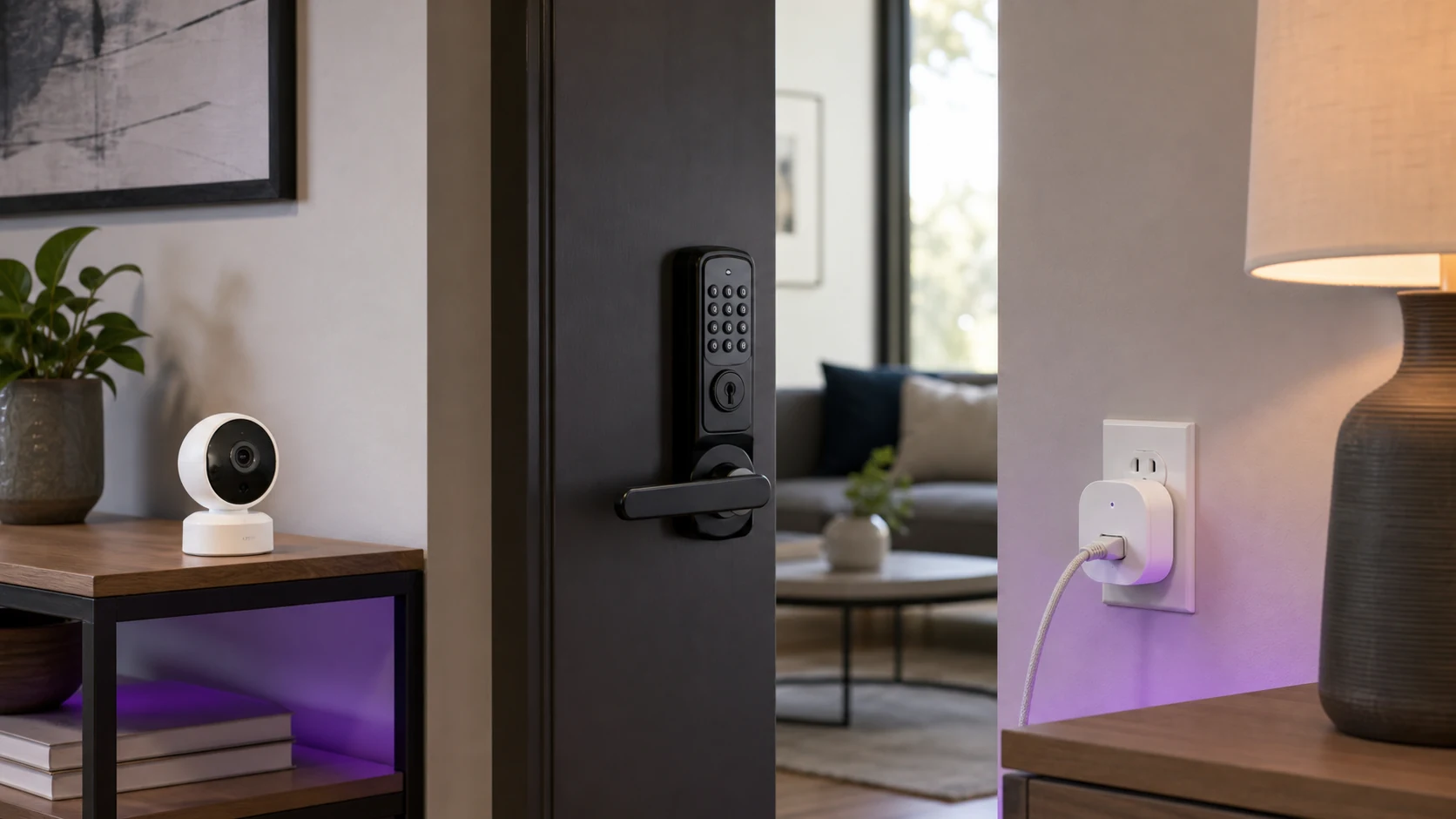
Smart plugs are the gateway drug of home automation. Plug one in, connect it to Wi-Fi, and suddenly you can turn off the space heater from bed, schedule the coffee maker, or find out exactly how much electricity that mini fridge in the garage is burning.
The catch: the smart plug market is 90% junk. Amazon is flooded with no-name plugs that lose Wi-Fi weekly, require a Chinese cloud server to function, and brick themselves after a firmware update. The good ones are boring. they connect, they stay connected, and they don't spy on you.
Here's how to pick the right one and avoid the rest.
SolderMag Take: a smart plug should be invisible after setup
The best smart plug is the one you forget is there. It connects to your network once, responds to voice commands or schedules reliably, and never requires you to open an app to troubleshoot why it went offline at 3am.
What actually matters:
- Wi-Fi reliability. stays connected for months without dropping
- Ecosystem fit. works with the voice assistant you already own
- Physical size. doesn't block the adjacent outlet
- Energy monitoring. optional but genuinely useful for identifying power hogs
What doesn't matter: RGB lights on the plug, "scene" features you'll never use, or apps with 47 tabs.
Our top smart plug picks for 2026
Best overall: TP-Link Kasa Smart Plug EP25
The EP25 is the default recommendation because it gets the fundamentals right. It connects via Wi-Fi (2.4GHz), supports Alexa, Google Assistant, and SmartThings, and the Kasa app is clean and functional. Setup takes under two minutes.
The compact form factor is the real win. The EP25 is small enough that plugging one in doesn't block the second outlet. a problem that plagues bulkier smart plugs. It also supports energy monitoring, so you can track how much power each device draws over time.
Scheduling and timers work locally after initial setup, meaning your schedules run even if your internet drops. That's a detail most people don't think about until the Wi-Fi goes down and all their "smart" devices become dumb.
TP-Link's track record on firmware updates and app maintenance is solid. The Kasa line has been around for years, and they haven't pulled the rug on older devices. which is more than many smart home brands can say.
TP-Link Kasa Smart Plug EP25
Why it works
- Compact. doesn't block second outlet
- Energy monitoring built in
- Works with Alexa, Google, and SmartThings
Main trade-off
- No HomeKit support
- 2.4GHz Wi-Fi only
Best for Alexa: Amazon Smart Plug
If your home runs on Alexa, the Amazon Smart Plug is the path of least resistance. Setup is instant through the Alexa app. scan, name, done. Voice control is fast because there's no third-party cloud relay; the plug talks directly to Amazon's ecosystem.
It supports Alexa Routines natively, which means you can chain it with other Alexa actions: "Alexa, goodnight" turns off the lamp, locks the door, and arms the security camera.
The trade-off: no energy monitoring and no Google/HomeKit support. This is a single-ecosystem plug. If you ever switch to Google Home, it becomes a paperweight. But if you're committed to Alexa, nothing integrates more cleanly.
The physical size is average. it can block the adjacent outlet on some power strips but fits standard wall plates fine.
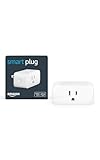
Amazon Smart Plug
Why it works
- Instant Alexa setup, fast voice response
- Native Alexa Routines support
- Usually positioned as an affordable option
Main trade-off
- No energy monitoring
- Alexa only. no Google or HomeKit
Best for HomeKit and privacy: Eve Energy
The Eve Energy is the smart plug for people who care about where their data goes. It uses Thread and Bluetooth. no cloud account required, no data sent to external servers. Everything processes locally through your Apple Home Hub (HomePod, Apple TV, or iPad).
For HomeKit users, this is the gold standard. Siri control, Home app integration, and automation that runs entirely on-device. The energy monitoring features are detailed, showing real-time wattage, daily totals, and cost projections.
The limitation is obvious: Apple ecosystem only. No Alexa, no Google. And you need a Thread border router (HomePod Mini or newer Apple TV) for the best reliability and range. Without Thread, it falls back to Bluetooth, which limits range significantly.
Price per plug is higher than the competition, but the privacy story and build quality justify it for Apple households.
Eve Energy Smart Plug
Why it works
- No cloud. fully local processing via Thread
- Detailed energy monitoring with cost projections
- Premium build quality
Main trade-off
- Apple ecosystem only
- Requires Thread border router for best range
Best budget multi-pack: Meross Smart Plug Mini
If you want to outfit multiple rooms without spending $25 per plug, Meross is the move. The Mini plugs come in 4-packs at a per-unit price that undercuts most competitors, and they support Alexa, Google, and HomeKit. all three ecosystems, which is rare at this price.
The compact design doesn't block adjacent outlets, and the Meross app handles scheduling, timers, and basic scene control. No energy monitoring at this tier, but for simple on/off automation (lamps, fans, holiday lights), you don't need it.
Reliability is good but not perfect. Occasional Wi-Fi disconnects happen. maybe once every few months. and a power cycle fixes it. For the price of a single Eve Energy, you can automate four outlets.
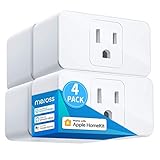
Meross Smart Plug Mini (4-Pack)
Why it works
- Works with Alexa, Google, AND HomeKit
- Compact design, excellent per-unit price
- Simple app with scheduling and timers
Main trade-off
- No energy monitoring
- Occasional Wi-Fi reconnection needed
How to choose the right smart plug in 2026
Most people overthink this. Answer these five questions and you'll have your answer:
- Which voice assistant do you use? Match your ecosystem first. Cross-platform support is nice but rarely as smooth as native.
- Do you need energy monitoring? Worth it for space heaters, dehumidifiers, or any device you suspect is burning excess power.
- How many do you need? One or two = buy quality. Five or more = multi-packs save real money.
- Does outlet size matter? Measure your outlet spacing. Bulky plugs that block both outlets defeat the purpose.
- Do you care about local control? Thread/HomeKit (Eve) and Matter-compatible plugs work without cloud servers.
- What will you plug into it? Lamps, fans, and coffee makers are fine. Space heaters and AC units need careful amperage checking. Never use a smart plug with a device that's unsafe to turn on unattended.
Smart plug buying checklist
- Compatible with your voice assistant (Alexa, Google, Siri)
- Compact enough to not block adjacent outlets
- Wi-Fi or Thread (avoid Bluetooth-only for range)
- Scheduling works even when internet is down (local execution)
- From a brand with a multi-year track record (TP-Link, Amazon, Eve, Meross)
- 15A rated for the devices you plan to control
- Your Wi-Fi router can handle additional IoT devices
Smart plug specs that matter
Amperage rating: 15A is standard, but check your devices
Most smart plugs handle 15A (1,800W). That covers lamps, fans, coffee makers, and small appliances. But a 1,500W space heater running through a 15A smart plug is cutting it close. sustained load near the max rating generates heat and shortens the plug's lifespan.
Wi-Fi band: 2.4GHz is correct (not a limitation)
Almost every smart plug uses 2.4GHz Wi-Fi. This isn't a weakness. 2.4GHz has better range and wall penetration than 5GHz, which is exactly what low-bandwidth IoT devices need. Make sure your router's 2.4GHz band is enabled and not set to "5GHz only."
Matter support: the future, but not urgent
Matter is the new universal smart home standard. Some newer smart plugs support it, which means they'll work across ecosystems without vendor lock-in. It's a nice future-proofing feature but not a requirement in 2026. most people are fine with their current ecosystem.
Smart plug red flags
- Requires a proprietary hub. In 2026, Wi-Fi and Thread plugs don't need extra hardware (except a Thread border router for Thread devices).
- Unknown brand with no app updates in 6+ months. Dead apps mean dead plugs when the cloud server shuts down.
- "Works with Tuya" as the only smart feature. Tuya-based plugs are everywhere and functional, but they all route through Tuya's cloud. Fine for some people, a deal-breaker for others.
- No UL/ETL certification. A smart plug handles AC power. Uncertified plugs are a fire risk. Period.
- Claims to handle "any appliance." Most smart plugs max out at 15A/1800W. Space heaters and window AC units can trip that limit.
Sources and methodology
- Safety certifications verified against UL and ETL databases for all recommended products
- Wi-Fi reliability assessed from long-term user reviews (6+ month ownership) across Amazon and community forums
- Energy monitoring accuracy cross-referenced with Kill-A-Watt meter measurements from independent reviewers
- Ecosystem compatibility tested against current Alexa, Google Home, and Apple Home app versions as of Q1 2026
For securing the rest of your smart home, check our best indoor security cameras. If you want voice control for your smart plugs and other devices, see our best smart speakers picks. And if your Wi-Fi struggles with smart home devices, see our best Wi-Fi 7 routers to upgrade your network backbone.