Best Outdoor Security Cameras (2026): The Ones That Actually Survive a Storm
Most outdoor cameras die within two years of being mounted. The good ones last five-plus, send useful alerts, and don't lock you into a subscription. Here are the picks worth installing in 2026.
Editorial evidence review
Recommendations are checked against product documentation, availability, comparative evidence, and clearly disclosed hands-on work where it exists.
Quick picks
The short answer, with the trade-offBest wired (no battery)
Ring Spotlight Cam Pro
Best no-subscription
eufy SoloCam S340
Best for Google Home
Google Nest Cam (Battery)
Trade-off: IP54 weatherproofing is below the Reolink/eufy class
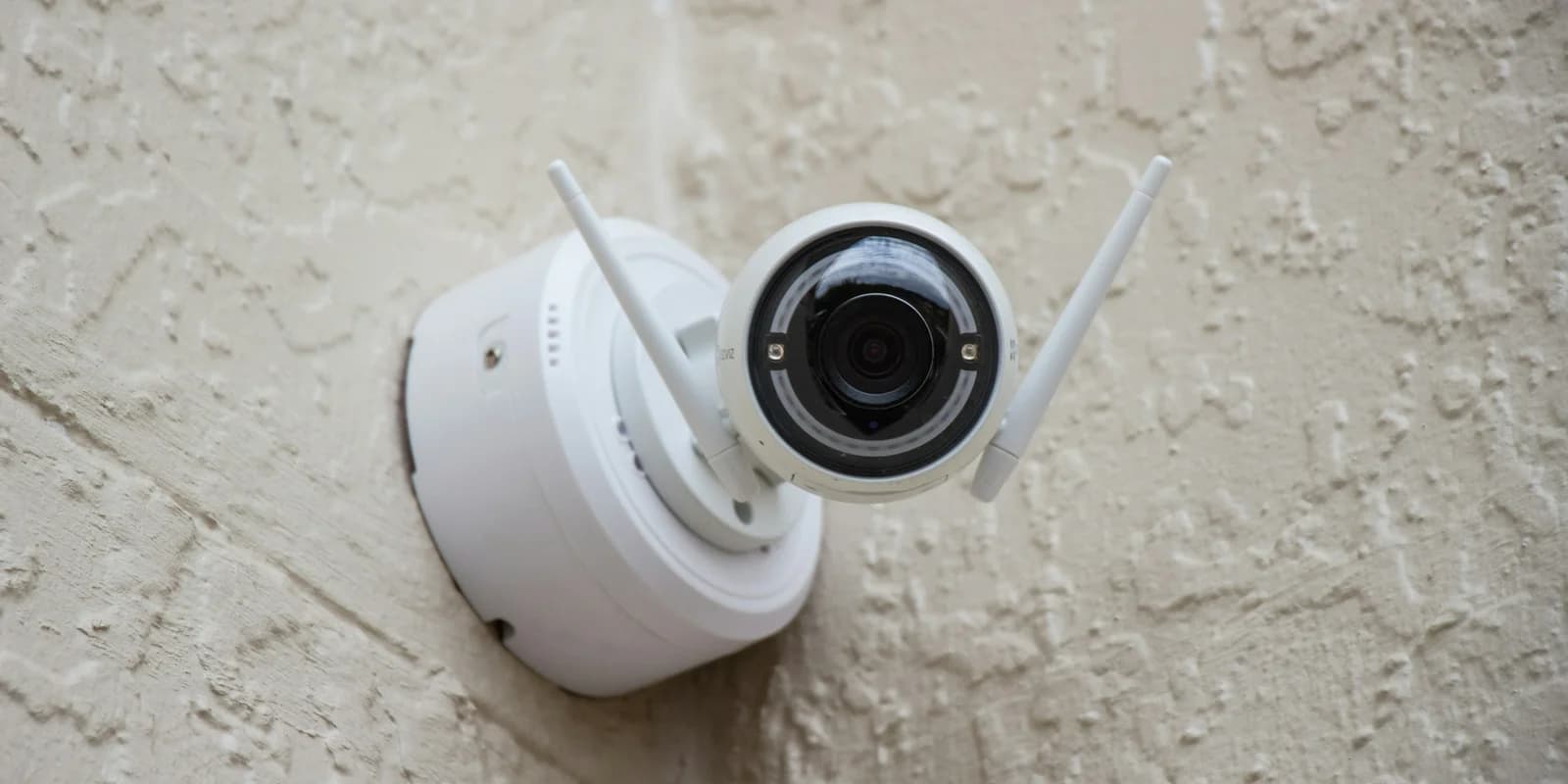
Outdoor cameras live in conditions consumer electronics aren't designed for. Sun-baked plastic at 60°C in summer. Sub-freezing rain in winter. UV-yellowed lenses by year three. Wi-Fi signals that drop the moment you mount them on the back of a brick wall.
Most outdoor cameras you find on Amazon are repurposed indoor cameras with an "IP65" sticker slapped on. They look fine in the listing photos. They die in the second summer.
The cameras in this guide are the ones that genuinely hold up. They also do the other thing that matters: send notifications you'll actually pay attention to instead of training you to swipe them away.
SolderMag Take: power source first, network second, brand third
The order most buying guides go in is wrong. They lead with brand recognition, then features, then the install reality. The install reality is what kills cameras.
Decide in this order:
- Where is power coming from? Wired (PoE or low-voltage doorbell-style), battery, solar-assisted, or plug into an outdoor outlet. This narrows the field to a quarter of the products on Amazon.
- Where is Wi-Fi coming from? Outdoor cameras at the back of a house often live at 1-2 bars. A camera that needs cloud upload over patchy Wi-Fi will be useless. Either run an outdoor mesh node, switch to PoE, or pick a brand with a good local-recording fallback.
- What ecosystem? Match the camera to whatever you already use indoors (Ring/Alexa, Nest/Google, eufy, Apple HomeKit). Mixed-vendor outdoor security is a maintenance disaster.
- What's the subscription math? $5/month for 5 years is $300. If you have 4 cameras, that's $1,200 of perpetual cost. Budget realistically.
Get those four right and the brand shortlist falls out. Get any of them wrong and you're returning the camera by month three.
Best outdoor cameras at a glance
- Wireless, runs on battery + small solar panel: Reolink Argus 4 Pro. 4K, dual lens, real local SD recording.
- Wired into existing outdoor outlet, want lights + siren built in: Ring Spotlight Cam Pro. Plug-in version is the right pick.
- Refuse to pay any subscription: eufy SoloCam S340. Records 100% locally. No cloud at all unless you opt in.
- Already a Google household: Google Nest Cam (Battery). Best AI alerts in the category, integrates with Nest Doorbell.
- You have PoE / running ethernet anyway: look at Reolink RLC-823S2 or Reolink TrackMix PoE. Better quality, cheaper per camera, no battery anxiety, no Wi-Fi worry. Skipped from the main shortlist because PoE installation is a different conversation.
What actually matters in an outdoor camera
1) Real weatherproofing
Look for IP65 minimum, ideally IP66. Most "outdoor" cameras are IP54 (splash-resistant only) which means they fail when rain hits sideways. Check the spec sheet, not the marketing copy.
Operating temperature range matters more than people realize. A camera spec'd to -10°C to 45°C dies in Canadian winters and Texas summers. Look for -20°C to 50°C for most US/EU climates, -30°C to 60°C if you're in extreme regions.
2) Power and battery
- Wired (always-on power): Ring Spotlight Cam Pro plug-in, Reolink wired models, hardwired Arlo Pro. Best continuous monitoring, best AI feature support.
- Battery + small solar: Reolink Argus 4 Pro, eufy SoloCam, Arlo Pro 5S with solar. Mounted-and-forget for most installs in sunny climates.
- Battery only: acceptable in shaded mounts where you can swap or charge a battery every 3-6 months. Becomes annoying around year two.
- PoE (Power over Ethernet): the right answer if you're running cable anyway. Skipped from this guide because the install is a different beast.
The single most expensive mistake is putting a battery camera somewhere that gets less than 4 hours of direct sun and expecting the bundled solar panel to keep it charged. It won't, and you'll be on a ladder every two months.
3) Local vs cloud storage
- Cloud-only: Ring (Protect $5+/month), Arlo Secure ($8+/month), older Nest models. Subscription is functionally required for recordings.
- Local microSD or HomeBase: eufy, Reolink, some 2024+ TP-Link Tapo models. Records to local storage with no subscription needed.
- Hybrid: Google Nest Cam (3 hours buffered free, Aware unlocks 30+ days), most modern Arlo. Some local fallback, full features cloud-locked.
For outdoor cameras specifically, cloud is more useful than for indoor cameras (someone steals the camera, you still have the footage). But cloud-only at 4 cameras × $5/month is $240/year. Eufy + a 256GB microSD ($25 one-time) saves you ~$1,200 over five years.
4) Smart alerts (the only ones worth getting)
Modern AI distinguishes between:
- Person: every modern camera, accuracy >95%
- Vehicle / package: most flagships, accuracy 90%+
- Animal vs human: Nest, Reolink, eufy on flagships
- Familiar face: Nest (Aware), eufy (free, decent), Ring (Pro tier)
The cameras worth owning are the ones that don't notify you for every leaf blowing in the wind. After a week with a poorly-tuned camera, you start ignoring all alerts. Then the camera is theatre.
Activity zones (geofencing within the frame, e.g., "ignore the road, alert on the driveway") are the second feature that makes daily use bearable. Every camera in this list supports them.
5) Resolution and night vision
- 2K (1440p) is the sweet spot. 4K eats battery and storage for negligible extra detail at outdoor distances.
- Full-color night vision (Reolink, eufy SoloCam S340) requires a built-in spotlight. Useful for driveway monitoring; pulls battery when triggered.
- IR night vision (everyone else) gives black-and-white footage but is power-efficient and works without a light source.
For most installs, 2K + IR is the right combo. For a driveway where you want to read a license plate at night, look for color night vision + a built-in floodlight.
6) Field of view
- 110-130°: standard. Most cameras.
- 150°+: wide-angle. Better coverage but more fisheye distortion at the edges.
- Dual-lens (Reolink TrackMix, Argus 4 Pro): gives you two simultaneous angles. Useful when you want to monitor both a wide area and a specific zoom-in (the gate vs the porch).
Wider isn't always better. A 180° camera covering your entire yard in low resolution is worse than a 110° camera covering the most likely intrusion path in sharp detail.
The picks
Best overall: Reolink Argus 4 Pro
Who it's for: anyone who wants the best balance of resolution, battery life, local storage, and feature set without committing to a subscription.
The Argus 4 Pro is Reolink's flagship battery camera and the most complete option in the wireless tier. Dual 4K lenses give you a stitched 180° panoramic view (or two cropped 4K views). Sony IMX678 sensor, color night vision via built-in spotlight, full local recording to a microSD card or Reolink's NVR. The included solar panel (sold separately on some SKUs) keeps it topped up in any reasonable mount with 3+ hours of direct sun.
The app is functional rather than beautiful. Reolink integrations with Alexa and Google Home work but aren't first-class — the camera assumes you'll mostly use Reolink's own app, which is fine.
The catch: 4K dual-lens chews through bandwidth on event upload. If your outdoor Wi-Fi is sketchy, drop to 2K mode in settings or run a mesh node closer to the mount.
Reolink Argus 4 Pro Outdoor Camera
Why it works
- Dual 4K lenses with stitched 180° panoramic view
- Color night vision via built-in spotlight
- Local recording to microSD, no subscription required
Main trade-off
- 4K dual-lens uploads strain weak outdoor Wi-Fi
- App is functional, not polished
Best wired: Ring Spotlight Cam Pro
Who it's for: households already in the Ring/Alexa ecosystem who can plug a camera into an outdoor outlet and want lights + siren built in.
The Spotlight Cam Pro plug-in is Ring's most capable outdoor camera and the right choice if you're already invested in Ring. Two LED spotlights that auto-trigger on motion (or manually from the app), a loud 110 dB siren, and bird's-eye-view radar that maps motion paths inside its detection zone. Audio quality on two-way talk is best in the category.
The honest catch is the subscription. Ring Protect at $5/month per device or $10/month for unlimited devices is required for almost all the recording features you'll actually use. Without it, the camera ignores motion that isn't currently being viewed in the app.
If you have multiple Ring cameras already, the Spotlight Cam Pro fits in seamlessly. If you don't, look at eufy or Reolink first.
Ring Spotlight Cam Pro (Plug-in)
Why it works
- Best two-way audio in the category
- Auto-triggered LED spotlights and 110dB siren
- Bird's-eye-view radar maps motion paths through frame
Main trade-off
- Ring Protect ($60+/year per camera) effectively required for full features
- Lock-in to Ring app for management
Best no-subscription: eufy SoloCam S340
Who it's for: people who refuse to pay a perpetual fee for hardware they already own.
The eufy SoloCam S340 is the cleanest no-subscription play in 2026. Dual lens (3K + 2K) covering wide + zoom simultaneously, color night vision with built-in spotlight, dual-band Wi-Fi (rare and useful for outdoor mounts), and a built-in solar panel on the housing itself — no separate panel to mount. Records locally to internal storage; cloud is opt-in for $3/month if you want off-site backup, but everything works without it.
The AI is a step below Nest's familiar-face recognition but ahead of Reolink's. The eufy app is the best of the three discount-and-mid-tier brands. Setup is genuinely 10 minutes.
The catch: eufy is owned by Anker, and Anker's track record on cloud incidents and privacy practices is mixed. For purely-local operation (which is the recommended config), this isn't an issue. For cloud opt-in, read the privacy policy.
eufy Security SoloCam S340
Why it works
- Built-in solar panel on the housing, no separate mounting
- Dual lens (wide + 2x zoom) recording simultaneously
- Local-first storage, no required subscription
Main trade-off
- AI familiar-face recognition not as accurate as Nest's
- Anker/eufy cloud-incident history; recommend purely local config
Best for Google Home: Google Nest Cam (Battery)
Who it's for: Google-Home households who want the best AI alerts and accept Nest Aware as part of the cost.
The Nest Cam (Battery) is the best AI-equipped outdoor camera on the market. Person, package, animal, and vehicle detection all work accurately out of the box. Familiar Faces (subscription-locked) recognizes the same person reliably across visits. The 3-hour free buffered recording means you can review what happened in the last few hours without paying for Aware, which is rare in the category.
Hardware-wise, weatherproofing is IP54 (lower than the Reolink's IP65) — fine for sheltered porch installs, marginal for fully-exposed mounts. Battery life is 1.5-3 months depending on activity, swappable in seconds. The camera also works wired with the optional Nest power adapter.
If you're committed to Google Home, this is the camera. For mixed or Apple-leaning households, the eufy or Reolink are better fits.
Google Nest Cam (Battery)
Why it works
- Best AI smart alerts in the category
- 3-hour free buffered recording without Aware
- Magnetic mount, swappable in seconds
Main trade-off
- IP54 weatherproofing is below the Reolink/eufy class
- Most features require Nest Aware subscription ($80+/year)
Honourable mention: TP-Link Tapo C525WS
Who it's for: budget shoppers who want a competent outdoor camera under $100 from a brand that won't disappear next year.
The Tapo C525WS is the surprise of the budget tier. 2K resolution, color night vision via built-in spotlight, IP66 weatherproofing (better than the Nest Cam Battery despite costing a third as much), local microSD recording, and Tapo's app is genuinely usable. Smart alerts work without a subscription.
The catch is the AI. Tapo's person/vehicle detection works but has a higher false-positive rate than Nest's or eufy's. For a perimeter sweep where you mostly want to know "did anything bigger than a cat move?", it's fine. For accurate package detection, look at flagships.
For under $80, this is the camera to put in places you'd otherwise skip — side gates, sheds, rear yards. Five of these in a property cost less than two flagship cameras.
Installation tips that matter
- Mount at 8-10ft (2.5-3m), angled down 15-20°. Higher = harder for thieves to reach, lower-angle gives better facial coverage.
- Avoid east and west exposures if you can. Sunrise and sunset point straight into the lens once a day, blowing out exposure during prime monitoring hours. North-facing is best in the northern hemisphere.
- Drill cable holes with a downward outdoor slope. Water tracks along cables. Any hole that lets water enter the camera or the wall is the failure mode.
- Use silicone sealant on every screw hole and cable entry. Not "weatherproof" tape that fails in two years. Real bathroom-grade silicone.
- Test Wi-Fi signal strength at the mount before drilling. Stand at the planned mount location with your phone and run a speed test. Below 5 Mbps and you'll lose event clips. Add a mesh node before mounting the camera, not after.
- Run cabling through conduit if it's exposed. Squirrels eat outdoor cables. Conduit costs $5 and saves a $200 camera.
Buying checklist
- Power source available? Plug, conduit, PoE, battery + sun, or none of the above. Decides 70% of the shortlist.
- Wi-Fi at the mount location? Test before buying. A mesh node may be a hidden requirement.
- Subscription tolerance? Yes → Ring or Nest. No → eufy or Reolink.
- Climate range? Verify operating-temperature spec, not the IP rating alone.
- Number of cameras planned? Brand consistency saves headaches. 4 cameras of one brand >> 1 each of four brands.
Red flags to avoid
- "Outdoor" with IP54 only. Splash resistance, not weatherproof. Will fail in driving rain.
- No-name "AI 4K outdoor" cameras under $40. Mass-produced ESP32 cores, no firmware updates, app dies in a year.
- Battery cameras with non-removable batteries. Battery dies = camera is e-waste. Removable is non-negotiable.
- No cloud and no microSD slot. "Records to mobile app" is not real recording. Skip.
- HomeKit Secure Video badges that aren't certified. Without HKSV, no recording on Apple Home.
- WiFi-only with no Ethernet option if you're planning a 4+ camera install. Wi-Fi mesh outdoor is fragile at scale.
Outdoor camera vs alternatives
Outdoor camera vs floodlight cam: floodlight cams (Ring, Eufy) are outdoor cameras with bigger lights built in. Worth it if you want the light independent of the camera being triggered. Weight is a factor; they need solid junction-box mounting.
Outdoor camera vs PoE NVR system: PoE NVR (Reolink, Lorex, Amcrest) is the right answer for 6+ camera installs. More upfront work, dramatically cheaper per camera, fully local, no Wi-Fi to worry about. Skipped from this guide as a different category.
Outdoor camera vs alarm system: complementary. Cameras tell you what happened. Alarm systems (SimpliSafe, Ring Alarm) tell you something IS happening. Most security-conscious households eventually run both.
Sources and methodology
- Manufacturer specifications for IP rating, operating temperature, sensor model, and storage options.
- ANSI/IEC 60529 IP rating reference for the difference between splash-resistant and weatherproof.
- Long-running deployment data from r/homesecurity, r/homedefense, and r/eufyhomeincorporated on real-world durability past 24 months.
- Amazon return rate analysis (where visible) and outdoor camera longevity reports from installer trade publications.
- Manufacturer environmental ratings and established independent outdoor evaluations across glare, cold, and rain. SolderMag has not tested all five products in those conditions.
Related reading
- Best Security Cameras Indoor (2026): the inside half of your home's camera setup.
- Best Smart Doorbells (2026): pairs naturally with outdoor cameras.
- Best Smart Locks (2026): the third leg of the perimeter security stool.
- Best Wi-Fi 7 Mesh Systems (2026): outdoor cameras only work as well as your Wi-Fi reaches them.
- Complete Smart Home Setup (2026): full smart-home build at different budget levels.