Best Smart Light Bulbs (2026): Hue, LIFX, Govee, and the Ones Worth Replacing Your Lamps With
Smart bulbs that need a hub feel like overkill. Smart bulbs that connect to Wi-Fi alone are flaky. Here's the lineup that actually works in 2026, and which to pick based on what you already own.
Editorial evidence review
Recommendations are checked against product documentation, availability, comparative evidence, and clearly disclosed hands-on work where it exists.
Quick picks
The short answer, with the trade-offBest overall
Philips Hue White and Color Ambiance Starter Kit (A19)
Best no-hub Wi-Fi
LIFX Color A19
Best value full-color
Govee A19 RGBWW
Best budget multipack
TP-Link Kasa Smart Bulb (4-Pack)
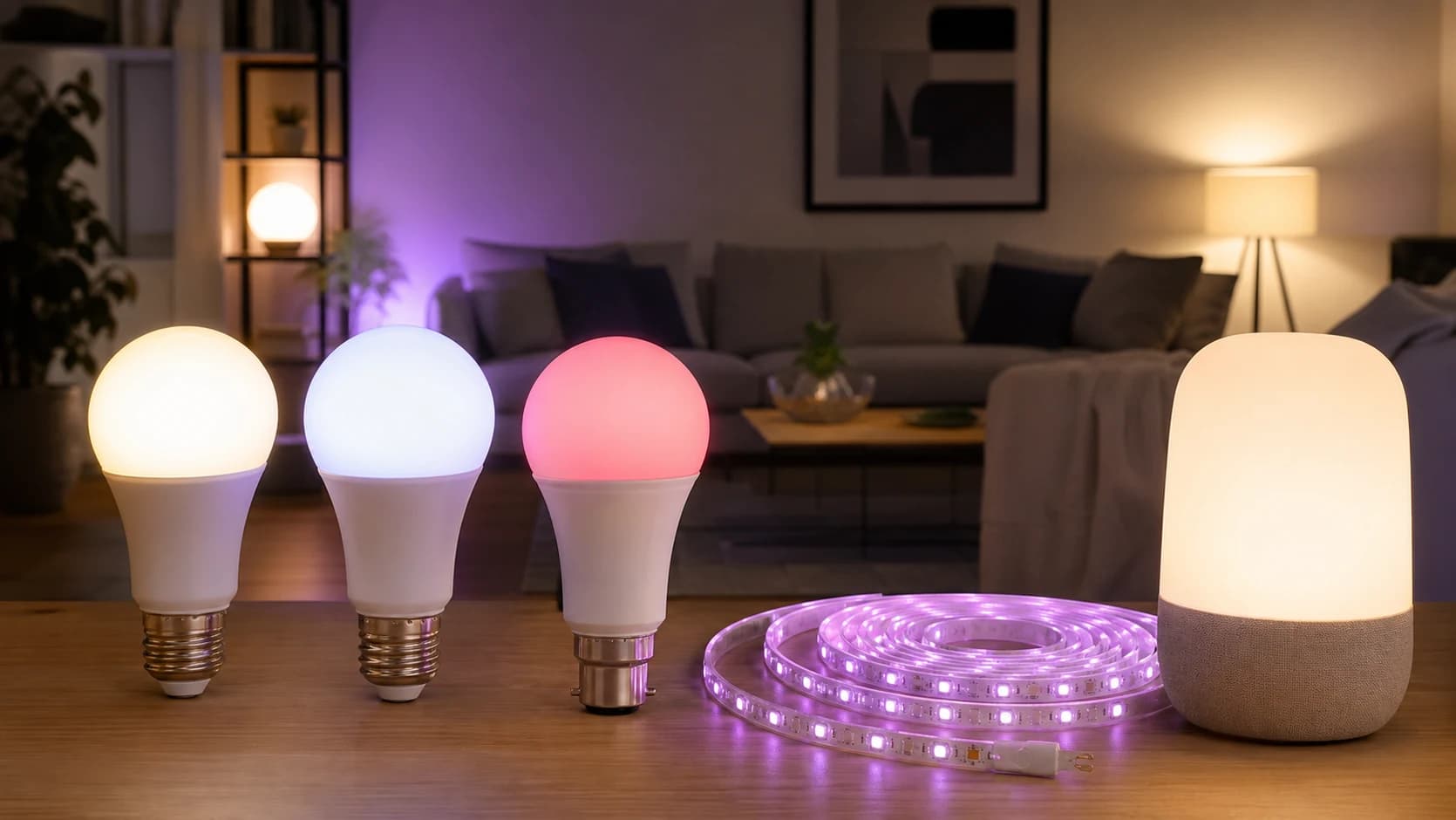
The first time you replace a regular bulb with a smart one, the use case is "lights on when I get home" or "good night, Alexa." That's fine. That's also a small fraction of what smart bulbs are actually good for.
The real reason to buy them shows up six months in. Color temperature that ramps from cool morning light to warm evening light without you touching anything. Wake-up routines that gradually brighten over 30 minutes instead of slamming you awake. Movie-mode lighting that dims the room and pulls accent colors off your TV. A house that's noticeably easier to live in.
The catch is that the smart-bulb category is full of dead ends. Some bulbs need a hub you forgot you bought. Some need an app that hasn't updated since 2022. Some look great in the listing photos and turn out to be flickery, slow, or color-inaccurate. Here's the shortlist that holds up in 2026.
SolderMag Take: hub vs no-hub is the only decision that matters
Almost every other choice in this category is downstream of one question: are you running a hub?
- Hub-based (Hue, IKEA Tradfri): bulbs talk Zigbee or Thread to a small hub, hub talks to your network. More reliable, faster to respond, scales cleanly to 30+ bulbs without congesting Wi-Fi. Costs $40-60 extra upfront for the hub.
- No-hub Wi-Fi (LIFX, Govee, TP-Link Kasa, Wyze): bulbs talk directly to your router. Cheaper to start, simpler setup, but each bulb is its own Wi-Fi client. Most home routers start choking around 25-30 connected smart devices.
If you're putting 1-5 bulbs in your house total, no-hub Wi-Fi is fine. If you're going whole-house (15+), pay the $50 once for a Hue Bridge and never think about it again.
Matter is the third option in 2026. Most current bulbs ship with Matter support; an Apple Home / Google Home / SmartThings hub takes the role of the bridge, and Thread (a Matter-friendly mesh) replaces Zigbee. Practically: if you have an Apple TV 4K or HomePod, those are already hubs. Same for newer Echo devices. Matter is real now and works.
Best smart light bulbs at a glance
- Want the most reliable color smart lighting in the house: Philips Hue White and Color with the Bridge. Boring answer. Correct one.
- Want full color without buying a hub: LIFX Color A19. Best color rendering of any direct-Wi-Fi bulb, slightly more expensive than Govee.
- Bedroom only, simple white-tunable: Philips Hue White Ambiance without the bridge if you only have 1-3 bulbs (Bluetooth-only mode works fine for a small footprint).
- Strip lighting + bulbs in the same ecosystem: Govee. Their entire lighting line uses one app and offers genuinely good music-sync.
- Cheapest reliable option: TP-Link Kasa multipacks. Boring tuneable-white. Reliable. $10-15 each.
What actually matters in a smart bulb
1) Bulb shape and base
Get this wrong and you have a returned bulb in three days.
- A19 / E26 (US standard): the classic teardrop bulb shape with a screw base. Default for most lamps and ceiling sockets. Every product in this guide is available in A19/E26.
- BR30: flood/recessed (downlights). Wider, more diffuse light. Hue, LIFX, and Govee all sell BR30 versions of their flagship bulbs.
- GU10: bayonet/twist-lock spot bulbs (UK + EU + recessed track lighting). Hue and TP-Link sell GU10. Many cheaper brands don't.
- Candelabra (B11/E12): chandelier bulbs. Hue, LIFX, and a handful of others. Lots of cheap options here are flickery; stick to the named brands.
Match the bulb to the existing fixture. Don't try to swap shapes — it always looks wrong.
2) Color vs tunable white vs warm-only
The three tiers, in order of price:
- Warm-only (2700K fixed): cheap, reliable, on-or-off plus dimming. Fine for laundry rooms, hallways, and places you don't care about. $5-15.
- Tunable white (2200-6500K): dim-warm to bright-cool, no color. The right choice for offices, kitchens, and bedrooms where you want circadian-friendly lighting. $15-30.
- Full color (RGB + tunable white): every color plus tunable white. The right choice for living rooms, accent lights, and any room where you want movie-mode or holiday lighting. $30-60.
Don't pay for full color in rooms where you'd never use it. The number of households where every bulb is color is fewer than the marketing suggests.
3) Lumens
Marketing loves to compare "60W equivalent" claims. The actual measure is lumens.
- 800 lumens: standard A19 brightness. Hue White and Color, LIFX A19, most flagship bulbs.
- 600 lumens: budget tier. Govee A19, TP-Link Kasa.
- 1100+ lumens: brighter than standard. Useful for kitchens or any room where you'd previously want a 75-100W incandescent.
A weaker bulb in a darker room makes the whole space feel dim. Don't bottom out on lumens to save $5.
4) CRI (color rendering)
CRI is how accurately a bulb shows real-world color compared to daylight.
- CRI 95+: looks natural, doesn't make your skin look weird. Hue, LIFX, premium tier.
- CRI 90: noticeably below natural. Govee, TP-Link Kasa. Acceptable for general lighting.
- CRI under 85: avoid. The light will make food look gross and your face look unhealthy on every video call.
If a listing doesn't state CRI, assume it's bad.
5) Latency and reliability
The thing that makes you stop using a smart bulb is delay. Voice command → bulb responds 4 seconds later → you flip the wall switch instead. The bulb becomes theatre.
- Hub-based (Hue, IKEA, Matter+Thread): under 500ms response. Reliable.
- Wi-Fi direct (LIFX, Govee, TP-Link): 1-3 second response, depending on router and cloud round-trip.
- Bluetooth-only: 1-2 second response when in range, fails entirely when not.
Latency matters most when you're standing next to the switch. Less so for routines.
6) Ecosystem and Matter
In 2026, Matter is the new normal:
- Hue Bridge: works with Apple Home, Google Home, Alexa, SmartThings, and Matter natively.
- LIFX: native Apple Home + Google Home + Alexa + Matter.
- Govee: Alexa + Google Home, partial Apple Home (newer models), Matter rolling out.
- TP-Link Kasa: Alexa + Google Home, no Apple Home, Matter on select models.
If you specifically need HomeKit, the answer is Hue or LIFX. If you only use Alexa or Google, anything works.
The picks
Best overall: Philips Hue White and Color Ambiance
Who it's for: anyone who's planning more than 5 smart bulbs in the house, or who values reliability over saving the price of a hub.
The Hue ecosystem is the reference smart-lighting platform and has been since 2014. Bulbs are CRI 95, full 16 million colors, dimmable to 0.1%, sub-200ms response from any major voice assistant. The Bridge handles up to 50 bulbs, scales to a whole house, and supports Apple Home, Google Home, Alexa, SmartThings, and Matter all natively.
The starter kit pricing makes this make sense. A 3-bulb A19 kit with the Bridge is the entry point; subsequent bulbs are $40-50 each (cheaper in multipacks). Once the Bridge is in place, every Hue accessory you add (motion sensors, dimmer switches, light strips, outdoor spots) just works.
The honest catch: Hue bulbs are 2-3x the price of Govee or TP-Link equivalents per bulb. The reliability gap is real, but you pay for it.
Philips Hue White and Color Ambiance Starter Kit (3 bulbs + Bridge)
Why it works
- Most reliable smart-lighting platform on the market
- CRI 95+, dimmable to 0.1%, sub-200ms response
- Bridge supports Apple Home, Google Home, Alexa, SmartThings, Matter
Main trade-off
- Bulbs are 2-3x the price of direct-Wi-Fi competitors
- Bridge required for full feature set; Bluetooth-only mode is feature-limited
Best no-hub: LIFX Color A19
Who it's for: people who want full-color smart lighting in 1-8 bulbs without buying a hub.
LIFX makes the highest-quality direct-Wi-Fi smart bulbs in 2026. CRI 90+, 1100 lumens (brighter than Hue), 16 million colors, and the best color accuracy in the no-hub tier — LIFX bulbs actually produce a saturated red and a clean blue, not the muddy approximations cheap competitors give you.
The trade-off is each bulb is its own Wi-Fi client. Up to about 8 bulbs is fine on most routers. Beyond that, the Wi-Fi congestion starts to matter and you should be on a hub-based system anyway.
LIFX also pioneered the Matter rollout in 2024 and now supports Apple Home, Google Home, Alexa, and Matter natively. No hub required for any of them.
LIFX Color A19 Smart Bulb
Why it works
- Best color accuracy in the no-hub category
- 1100 lumens — brighter than Hue or competitors
- Native Apple Home, Google Home, Alexa, Matter — no hub
Main trade-off
- Each bulb is a Wi-Fi client; not ideal past ~8 bulbs
- App is functional but less polished than Hue's
Best value full-color: Govee A19 RGBWW
Who it's for: someone who wants color smart bulbs at half the LIFX price and accepts a small step down in build quality.
Govee A19 RGBWW is the value play in full-color smart bulbs. 800 lumens, full RGB + tunable white, native Alexa + Google + Matter (Apple Home support is partial), and Govee's app is the standout feature: best music-sync of any smart-lighting brand, easiest scene creator, and a community library of pre-built scenes you can one-tap apply.
The build quality is a step below Hue and LIFX. Some users report bulb failures in the 18-24 month range, especially on hot ceiling fixtures. Govee's warranty replaces them but it's a hassle.
For accent lighting, lamps, and any room where you'd want to dramatically change the color often, Govee at $15 a bulb is the right answer. For ceiling lights you never want to fail, spend the extra on Hue.
Govee A19 RGBWW Smart Bulb
Why it works
- Full RGB + tunable white at half the LIFX price
- Best music-sync app in any smart-bulb ecosystem
- Native Alexa, Google Home, Matter; partial HomeKit
Main trade-off
- Build quality below Hue/LIFX; some reports of 18-24 month failures
- Apple Home support is partial, not first-class
Best budget multipack: TP-Link Kasa Smart Bulb 4-Pack
Who it's for: people who want simple tunable-white smart bulbs in places color doesn't matter (kitchens, hallways, laundry rooms, garages).
The Kasa multipack is the boring answer to "I just want my regular bulbs to be controllable." Tunable white only (2700-6500K, no RGB), 800 lumens, native Alexa and Google Home, and reliable. Each bulb is around $10 in a 4-pack — a fraction of the Hue equivalent.
No hub needed, no music sync, no fancy app features. Just smart on/off, scheduling, and color-temperature control. Which, honestly, is what 70% of smart-bulb use is.
If you're trying smart bulbs for the first time, a 4-pack of these is the right way to evaluate whether the category is for you. If you love them, upgrade to color in your living room later.
TP-Link Kasa Smart Tunable White Bulb (4-Pack)
Why it works
- Around $10 per bulb in 4-packs — fraction of Hue/LIFX cost
- Reliable; TP-Link's networking heritage shows
- Tunable 2700-6500K covers most circadian needs
Main trade-off
- No color, only tunable white
- No Apple Home support
Setup tips that matter
- Wire bulbs directly to a "dumb" switch left in the on position. Smart bulbs need power to receive commands. A wall switch turning them off makes them unreachable. Either leave the switch on permanently, replace it with a Lutron Aurora dimmer (works with Hue), or use Hue Smart Buttons.
- Don't use smart bulbs in fixtures with traditional dimmers. They flicker, hum, and die early. Replace the dimmer with a smart switch instead, or use a smart bulb on a non-dimmer circuit.
- Group bulbs by room in the app from day one. Voice commands work much better with named rooms ("turn off bedroom") than individual bulbs.
- Run the bulb's firmware update before mounting. Easier to do at table-height than on a ladder. All four ecosystems push updates over the air; check after the first install.
- Heat is the long-term killer. Enclosed fixtures (sealed glass, recessed cans without ventilation) shorten bulb life from 25,000 hours to 5,000. Use bulbs marked "for enclosed fixtures" in those spots, or pick a different fixture.
Buying checklist
- How many bulbs total? Fewer than 5: no hub. More than 15: hub or Matter.
- Color or tunable white? Honestly. Most rooms don't need color.
- Ecosystem? Apple Home → Hue or LIFX. Alexa-only → anything works. Google → most options work, Hue is most reliable.
- Bulb shape? Match the fixture. A19, BR30, GU10, candelabra all have different vendors.
- Will I expand? Hue scales cleanly to 50. Wi-Fi-only systems hit walls past 25.
Red flags to avoid
- No CRI on the spec page. Almost always means bad color rendering. Skip.
- "Bluetooth-only" labeled as a feature for whole-home use. Bluetooth bulbs lose connection past 30 ft. Fine for a single bedroom; useless for whole-house routines.
- No-name "RGBWW WiFi smart bulbs" multipacks under $5/bulb. Cheap LEDs, dim, flickery, app dies in a year.
- App-only control (no Alexa/Google/Apple). Vendor dies, your bulbs become dumb bulbs.
- Color bulbs with only 16 colors instead of 16 million. That spec language usually means PWM-flicker bulbs that look terrible on camera and induce headaches.
Smart bulbs vs alternatives
Smart bulbs vs smart switches: smart switches (Lutron Caseta, TP-Link Kasa) replace the wall switch instead of the bulb. Better for high-traffic rooms because anyone walking in just flips the switch like normal. Smart bulbs better for individual lamp control and color/temperature change.
Smart bulbs vs smart plugs + dumb bulbs: smart plugs let you on/off control any lamp, costs ~$10/lamp, no color or temperature control. Right answer for outdoor string lights, fans, and lamps you only need on/off control for.
Smart bulbs vs Hue Lightstrip / Govee strips: strip lighting goes where bulbs can't (under cabinets, behind TVs, under desks). Different use case; same ecosystems support both.
Sources and methodology
- Manufacturer datasheets for lumens, CRI, color temperature range, and protocol support (Zigbee, Wi-Fi, Thread, Matter).
- Long-running smart-home community feedback from r/Hue, r/Govee, r/homeautomation on bulb longevity past 24 months.
- Independent CRI measurements from photographer/videographer forums for working backlight scenarios.
- Comparative review of current specifications, documented fixture limits, and independent long-term evaluations. SolderMag has not completed a matched six-month test of these bulbs.
Related reading
- Best Smart Plugs (2026): the cheaper smart-home entry point most people start with.
- Best Smart Speakers (2026): the voice front-end most people control bulbs with.
- Best Smart Thermostats (2026): pairs naturally — both move on the same Home/Away routines.
- Complete Smart Home Setup (2026): full smart-home build at different budget levels.