Best Air Quality Monitors (2026): Four Research-Based Picks
Four indoor air quality monitors compared by sensors, display, connectivity, power, and the situations each model suits.
Research-based buying guide
Recommendations are checked against product documentation, availability, comparative evidence, and clearly disclosed hands-on work where it exists.
Quick picks
The short answer, with the trade-off
Best overall
Airthings View Plus
Includes radon (most consumer monitors don't)
Trade-off: Display shows indicator dots, not numbers
Best for HomeKit / Alexa
Awair Element
Best for accuracy
IQAir AirVisual Pro

Best value
Temtop M2000C 2nd Generation
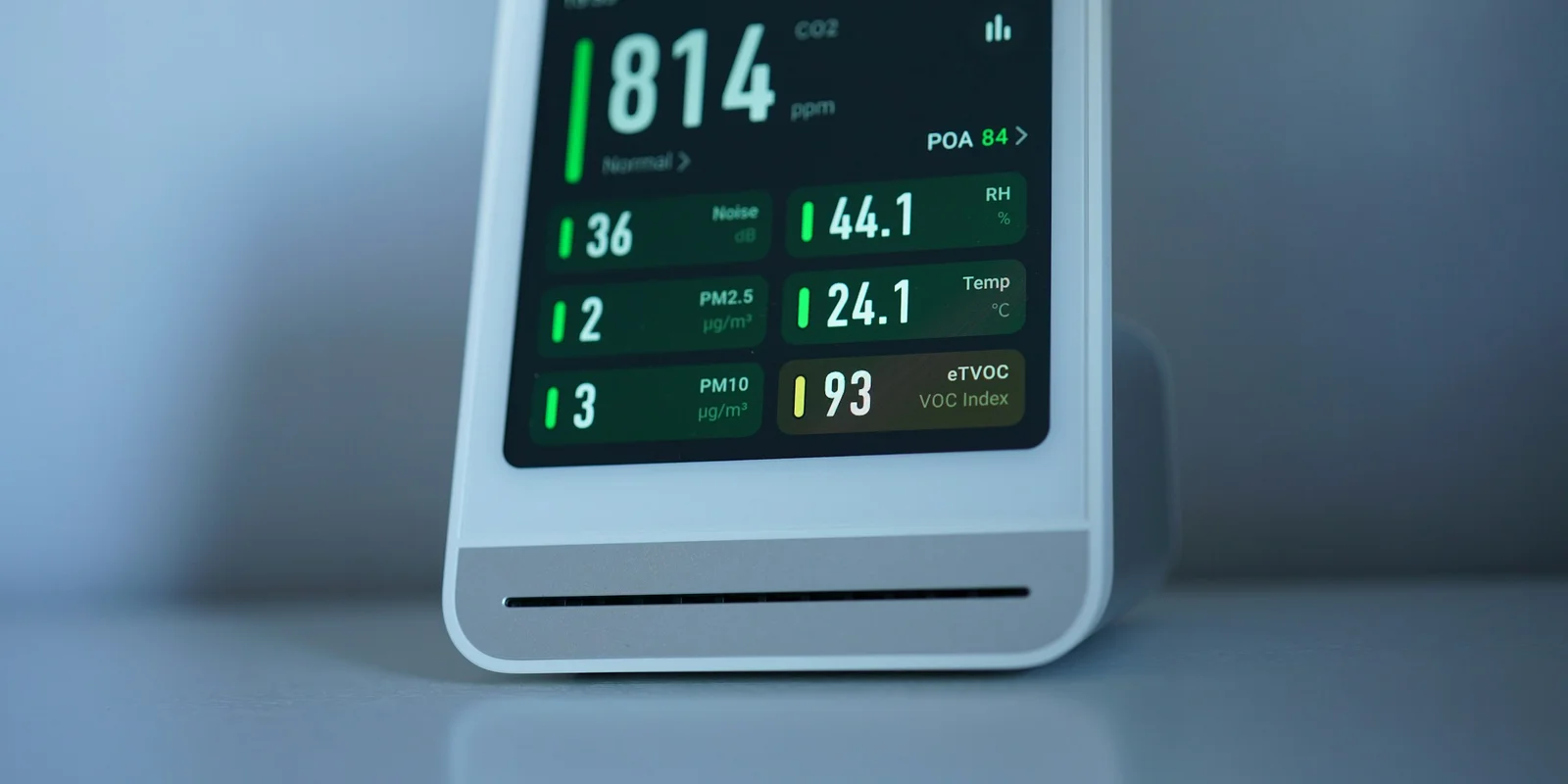
Indoor conditions can change quickly with cooking, smoke, ventilation, cleaning products, and occupancy. A monitor can help you identify which reading changed and when; it does not diagnose a health problem or replace a calibrated professional instrument.
You can't fix what you don't measure. A useful air quality monitor shows which pollutant changed and when; compatible smart-home models can also trigger a response automatically.
This is a research-based shortlist built from manufacturer sensor specifications, published environmental guidance, product support material, and comparative analysis. We have not completed reference-instrument calibration or six-month home deployment testing of these monitors.
SolderMag Take: start with PM2.5 and CO2
Air quality monitors throw a lot of acronyms at you. The honest hierarchy of what actually matters in a normal home:
- PM2.5 (particulate matter under 2.5 microns): can rise with cooking, candles, wildfire smoke, and other combustion sources. Use current public-health guidance for interpretation rather than treating a consumer sensor as a medical device.
- CO2: a practical proxy for how well an occupied room is ventilated. A high reading tells you to investigate airflow; it does not identify other pollutants.
- VOCs (volatile organic compounds): paint, glue, cleaning products, new furniture off-gassing, candles. Worth knowing about for the first 6 months in a new home or after renovations. Less actionable day-to-day.
- Radon (in some homes): radioactive gas from soil, accumulates in basements. Long-term exposure is a real lung cancer risk. Worth a one-time test in any home with a basement; ongoing monitoring matters in known radon-prone regions.
- Humidity and temperature: nice to have, not the reason to buy a monitor.
- Formaldehyde: specific to new furniture and certain manufactured woods. Useful in narrow scenarios.
If you're in a city with wildfire smoke or you cook a lot, prioritize PM2.5. If your bedroom always feels stale, prioritize CO2. If you have a basement, prioritize radon. The rest is nice-to-have.
Best air quality monitors at a glance
- Want one device that measures everything (including radon): Airthings View Plus. Six-sensor flagship, battery powered, integrates with everything.
- HomeKit / Alexa native, prefer a beautiful device on the desk: Awair Element. Limited sensors, best industrial design.
- Pollution-aware city dweller, want professional-grade accuracy: IQAir AirVisual Pro. Lab-calibrated PM2.5 sensor, large display.
- Don't want subscriptions or smart-home integration, just a number: Temtop M2000C. Standalone display, no app required.
What actually matters in an air quality monitor
1) Sensor accuracy and calibration
This is the spec nobody markets but everyone should care about.
- IQAir AirVisual Pro: factory-calibrated against reference equipment. The lab-grade option in this price tier.
- Airthings View Plus: NDIR (non-dispersive infrared) CO2 sensor (the gold standard). PM2.5 is laser-based, accurate within roughly 10%.
- Awair Element: NDIR CO2, capable but slightly less accurate than Airthings on PM2.5.
- Temtop M2000C: laser PM2.5, decent accuracy. Cheap CO2 sensor (NDIR but less precise).
Cheap PM2.5 sensors (the kind in $50 monitors) drift by 30 to 50% over time. The flagships above stay accurate within 10 to 15% over 2 to 3 years.
2) What it actually measures
The full sensor matrix matters. Here's what each model has:
- Airthings View Plus: PM2.5, PM1, CO2, VOC, radon, humidity, temperature, atmospheric pressure. Most complete in one device.
- Awair Element: PM2.5, CO2, VOC, humidity, temperature. No radon, no PM1 differentiation.
- IQAir AirVisual Pro: PM2.5, CO2, humidity, temperature. Best accuracy on PM2.5 but missing VOC and radon.
- Temtop M2000C 2nd Generation: PM2.5, PM10, CO2, humidity, and temperature, plus local data export. A useful standalone combination for the price.
If you want radon, the View Plus is the only option in this list. If you want local CSV data export without relying on an app, the Temtop M2000C 2nd Generation is the relevant pick. None of these recommendations should be bought specifically for formaldehyde measurement.
3) Smart-home and HVAC integration
The biggest jump in usefulness comes when the monitor triggers other devices automatically.
- Airthings View Plus: integrates with Apple Home (with Hub), Google Home, IFTTT, Alexa, and more. Most automation-friendly.
- Awair Element: native Apple Home and Alexa. Cleanest HomeKit integration in the category.
- IQAir AirVisual Pro: app only. No native smart-home integration.
- Temtop M2000C: standalone display. No app, no smart-home.
The killer use case: PM2.5 spike triggers your air purifier to high speed. CO2 high triggers an HVAC fresh-air mode. This is where smart-home pays for itself.
4) Display vs app vs both
- App-only: data lives in the phone. Easy to track over time but you have to look at it. Good for nerds.
- Display + app: you can see at a glance whether the air is bad right now, plus historical data in the app. Best of both worlds.
- Display only: number on the device, simple. Good for people who don't want another smart-home app.
The View Plus and Awair Element have small displays plus app data. The IQAir has a large always-on display plus app. The Temtop is display-only.
For most homes, having an at-a-glance display in the bedroom or kitchen catches problems faster than checking an app.
5) Power: battery vs plugged
- Airthings View Plus: 2 AA batteries, 6 to 12 month life. Mount anywhere.
- Awair Element: USB-powered, must be plugged in.
- IQAir AirVisual Pro: USB-powered.
- Temtop M2000C 2nd Generation: built-in rechargeable battery; charge and data export use the supplied USB connection.
Battery-powered monitors win for placement flexibility (mount in a basement for radon, in a bedroom away from outlets, etc.). Plugged-in monitors win for set-and-forget operation.
6) Subscription and data ownership
The unspoken catch with some monitors is data lockup. Worth checking:
- Airthings: free tier is generous, data is yours, exports to CSV.
- Awair: free, data is yours.
- IQAir: free, data is yours, professional dashboard available for a fee.
- Temtop: standalone, no subscription, no app.
None of the flagships in this list lock data behind subscriptions. The cheap no-name monitors often do.
The picks
Best overall: Airthings View Plus
Who it's for: anyone who wants the most complete air quality picture in one device, especially homes with basements or where radon matters.
The View Plus is the only popular consumer monitor that includes radon, and that alone makes it the right pick for any home with a basement or anyone in a radon-prone region (much of the US Midwest, parts of Europe, parts of Australia). Beyond radon, it tracks PM2.5, PM1, CO2, VOC, humidity, temperature, and atmospheric pressure: more than any competitor.
Battery-powered with 2 AAs, lasting 6 to 12 months. Mounts on a wall or sits on a shelf. Pairs with the Airthings Hub for cellular-backup data and tighter smart-home integration. The companion app is genuinely good: clean charts, clear "what's wrong now" alerts, and IFTTT triggers for automation.
The honest catches: the display is small (just three indicator dots, not numbers), and the radon reading takes 7 days to stabilize after first install. For long-term monitoring, both are non-issues.
Airthings View Plus
Why it works
- Includes radon (most consumer monitors don't)
- Battery powered, mount anywhere
- Most complete sensor suite in this price tier
Main trade-off
- Display shows indicator dots, not numbers
- Radon reading needs 7 days to stabilize after install
Best for HomeKit / Alexa: Awair Element
Who it's for: Apple Home or Alexa households who want a beautiful device that fits the desk or kitchen counter and integrates cleanly with existing smart-home automations.
The Awair Element is the design-forward choice. Walnut-veneer face, soft LED dot-matrix display that shows the overall air quality score, and the cleanest Apple Home integration of any monitor on the market. Open the Home app, see the air quality in your bedroom, trigger automations that adjust your thermostat or turn on a purifier.
Sensor coverage is solid (PM2.5, CO2, VOC, humidity, temperature) but missing radon and PM1 differentiation that the Airthings View Plus has. For homes without basements or radon concern, this gap doesn't matter.
The catch: USB-powered, so it needs to be near an outlet. The Awair app is fine but not as polished as Airthings.
Awair Element Indoor Air Quality Monitor
Why it works
- Native Apple Home integration is best in category
- Beautiful walnut-veneer design that fits any room
- PM2.5, CO2, VOC, humidity, temperature sensors
Main trade-off
- No radon or PM1 differentiation
- USB-powered, must be near an outlet
Best for accuracy: IQAir AirVisual Pro
Who it's for: people in wildfire-prone or polluted regions who want professional-grade PM2.5 accuracy and a large always-on display.
The AirVisual Pro is the monitor used by air-quality-conscious city dwellers and journalists covering pollution. Factory-calibrated against reference equipment, lab-grade laser PM2.5 sensor, big always-on color display that shows current numbers and the AQI scale at a glance. The IQAir app overlays your indoor data with outdoor pollution and forecasts so you can decide when to open the windows.
What it doesn't have: VOC, radon, smart-home integration. The trade-off is intentional: the AirVisual Pro is built around being right about PM2.5 above all else.
If you live somewhere where wildfire smoke is a yearly event (US West Coast, parts of Canada, Australia in fire season), the accuracy matters a lot. For everyone else, the Airthings or Awair give you broader coverage with adequate accuracy.
IQAir AirVisual Pro Air Quality Monitor
Why it works
- Factory-calibrated, lab-grade PM2.5 accuracy
- Large always-on color display with AQI scale
- Indoor + outdoor pollution overlay in the app
Main trade-off
- No VOC or radon sensor
- No native smart-home integration
Best value: Temtop M2000C 2nd Generation
Who it's for: people who want hard numbers on a screen without an app, smart-home, or subscription.
The Temtop M2000C 2nd Generation combines PM2.5, PM10, CO2, humidity, and temperature on one device. It has a rechargeable battery, colour display, settable audio alarm, and USB data export without an account requirement. Check the exact current variant before buying because similar Temtop model names can have different sensor sets.
The catch is accuracy. The M2000C is good, not lab-grade. Drift over 2 to 3 years is more noticeable than the IQAir or Airthings flagships. For a kitchen counter or guest bedroom where you want a quick number to react to, it's perfect. For long-term scientific tracking, get the Airthings or IQAir.
The useful extra is local CSV export. That makes it easier to inspect trends without committing the readings to another smart-home account.
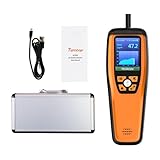
Temtop M2000C 2nd Generation Air Quality Monitor
Why it works
- PM2.5, PM10, CO2, humidity, and temperature on one device
- Built-in rechargeable battery and USB data export
- No app, no account, no subscription
Main trade-off
- More drift than flagships over 2 to 3 years
- No smart-home integration
Setup tips that matter
- Place the monitor in your bedroom first. It's where you spend a third of your life and where bad CO2 buildup is most actionable. Open a window when you wake up and watch the number drop in real time.
- Keep it 1 to 2 metres from the floor. Floor-level readings are biased by dust. Ceiling-level readings miss particulates that settle.
- Don't put it near a window or vent. Direct airflow gives you fresh-air readings, not room readings. Place it in the middle of the space, away from the obvious sources.
- Calibrate after major life events. Renovations, new furniture, post-fire smoke. Restart the device to reset baselines.
- Cross-check on bad days. When the monitor reads PM2.5 above 35, check your local outdoor AQI. If outdoor is fine and indoor is bad, something inside is the source. Most often: cooking, candles, or vacuuming.
Buying checklist
- Do I have a basement or live in a radon zone? Yes, Airthings View Plus is the only option here.
- Apple Home or Alexa household? Yes, Awair Element. No, any of them work.
- Live somewhere with wildfire smoke? Yes, IQAir AirVisual Pro for accuracy.
- Want smart-home automation (purifier triggers, HVAC ventilation)? Yes, Airthings or Awair. No, Temtop is fine.
- Battery or plugged? Battery (mount anywhere), Airthings View Plus. Plugged, others.
Red flags to avoid
- Cheap PM2.5 sensors under $50. Drift is severe. The number you see is not the real number.
- "AQI" only, no specific pollutant numbers. Marketing oversimplification. You can't tell PM2.5 from CO2 from VOC.
- No NDIR CO2 sensor (uses MOX or other cheap sensor). Wildly inaccurate, drifts within months. Look for "NDIR" specifically.
- Subscription required to see history. Some no-name monitors lock 7+ day history behind a paid tier. Skip.
- Standalone monitors with proprietary cables. Always look for USB-C charging.
Air quality monitor vs alternatives
Air quality monitor vs cheap CO2 meter: a $30 CO2 meter shows you one number. A $200 monitor shows you the full picture. If your only concern is bedroom stuffiness, a CO2 meter works. For everything else, the multi-sensor monitors are worth the upgrade.
Air quality monitor vs air purifier with built-in sensor: built-in sensors on cheap purifiers are notoriously bad. Premium purifiers (Dyson, Coway) have decent sensors. Either way, a dedicated monitor is more accurate and lets you decide whether the purifier is actually doing its job. If you are sizing a Blueair unit by smoke CADR, our Blueair 311i Max vs 311i+ Max comparison explains why the plus model has more smoke headroom.
Air quality monitor vs outdoor weather station: different tools. Outdoor stations measure outdoor conditions, indoor monitors measure what you're actually breathing. The difference is sometimes large; both are useful.
Sources and methodology
- Manufacturer specifications for sensor types (NDIR, laser, MOX) and accuracy claims.
- EPA and WHO indoor air quality guidelines for PM2.5, CO2, VOC, and radon thresholds.
- Manufacturer accuracy, sensor, calibration, power, connectivity, and support documentation for the exact models discussed.
- EPA and WHO guidance used only for pollutant context, not as proof that a consumer monitor matches a reference instrument.
- This guide does not claim SolderMag reference-instrument calibration, 30-day side-by-side measurement, or six-month home deployment testing.
Related reading
- Best Air Purifiers (2026): pairs naturally with a monitor for closed-loop air management.
- Blueair 311i Max vs 311i+ Max: smoke CADR and room-size math for a confusing mid-size purifier pair.
- Best Smart Thermostats (2026): some smart thermostats integrate with air quality monitors for fresh-air automation.
- Best Smart Plugs (2026): turn any non-smart purifier into one that responds to air quality data.
- Complete Smart Home Setup (2026): full smart-home build at different budget levels.
As an Amazon Associate I earn from qualifying purchases.