Best Portable Power Stations (2026): EcoFlow, Anker, Bluetti, Jackery Compared Honestly
Portable power stations went from camping accessory to genuine home backup in two years. Here's which one to buy in 2026, with honest notes on capacity, the LiFePO4-vs-NMC question, and the gotchas hidden in 'expandable' battery marketing.
Editorial evidence review
Recommendations are checked against product documentation, availability, comparative evidence, and clearly disclosed hands-on work where it exists.
Quick picks
The short answer, with the trade-offBest for home backup (2kWh+)
EcoFlow DELTA 2 Max
Best for camping & RV
Jackery Explorer 1000 v2
Best small / day-trip
Anker SOLIX C300
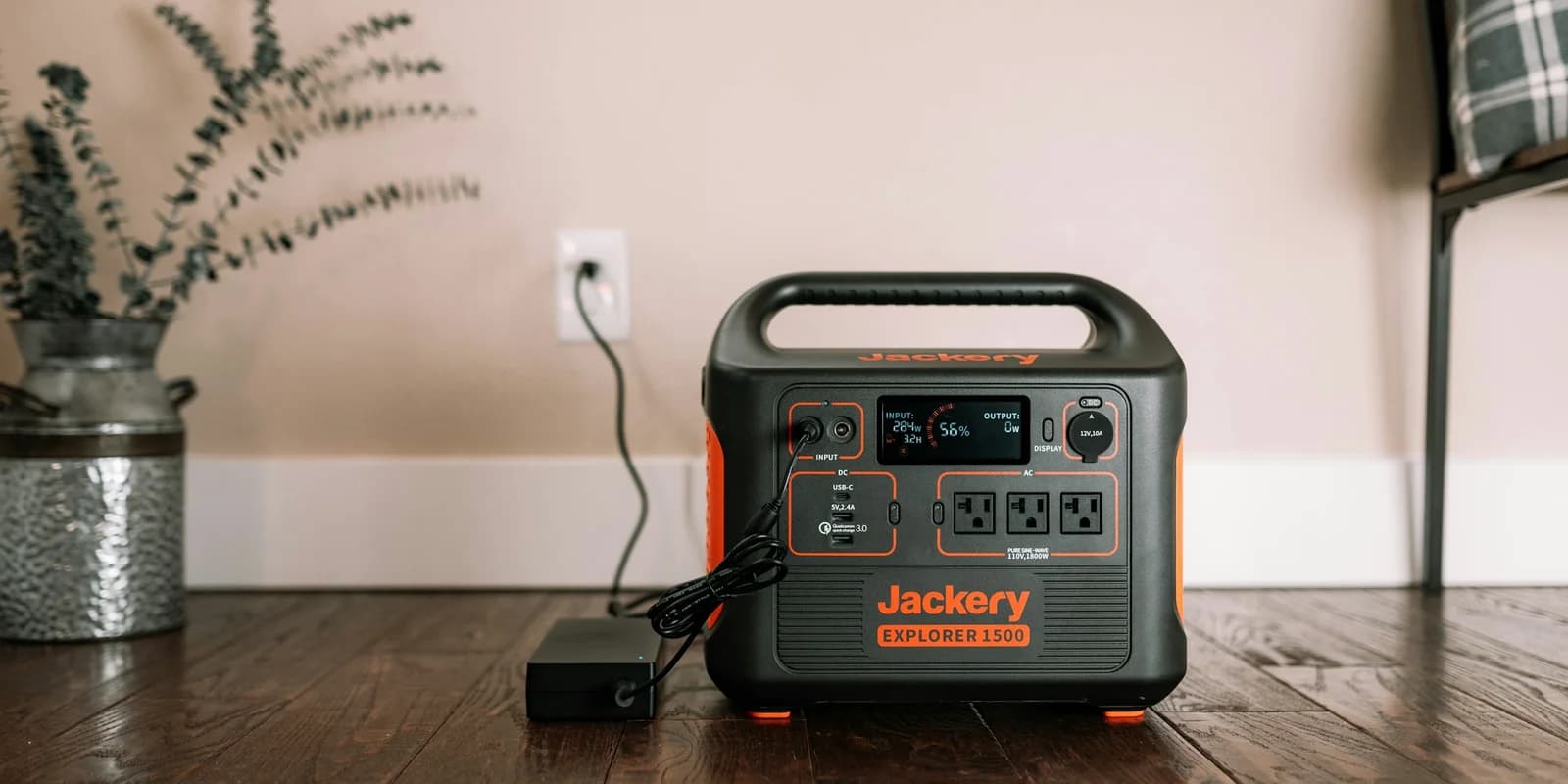
A portable power station in 2026 isn't a camping toy. The right one keeps your fridge, modem, and a few lamps alive through a day-long blackout, charges your laptop and phone for a week off-grid, and powers your whole work-from-anywhere setup at a campsite or job site. Prices dropped. Capacities went up. Battery chemistry quietly switched to something that lasts ten years instead of three. The category got serious.
It also got crowded. Five major brands, four meaningful capacities, two battery chemistries, and a marketing fog of "expandable" claims and watt-hour numbers that don't always mean what you think. Buy the wrong one and you'll learn that 1000Wh on the box is 700Wh in practice, that the inverter sags under load, or that the unit dies after eighteen months because it's still using the old chemistry.
This is the honest version. Which power stations are worth buying in 2026 for which use case, and which marketing words mean "skip."
SolderMag Take: LiFePO4 isn't optional anymore
The single most important spec in 2026 is the battery chemistry, and it's the one most buyers don't check. There are two relevant types:
- LiFePO4 (lithium iron phosphate) — 3000–6000 cycles to 80% capacity. Roughly ten years of daily use. Heavier per watt-hour. Safer thermal behavior. The right choice for a power station you intend to keep.
- NMC (lithium nickel manganese cobalt) — 500–1000 cycles. Two to three years of frequent use. Lighter and cheaper. Higher fire risk under abuse.
A LiFePO4 power station will outlive an NMC one by 5–10x. The NMC unit might be cheaper today, but you'll buy two before the LiFePO4 owner buys their second.
In 2026, every brand worth recommending has moved to LiFePO4 on their main lineup. Anker SOLIX, EcoFlow DELTA 2 and newer, Bluetti AC-series, and Jackery Explorer "v2" units. The exceptions are old SKUs still on shelves at Costco and Amazon. The original Jackery Explorer 1000 (without "v2"), the original EcoFlow DELTA, and most cheap Amazon house brands are still NMC. Don't buy them as 2026 purchases regardless of how good the discount looks.
Best portable power stations at a glance
- One unit that handles 90% of households' needs: Anker SOLIX C1000. 1056Wh of LiFePO4, 1500W inverter, fast charge, $700 area. The one to beat in this class.
- Whole-fridge-plus blackout backup: EcoFlow DELTA 2 Max. 2048Wh, 2400W inverter, expandable to 6kWh. The right home-backup pick if you can swing the price.
- Tent-and-trailer camping: Jackery Explorer 1000 v2. Lightest in class, fastest solar input, and Jackery's app is the least annoying.
- Day trip / laptop kit / car emergency: Anker SOLIX C300. 288Wh, 2.7kg, fits in a tote bag.
- Massive off-grid setup: EcoFlow DELTA Pro 3. 4096Wh base, expandable, 3600W inverter, generator and solar input. The one that actually replaces a generator.
What actually matters in a portable power station
1) The battery chemistry, again, because nothing else matters as much
If you remember one thing from this article: LiFePO4 only. We won't keep repeating it. Every primary recommendation here is LiFePO4. If a model name doesn't say "v2," "Pro," or current generation, check the spec sheet. The chemistry is listed there, and if it's LFP / LiFePO4 you're fine. If it says NMC or just "lithium-ion," you're buying old chemistry.
2) Watt-hours vs usable watt-hours
The capacity printed on the box is the cell capacity, not what reaches your devices. After inverter losses, voltage conversion, and the battery's reserved bottom 10–15%, you typically get 75–85% of the rated capacity in usable AC output.
A "1000Wh" station gives you about 800Wh of real power. A "2048Wh" station gives you about 1700Wh. This isn't a scam, it's physics, but it matters when you're sizing for a real load. A 600W refrigerator running 12 hours a day at a 30% duty cycle pulls about 2.2kWh per day — a 1kWh station won't get you through a full day of fridge backup, no matter what the cycle count says.
Real-world rule: if you want a station to handle 24 hours of fridge-plus-modem-plus-lights backup, plan on 2.5–3kWh of nameplate capacity. Less than that means you're charging from solar during the day or running short.
3) Inverter wattage and surge
The inverter wattage is the maximum continuous AC output. Surge wattage is the brief peak it can handle when a motor starts (fridge compressor, well pump, microwave). Most kitchen appliances pull 3–5x their rated wattage for the first half-second.
Sizing rule:
- Phones, laptops, lights, modem, TV: 300W inverter is plenty.
- Add a fridge (running compressor): 500W continuous, 1000W surge.
- Add a microwave or coffee maker: 1000–1500W continuous.
- Add a window AC unit, induction cooktop, or hair dryer: 1800–2400W continuous.
- Add a sump pump, well pump, or central HVAC: don't. Those need transfer switches and bigger systems than any portable.
The Anker C1000 at 1500W continuous is the sweet spot for most homes. The DELTA 2 Max at 2400W handles essentially everything except whole-house heavy loads.
4) Charging speed (AC and solar)
The dirty secret of older power stations was that they took 8–10 hours to recharge from a wall outlet. In 2026, the leading brands fast-charge:
- Anker SOLIX C1000: 0–80% in 58 minutes from AC.
- EcoFlow DELTA 2 Max: 0–80% in 43 minutes.
- Jackery Explorer 1000 v2: 0–100% in 60 minutes.
Solar input matters if you're planning extended off-grid use. The leading 2026 models accept 400–1000W of solar input, which means a 200W panel actually charges the battery in usable time:
- Anker C1000: up to 600W solar.
- EcoFlow DELTA 2 Max: up to 1000W solar (huge).
- Jackery 1000 v2: up to 400W solar.
- Bluetti AC180: up to 500W solar.
If you want true off-grid capability, the EcoFlow's solar headroom matters; you can replenish the battery with two 400W panels in a few hours of sun.
5) Expandability
Most modern power stations accept add-on batteries from the same brand. This is the single best feature added to the category in the last three years, because it lets you start with one unit and grow into a full home-backup system without replacing anything.
- EcoFlow DELTA 2 Max: expandable to 6144Wh with two extra batteries.
- EcoFlow DELTA Pro 3: expandable to 36kWh with chained batteries (genuinely whole-home territory).
- Anker SOLIX C1000: expandable with the BP1000 or BP1000K to 2112Wh.
- Bluetti AC200L: expandable with B210/B300/B500.
- Jackery 1000 v2: not expandable (downside).
If you might ever want more capacity than you're buying today, choose a model with a clear expansion path. The cost per Wh of an add-on battery is usually 30–40% lower than buying a second standalone unit.
6) Cycle life and warranty
LiFePO4 cells are rated to 3000–6000 cycles to 80% capacity. The honest brands warranty their stations for 5 years. Look for that. Anker, EcoFlow, Bluetti, and current-gen Jackery all warranty 5 years on their LiFePO4 lineup. House-brand Amazon stations warranty 1–2 years, which is a tell.
The picks, in detail
Best overall: Anker SOLIX C1000
This is the power station we recommend to most households. 1056Wh of LiFePO4 (real capacity around 850Wh), 1500W continuous inverter (2000W surge), a fast charger that hits 80% in under an hour, and Anker's UPS function that switches over in under 20ms when the wall power dies.
The C1000 sits in the right capacity slot for the most common use cases: a long blackout (8–12 hours of fridge plus essentials), a long weekend of camping (laptop plus phones plus a fan), or a job-site kit (power tools plus charging). It's heavy at 12.9kg but has a real handle and rolls if you put it on a furniture dolly.
The expansion option matters. If you start with the C1000 and add the BP1000K later, you double the capacity for less than the price of a second C1000.
The honest weakness: the user interface on the unit itself is good, but Anker's app is mediocre. You can update firmware and check capacity. You can't deeply customize charge rates or schedule charging from solar. EcoFlow's app is better; if you obsess over the app experience, look there.
Best home backup: EcoFlow DELTA 2 Max
The DELTA 2 Max is the right pick when "long blackout" means more than a single day. 2048Wh of LiFePO4 (real capacity around 1700Wh), a 2400W inverter that handles a window AC or microwave, and the option to chain two extra batteries up to 6144Wh.
EcoFlow's software is the best in the category. The app actually works, lets you schedule charging from solar versus AC, throttles charge speed if you want longer cell life, and shows real-time consumption per AC outlet. The sub-30ms UPS switchover keeps a desktop PC running through brownouts.
It's expensive. List is around $1900, and a 6kWh expanded setup with two add-on batteries lands at $4,000+. For that money you're approaching whole-home solar territory, where a permanent installation might be a better answer. The DELTA 2 Max wins when you want serious capacity without contractors, permits, or roof penetrations.
Best for camping & RV: Jackery Explorer 1000 v2
Jackery is what the Toyota Corolla is to cars: not the most exciting, not the cheapest, but reliable and easy to live with. The Explorer 1000 v2 finally moves Jackery to LiFePO4 (the original Explorer 1000 and 1500 are still NMC and on shelves; avoid). 1070Wh real capacity, 1500W inverter, 60-minute AC fast charge, 11.5kg.
Two reasons it wins for camping. First, it's the lightest unit in this class — 1.4kg less than the Anker C1000. Second, the form factor with the integrated handle makes it the easiest to carry in and out of an RV or tent. The pure-sine inverter is genuine and the unit handles fridges and CPAPs without complaint.
It is not expandable, which is the meaningful trade. If you want camping today and home-backup later, buy the Anker. If your use case is firmly "weekend trips and emergencies," the Jackery is the friendliest unit in the class.
Best small/day-trip: Anker SOLIX C300
288Wh of LiFePO4, 300W continuous inverter (600W surge), USB-C PD that can output 140W to a laptop, and a 2.7kg form factor that's smaller than a hardcover book. This is the unit that actually makes sense in a backpack or a car trunk.
What it powers: phones for a week, a laptop for two full work days, a CPAP for one full night, a tablet for two weeks of light use, a Starlink Mini for an evening off-grid. What it doesn't power: a fridge (technically can, briefly, not worth it), anything with a heating element, anything with a motor.
This is the second power station to buy after a 1000Wh unit. It goes in the car, the camping bag, the office. It is also the right first power station for someone who wants USB-C charging headquarters without the size and price of a 1kWh unit.
Best big setup: EcoFlow DELTA Pro 3
4096Wh base, 3600W continuous inverter (7200W surge), expandable to 36kWh, supports 240V output for clothes dryers and EV charging at low speed, accepts up to 2600W of solar input. This is no longer "portable" in the sense that you carry it; it has wheels for a reason and weighs 50kg. It is also the unit that genuinely replaces a small gas generator.
For the right use case (off-grid cabin, RV with serious power needs, whole-home outage backup short of full solar) this is the unit. For most homes it's overkill, and the spend is closer to a permanent solar install than a portable accessory.
What we'd skip
Original Jackery Explorer 1000 / 1500 (without v2 or Pro) — still NMC chemistry, 500-cycle batteries. They look identical to the v2 in stock photos. Check the SKU before buying.
Original EcoFlow DELTA / RIVER (without 2 or Pro) — same story. Old chemistry, shorter warranty, end-of-life.
Amazon house-brand 1000Wh units under $400 — almost universally NMC, often with overstated capacity, generally with no real warranty pathway. The "premium tax" on Anker / EcoFlow / Bluetti is real and it's worth paying for cells that last a decade.
"Solar generator kits" with included 100W panels — bundle deals usually pair a good unit with a mediocre 100W folding panel that puts out 60W in real conditions. Buy the station alone, then buy a single 200–400W panel from a solar specialist. You'll get more solar input for similar money.
Inverter generators bundled with batteries — different category. If you specifically need long off-grid runtime (days, not hours) and have access to fuel, a Honda EU2200i or similar is still the right answer; a power station is not.
A note on UPS function
Anker, EcoFlow, and Bluetti all market a UPS function on their main 1kWh+ units. The headline number (sub-30ms switchover) is genuine and works for most home electronics, including modern desktop PCs. The caveats:
- A real desktop UPS (CyberPower, APC) switches over in under 4ms and is purpose-built for this. If you have a workstation that absolutely cannot drop a single line cycle, the dedicated UPS is the right answer.
- Some sensitive medical equipment specifies a "true online" UPS, not the line-interactive type. Power stations are not online UPS. Check the equipment spec.
- The pass-through switchover stresses the inverter every time. It's fine occasionally; if you're using the station as a 24/7 UPS for a single device, get a dedicated UPS.
For most "keep the modem and a couple of computers running through brownouts" use cases, the built-in UPS function is genuinely useful and a real upgrade over plugging into the wall. If you are deciding whether this category replaces a desk UPS, read our portable power station vs UPS guide before buying.
The bottom line
Buy the Anker SOLIX C1000 if you want one power station that handles 90% of households' real needs: blackouts, camping, work-from-anywhere, occasional power tools. It's the unit with the best balance of capacity, inverter, charging speed, expansion, and price.
Buy the EcoFlow DELTA 2 Max if you specifically want a real home-backup system that can grow to 6kWh, you'll use the better software, and you accept the price.
Buy the Jackery Explorer 1000 v2 if your primary use case is camping or RV, weight matters more than expansion, and you want the simplest unit to live with.
Buy the Anker SOLIX C300 as the small one that goes in the car or the daypack, regardless of which big one you own.
Skip anything older than 2024, anything with NMC chemistry, anything from a brand with a 1-year warranty. The category matured to the point where the right answer at every price point is clear, and the trap models are easy to spot.