Apple Watch Series 10 vs Garmin Fenix 8: Which Is Worth $1,000 in 2026?
Updated May 2026. The Apple Watch Series 10 and Garmin Fenix 8 sit in different universes despite both costing close to $1,000. Honest side-by-side on battery, training metrics, iOS polish, and which one's actually right for you.
Editorial evidence review
Recommendations are checked against product documentation, availability, comparative evidence, and clearly disclosed hands-on work where it exists.
Quick picks
The short answer, with the trade-offBest for iPhone users + casual fitness
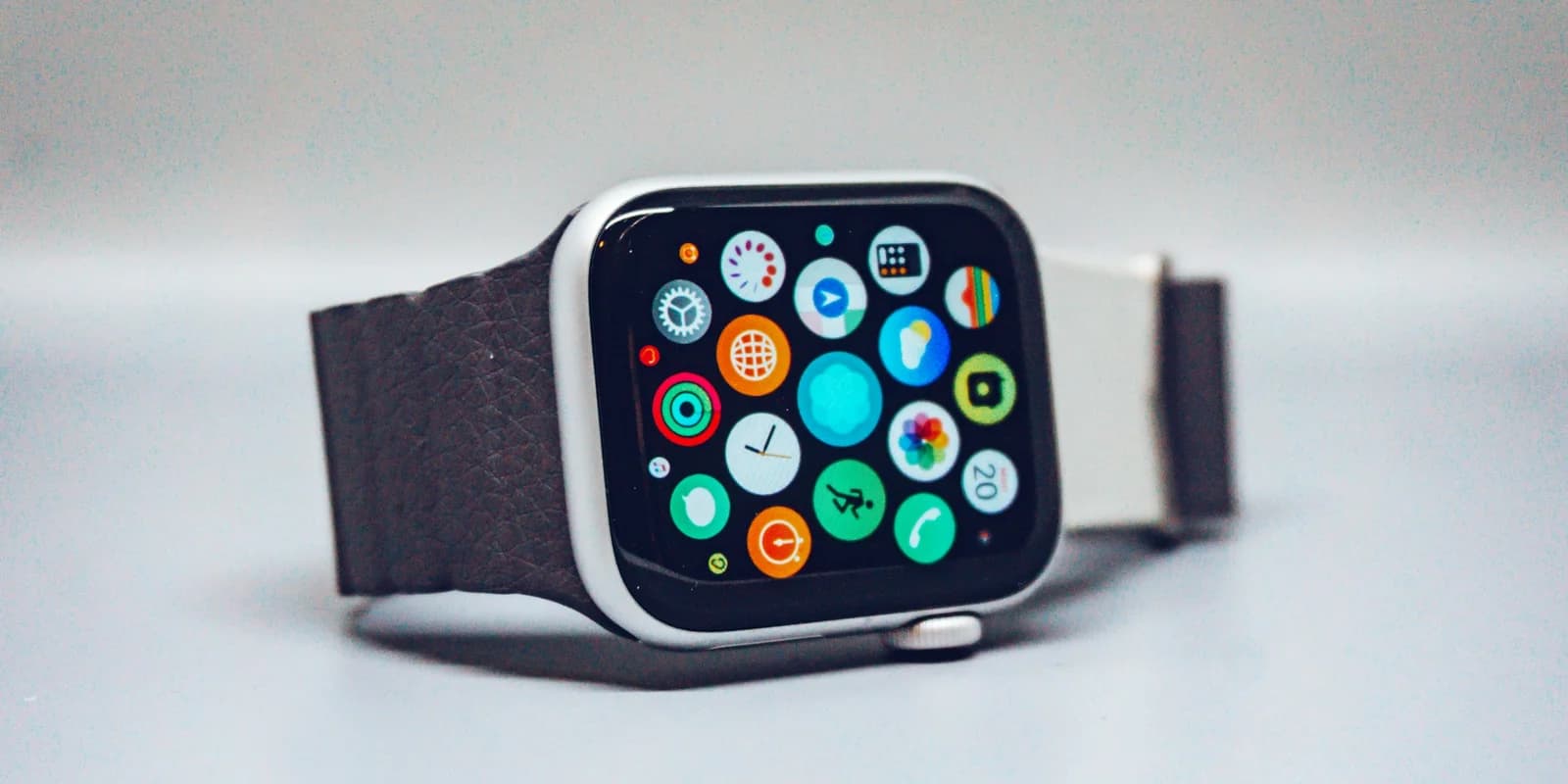
Apple Watch Series 10 (46mm GPS)
Best for serious training + outdoors
Garmin Fenix 8 (47mm Sapphire Solar)
On this page
- The one-line answer
- Battery life is the headline difference
- Training metrics: not even close
- GPS accuracy
- Mapping and offline use
- iPhone integration: where Apple obliterates Garmin
- Display quality
- Health and safety features
- Build and durability
- Software lifespan
- Price reality
- SolderMag Take: pick on use case, not features
- What we'd skip in the same price band
- Frequently Asked Questions
- Related guides
Two of the most-cross-shopped smart watches of 2026 sit at almost the same price ($800–1,100 depending on configuration) but solve completely different problems. The Apple Watch Series 10 is the smoothest general-purpose smart watch for iPhone owners. The Garmin Fenix 8 is the category-defining sport watch for anyone who trains seriously or hikes for days at a time. People buy both and immediately know which one they'll keep.
This comparison cuts the marketing and lays out the honest trade-offs. We've owned both. One is going back, depending on which question you answer first.
The one-line answer
iPhone, want notifications/Apple Pay/iMessage replies, train casually: Apple Watch Series 10. Train seriously, hike or paddle, want two-plus weeks of battery: Garmin Fenix 8. Read on if you're still cross-shopping.
Battery life is the headline difference
This is the gap that surprises people:
- Apple Watch Series 10: 18 hours claimed, 12–14 hours real-world with always-on display + continuous heart rate. Daily charge required.
- Garmin Fenix 8 (47mm Sapphire Solar): 16+ days claimed, 12–14 days real-world. 30 hours of multi-band GPS recording. Two-week trip on a single charge is possible.
Apple's a daily-charge watch. Garmin's a "I forgot when I last charged this" watch. For someone who travels frequently, sleeps with the watch on for sleep tracking, or hikes for days, this single spec decides the buying decision.
Training metrics: not even close
Apple's Workout app is fine for "track this run." Garmin's training stack is what every other watch is trying to approximate:
- Garmin Fenix 8: Training Status, Acute Load, Recovery Time, HRV Status, Training Readiness, Body Battery, Stress Score, Race Predictor, Hill Score, Endurance Score, Real-Time Stamina, Heat & Altitude acclimation. All cross-referenced and contextualised.
- Apple Watch Series 10: Heart rate zones, basic VO2 max trend, Training Load (added in watchOS 11), Vitals app. Improved meaningfully in the last two years. Still significantly behind Garmin.
If you train with structured workouts, lactate threshold, or care about recovery scoring, you'll outgrow the Apple Watch within a month. If "track this run" is the bar, you won't notice the gap.
GPS accuracy
- Apple Watch Series 10: Single-band GPS. Accurate enough for road running and easy trails. Drifts into buildings in dense cities, struggles in canopy.
- Garmin Fenix 8 Sapphire Solar: Multi-band L1+L5 GPS, the best consumer-watch GPS shipping. SatIQ auto-selects the right band per environment.
If you train in cities or for race accuracy, multi-band matters. The Apple Watch Ultra 2 also has multi-band, but that's an extra $400.
Mapping and offline use
This is where the gap is widest:
- Garmin Fenix 8: Full topographic onboard maps for your continent, routable, with TopoActive Pro contours. ClimbPro, ski resort maps, golf course maps. Works completely offline.
- Apple Watch Series 10: Apple Maps tiles can be downloaded for limited areas. Outside cell range, useful for fitness routes you've planned in advance only.
For hiking, climbing, backcountry skiing, or anything genuinely outdoors and off-grid, this is the difference. Fenix 8 is a wrist-mounted GPS computer. Apple Watch is a connected accessory.
iPhone integration: where Apple obliterates Garmin
The other direction matters too:
- Apple Watch Series 10: iMessage send and reply (handwriting, scribble, voice, quick reactions), Apple Pay, full Find My on family devices, Apple Music offline, AirPods auto-switch, Health app integration with all your other apps and your doctor's exports.
- Garmin Fenix 8 (on iPhone): Notifications work and you can do canned-text replies. iMessage send-from-watch is impossible (iOS API restriction, not a Garmin limit). No Apple Pay (Garmin Pay supports fewer banks).
If you use your watch primarily for replying to messages and paying for things, Apple Watch wins decisively. If those are nice-to-haves, Garmin's iOS integration is "good enough."
Display quality
- Apple Watch Series 10: LTPO OLED, 2000 nits peak, always-on. Best-in-class screen. The black is true black, refresh is smooth.
- Garmin Fenix 8 Sapphire Solar: AMOLED at 1500 nits (the non-Solar Fenix 8 is similar). Big upgrade from the older Fenix 7 transflective MIP display. Still slightly dimmer than the Apple Watch in direct sun, but very usable.
For everyday wrist-glance use indoors, both are great. The Apple Watch wins on pure display benchmark; the Fenix is plenty good.
Health and safety features
Largely converged in 2026:
| Feature | Apple Watch S10 | Garmin Fenix 8 |
|---|---|---|
| ECG | ✅ FDA-cleared | ✅ FDA-cleared |
| Blood oxygen (SpO2) | ✅ (re-enabled in 2026 after patent ruling) | ✅ Continuous |
| Sleep apnea screening | ✅ FDA-cleared | ✅ Screening alerts |
| Fall detection | ✅ | ✅ |
| Emergency SOS via satellite | ✅ (iPhone-paired) | ✅ inReach-capable variant |
| Skin temperature | ✅ Wrist | ✅ Wrist |
Both are excellent. The Fenix's inReach satellite messaging (if you spec it that way) is the more capable backcountry safety tool; Apple's is iPhone-tethered.
Build and durability
- Apple Watch Series 10: Aluminium (most models) or Titanium (premium). Ion-X glass or Sapphire on the top tier. 50m water resistance. Reasonable everyday durability; not built for serious abuse.
- Garmin Fenix 8: Fiber-reinforced polymer body, Sapphire glass on Sapphire variant, titanium bezel. MIL-STD-810 tested. 100m + dive computer to 40m. Designed to survive ten years.
For office wear and gym sessions, both fine. For climbing, paddling, or any abrasion-heavy activity, Fenix is the noticeably tougher tool.
Software lifespan
- Apple Watch Series 10: watchOS updates expected through 2030+. Apple drops support for older watches every 5–6 years.
- Garmin Fenix 8: Garmin's own firmware, free updates roughly forever, no forced obsolescence. The Fenix 5 (2017) still gets updates. Some 8-year-old Garmins are still running current software.
If "I want this watch to keep working in 2032" matters, Garmin has the better track record by a wide margin.
Price reality
- Apple Watch Series 10: $399 (42mm aluminum GPS) up to $799 (Titanium 46mm GPS+Cellular).
- Garmin Fenix 8 Sapphire Solar 47mm: $1,100. The 51mm variant runs $1,200. Non-Sapphire and non-Solar variants drop to ~$900.
The Apple Watch is significantly cheaper for the entry config. The two converge near $800–1,100 once you spec Cellular + Titanium on the Apple side, or any reasonable Fenix.
SolderMag Take: pick on use case, not features
The mistake people make: spec-comparing two watches that aren't competing for the same wrist. They're priced similarly but solve different jobs:
- Pick the Apple Watch Series 10 if you want a smart watch first, with light fitness tracking. You'll charge it daily, you live on iMessage, you want Apple Pay everywhere, and you're not going to spend ten consecutive hours on a trail this year.
- Pick the Garmin Fenix 8 if you want a sport watch first. You'll appreciate the two-week battery, you train with structured workouts, you hike or paddle or ski, and you accept that messaging from the wrist will never be as smooth.
The cleanest version of this decision: ask yourself "Which feature would I be more annoyed to lose — iMessage replies or two-week battery?" Answer that, and the rest of this article was just trivia.
What we'd skip in the same price band
- Apple Watch Ultra 2 — costs $799, gives Apple Watch comfort + multi-band GPS + bigger battery (36h vs 18h). Still half the Fenix battery, still single-platform. Right pick for iPhone users who want better outdoor performance without leaving iOS.
- Samsung Galaxy Watch Ultra — Android equivalent to Apple Watch Ultra. Don't cross-shop with Apple Watch (different ecosystems).
- Garmin Forerunner 965 — same Garmin training stack at $600 with a slightly smaller battery and slightly less rugged build. If you don't need maps off-grid or 100m water rating, this is the smarter Garmin buy.
Frequently Asked Questions
Does the Apple Watch Series 10 work on Android?
No. Apple Watches are iPhone-exclusive. If you're on Android, your options are Samsung Galaxy Watch 7, Pixel Watch 3, or Garmin.
Can the Garmin Fenix 8 receive iMessages?
It can display them but cannot reply to iMessage. iOS doesn't expose iMessage write APIs to third-party watches — that's an Apple decision, not a Garmin limit. Pre-set canned replies via SMS work on Android-paired phones only.
Is the Apple Watch Series 10 good for running?
Adequate, not exceptional. GPS is single-band (will drift in cities), training metrics are basic compared to Garmin. Fine for casual running. Frustrating for structured training.
How long does the Garmin Fenix 8 actually last between charges?
With always-on AMOLED + all-day heart rate + one 1-hour GPS workout per day: 12–14 days realistically. Manufacturer claim of 16 days is conservative if you turn off some features. Solar adds 2–3 days in direct sun.
Which is better for sleep tracking?
Both are good; Garmin is slightly more accurate on sleep-stage detection. Apple's Vitals app is better at surfacing trend insights. Whoop 5.0 or an Oura Ring 4 beats either for pure sleep data.
Should I wait for the Apple Watch Ultra 3?
Probably yes if you want the rugged Apple Watch. It's rumoured for late 2026 with the redesigned chip and improved battery. If you're cross-shopping the regular Series 10, no need to wait.