Anker SOLIX C1000 vs EcoFlow DELTA 2 Max (2026): Which Power Station Is Right For You?
Updated May 2026. The Anker SOLIX C1000 and EcoFlow DELTA 2 Max are the two power stations most homes seriously consider in 2026. Honest comparison on real capacity, inverter behaviour, expansion, app quality, and which one's actually worth the money.
Editorial evidence review
Recommendations are checked against product documentation, availability, comparative evidence, and clearly disclosed hands-on work where it exists.
Quick picks
The short answer, with the trade-offBest for 90% of households — 1kWh class
Anker SOLIX C1000
Best for serious home backup — 2kWh+ class
EcoFlow DELTA 2 Max
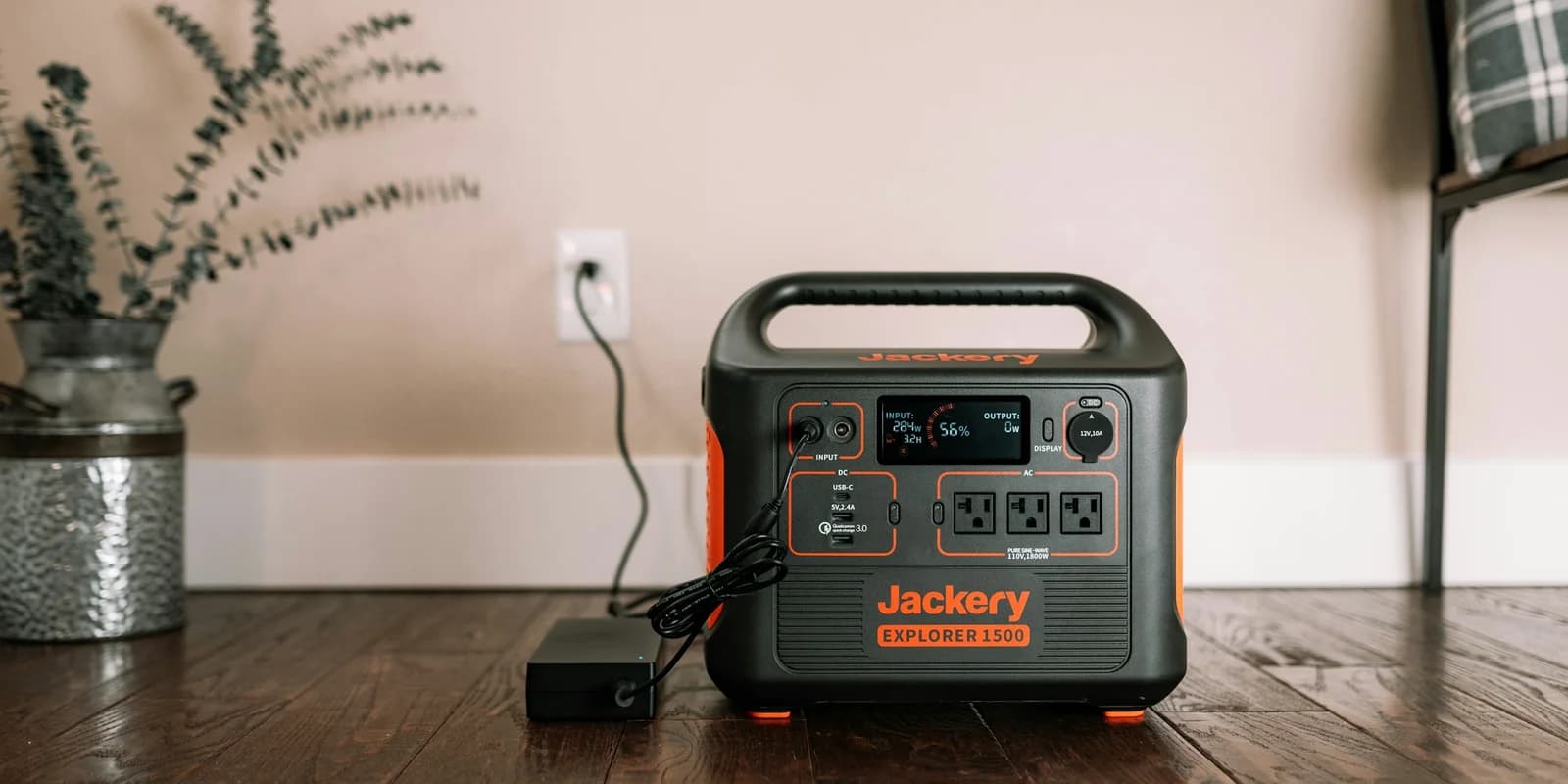
The Anker SOLIX C1000 is a 1056Wh power station, while the EcoFlow DELTA 2 Max provides 2048Wh. They're not exactly competitors — different capacity classes, different price tiers — but they are natural comparisons when deciding how much backup capacity you actually need.
Both are LiFePO4 (the right chemistry in 2026 — see the FAQ if you're not sure why). Both have 5-year warranties. Both UPS-switch under 30ms. The differences come down to capacity, inverter wattage, expandability, charging speed, and the software experience.
The one-line answer
Camping + occasional blackout + work-from-anywhere kit, ≤1 day backup: Anker SOLIX C1000. Multi-day home backup, run a fridge + microwave + window AC, scale to 6kWh later: EcoFlow DELTA 2 Max.
Capacity reality
Watt-hour spec on the box is cell capacity, not usable AC output. Realistic usable output (after inverter losses + battery management reserves):
- Anker SOLIX C1000: 1056Wh nameplate → ~850Wh usable
- EcoFlow DELTA 2 Max: 2048Wh nameplate → ~1,700Wh usable
What that means in practice — for a typical home fridge that pulls 1.5kWh/day:
- C1000 = ~14 hours of fridge-only runtime
- DELTA 2 Max = ~27 hours of fridge-only
If your blackout scenario is "a six-hour outage twice a year," the C1000 handles it with capacity to spare. If it's "a 24-hour ice storm that knocks out power overnight," the DELTA 2 Max is the right tool.
Inverter wattage
- C1000: 1,500W continuous, 2,000W surge (SurgePad mode up to 2,400W for resistive loads).
- DELTA 2 Max: 2,400W continuous, 4,800W surge (X-Boost mode up to 3,400W).
The practical implication:
- Hair dryer (1,800W): C1000 trips. DELTA 2 Max runs it.
- Microwave (1,000–1,300W): Both run it.
- Window AC (900–1,500W): C1000 borderline. DELTA 2 Max comfortable.
- Coffee maker drip cycle (1,500W brief): Both fine.
- Electric kettle (1,500W sustained): Both fine, C1000 right at the edge.
If you'll ever plug in anything 1,500W+ (hair dryer, space heater, induction cooktop, electric kettle), the DELTA 2 Max is the safer pick.
Expandability
- C1000: Expandable with one BP1000K external battery, doubling capacity to 2,112Wh.
- DELTA 2 Max: Expandable with up to two DELTA 2 Max Extra Batteries, scaling to 6,144Wh. The cost per kWh of an extra battery is ~40% lower than buying a second standalone unit.
If "I might want more capacity later" is a real consideration, the DELTA 2 Max scales further. If your scenario is fixed at 1–2 kWh, the C1000's single expansion path is fine.
Charging speed
Both fast-charge aggressively:
- C1000: 0–80% in 58 minutes from AC, 0–100% in 1h 18min.
- DELTA 2 Max: 0–80% in 43 minutes from AC, 0–100% in ~80 minutes.
Both have an "energy saver" mode that throttles charge speed for longer cell life, which is the right setting if you keep the unit plugged in as a UPS.
Solar input:
- C1000: 600W max solar input (one MPPT, single 11–32V port).
- DELTA 2 Max: 1,000W max solar input (two MPPT, dual ports). Genuinely useful — two 400W panels recharge the DELTA 2 Max from empty in 3–4 hours of sun.
For off-grid use, DELTA 2 Max's solar headroom is meaningful. For backup-only use, both are fine.
App and software quality
- EcoFlow App: Best in the category. Real-time per-outlet consumption tracking, schedule charging from solar vs AC, set charge limits for cell longevity, control UPS behaviour, OTA firmware updates that consistently add features.
- Anker App: Good. You can update firmware, set charge limits, and check current state. Less granular than EcoFlow.
If you obsess over the data and want to schedule "charge from solar between 10am-3pm, AC otherwise," EcoFlow wins. If you'll set it up once and forget about it, Anker's app is fine.
UPS quality
- C1000: ~20ms switchover. Handles modern desktops, networking gear, fridges, modems.
- DELTA 2 Max: under 30ms switchover. Same real-world behaviour.
Neither is a substitute for a dedicated double-conversion UPS (CyberPower OL series, APC Smart-UPS RT). Both are excellent for "keep the modem + computer running through brownouts and short outages."
Physical size and weight
- C1000: 37.6 × 21 × 25.8 cm, 12.9 kg, real handle.
- DELTA 2 Max: 49.7 × 24.2 × 30.5 cm, 23 kg, wheels and a pull handle.
C1000 is portable in the "throw in the car" sense. DELTA 2 Max is portable in the "roll it to where you need it" sense — it weighs as much as a checked suitcase.
For camping, the C1000 is the obvious choice. For home backup that doesn't need to move regularly, DELTA 2 Max's weight is fine.
Price reality
The C1000 is normally the lower-cost entry because it is in a smaller capacity class. The DELTA 2 Max costs more upfront but provides roughly twice the rated capacity, a higher inverter ceiling and a larger expansion path.
Compare the current price per usable watt-hour rather than relying on list prices or temporary promotions. If you do not need the extra capacity, paying for the larger EcoFlow still wastes money.
SolderMag Take: how to actually pick
Match the unit to the scenario, not the spec sheet:
- Power 90% of normal life through an 8-hour outage (fridge, modem, lights, phones, laptop): C1000 handles it with margin.
- Power one weekend of camping (CPAP, lights, fan, phones, kettle): C1000.
- Run a fridge + medical equipment + a couple of fans through 24-hour outage: DELTA 2 Max.
- Whole-home backup that grows to 6kWh later: DELTA 2 Max (and budget for the expansion).
- You might also want a generator-replacement off-grid kit: Look at the EcoFlow DELTA Pro 3 instead — different tier.
Common compromise: buy the C1000 first, get experience, decide later if you need to scale up. Resale value on Anker and EcoFlow is high, so upgrading isn't expensive.
Frequently Asked Questions
Why does LiFePO4 chemistry matter?
Cycle life. LiFePO4 (lithium iron phosphate) batteries last 3,000–6,000 cycles to 80% capacity — about 10 years of daily use. The older NMC (lithium nickel manganese cobalt) chemistry lasts 500–1,000 cycles, about 2–3 years. Both the C1000 and DELTA 2 Max are LiFePO4 — that's why we recommend them.
Can I charge these from my car's 12V outlet?
Yes, both support 12V car-port charging at ~100W. Slow (12-15 hours from empty) but useful for road trips and emergency top-ups.
Will either run a window AC?
C1000: marginally on small 5,000 BTU window units (~500W) — yes. On larger 8,000-12,000 BTU units — borderline. DELTA 2 Max: comfortably on most window units up to 12,000 BTU.
Do these work with solar panels from any brand?
Yes, both accept standard MC4 panel connections with 12-50V input range. You're not locked into the brand's own panels — buy whatever 100-400W panel makes sense for your setup.
How loud are they when running?
Both have small cooling fans that kick in under heavy load (>500W output or fast charging). Sound level is about 35-50 dB at 1 meter — quieter than a refrigerator. In idle UPS mode, they're silent.
Can I use these as a regular always-on UPS?
Yes, both have a UPS mode that switches over in under 30ms when wall power fails. Not as instantaneous as a dedicated double-conversion UPS (which switches in 0ms because it's always running on battery), but adequate for desktops, modems, and home electronics.