Best Studio Microphones (2026): Shure, RODE, Elgato — The Ones Podcasts and Streamers Actually Use
USB mics for video calls are a different category. If you're recording a podcast, streaming, or making YouTube videos, the bar is higher. Here are the studio mics worth buying in 2026 at every budget.
Editorial evidence review
Recommendations are checked against product documentation, availability, comparative evidence, and clearly disclosed hands-on work where it exists.
Quick picks
The short answer, with the trade-off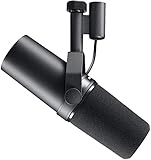
Best overall
Shure SM7B Dynamic Microphone
Industry-standard broadcast tone, used by major podcasts and shows
Trade-off: XLR only — requires audio interface plus Cloudlifter for full gain
Best USB / hybrid
Shure MV7+ Podcast Microphone
Trade-off: Built-in DSP can sound over-processed if left on its defaults
Best for streamers
Elgato Wave:3 USB Condenser
Best value
RODE PodMic USB
There's a meaningful gap between "good enough for a Zoom call" and "good enough that listeners don't notice the audio." The former is a $80 USB mic. The latter is the kind of mic Joe Rogan, Marques Brownlee, and every credible podcast use, and the difference is audible the moment you A/B test them.
The good news: the price of broadcast-quality audio dropped a lot in the last three years. The Shure SM7B is no longer the only path to a pro sound. The bad news: most of the alternatives still aren't cheap, and the budget end of the studio-mic market is full of mics that look great in YouTube reviews and disappoint in real recording.
This guide is the shortlist that actually delivers, grouped by budget and use case.
SolderMag Take: dynamic vs condenser is the only decision that matters
The single thing that determines whether your recordings sound professional or amateurish is how much room you bring into the recording. Echo, traffic outside, the fridge cycling on and off, your air con — all of that shows up on a condenser mic and turns the recording into something nobody wants to listen to.
The two mic types and what they actually do:
- Dynamic microphones (Shure SM7B, Shure MV7+, RODE PodMic): less sensitive, reject room sound aggressively, sound like every podcast you've ever loved. Forgiving of bad rooms, mediocre mic placement, and varied speaker volumes. They are the broadcast standard for a reason.
- Condenser microphones (Elgato Wave:3, RODE NT-USB+, Blue Yeti X): more sensitive, capture everything in the room, sound brighter and more "open." Sound great in treated rooms with controlled background. Sound terrible in untreated bedrooms with a humming computer.
If you record in a typical home office without sound treatment, buy a dynamic mic. The room-noise rejection more than makes up for the slightly less "airy" top end. Streamers in tile-floor apartments who buy a condenser because it looks better on their desk find this out within a week.
The exception: if you have a closet you can record in, a treated home studio, or you're recording instruments / vocals where you want detail, condensers are the right call. For 90% of the people reading this guide, dynamic.
Best studio microphones at a glance
- Industry standard, XLR, requires interface or Cloudlifter: Shure SM7B. The mic Joe Rogan, Marques Brownlee, and every major podcast use.
- USB and XLR in one box, no interface needed: Shure MV7+. SM7B's little sibling. Plug-and-play with built-in DSP.
- Streamer who films in a clean-ish room and wants USB: Elgato Wave:3. Condenser, USB, plug-and-play, designed for streaming.
- Tightest budget that's still genuinely studio-grade: RODE PodMic USB. Same broadcast tone as the XLR PodMic for half the cost of an SM7B.
- Recording instruments / vocals / quiet detail work: RODE NT-USB+ condenser. Honest small-diaphragm condenser at USB price.
What actually matters in a studio mic
1) Connection: USB vs XLR
- USB: plugs straight into your computer via USB-C. No interface, no Cloudlifter, no XLR cable. Plug-and-play. Trade-offs: depending on the mic the audio sample rate may be capped at 24-bit/48kHz, gain control is via the OS or a built-in dial, and you're locked to one mic per channel.
- XLR: requires a separate audio interface (Focusrite Scarlett, Rodecaster, MOTU M2). More flexible: multiple mics on one interface, full hardware gain control, swap mics without reconfiguring software. Costs $100-300 more upfront once you add the interface.
- Hybrid (USB + XLR in one): Shure MV7+, RODE PodMic USB, AT2020USB+. Start on USB, upgrade to an interface later without buying a new mic. The smart middle path for most creators.
If you're recording one person talking, USB is fine. If you're recording two or more (interviews, co-hosts), XLR with an interface is the right answer.
2) Polar pattern
- Cardioid (heart-shaped pickup): rejects sound from behind, captures sound in front. The default for most studio mics. The right choice for a single speaker.
- Omnidirectional: captures equally from all directions. Useful for room-tone or capturing multiple voices on one mic. Bad for noisy rooms.
- Bidirectional / figure-8: captures from front and back, rejects the sides. Useful for two people facing each other across a single mic. Niche.
- Multi-pattern (Blue Yeti X): switches between modes via a knob. Useful if you record different scenarios; overkill if you only do one thing.
For a podcast or YouTube voiceover, cardioid is the only pattern you need.
3) Self-noise
The lower the better. Marketing rarely advertises this; the spec is buried in the datasheet.
- Below 8 dB-A: pro studio condenser territory. Wave:3, NT-USB+.
- 8-15 dB-A: dynamic mic territory. SM7B, MV7+, PodMic USB.
- Above 20 dB-A: budget mics. You'll hear hiss in quiet passages.
For a dynamic mic, self-noise matters less because the mic isn't picking up much subtle audio anyway. For a condenser, it's worth checking before you buy.
4) Mounting and accessories
The mic is half the cost. The mount-and-arm bundle is the rest.
- Boom arm: essential. The mic sits 4-6 inches from your mouth, off the desk. Reach Industries, RODE PSA1+, Elgato Wave Mic Arm LP. Budget $80-150 for a real arm; the $25 ones sag and squeak.
- Pop filter or windscreen: dynamic mics need a foam windscreen ($10), condensers need a mesh pop filter ($15-30). Without either, your "P" and "B" sounds blast the recording.
- Shock mount: stops desk-tap and keyboard-bump noise from reaching the mic. Most mics ship with a basic mount; spend the extra $30 on the included or branded shock mount if it's available.
- Cloudlifter (XLR only): the SM7B and most older dynamic XLR mics output a quiet signal that interfaces struggle with. A Cloudlifter ($150) inline gives you 25 dB more clean gain. Required for the SM7B with most affordable interfaces.
Budget $200-300 for the accessories on top of the mic. The mic without the arm + filter + mount sounds noticeably worse.
5) Sample rate and bit depth (USB mics)
Most modern USB mics record at 24-bit / 48kHz, which is enough for any podcast, streaming, or YouTube video. A few pro USB mics (RODE NT-USB+, Shure MV7+ in pro mode) record at 24-bit / 96kHz or 192kHz.
For voice work, anything above 48kHz is overkill. For music or sound design, 96kHz starts to matter. Don't pay extra for sample rates you won't use.
The picks
Best overall: Shure SM7B
Who it's for: anyone serious about podcasting, broadcast, or any work where audio quality is part of your brand.
The SM7B is the broadcast standard, full stop. Every major podcast uses one (or its older cousin the SM7). Every late-night-show monologue mic you've ever heard. Marques Brownlee's voiceovers. Joe Rogan. The reason: dynamic capsule with a flat frequency response, internal pop filter, ultra-low self-noise, and a tone that flatters almost every voice.
The catches:
- XLR only — you need an audio interface (Focusrite Scarlett, Rodecaster, etc.).
- Requires high gain — 60 dB+ on the interface, more than most affordable interfaces deliver. Pair with a Cloudlifter ($150) or an interface that handles low-output dynamic mics (the Rodecaster Pro 2 does this natively).
- Total system cost: $400 mic + $200 interface + $150 Cloudlifter + $100 boom arm = $850-1000 ready to record.
If you're at the level where audio quality is part of your brand, this is the mic. If you're starting out, the MV7+ is 80% of the experience for half the system cost.
Shure SM7B Dynamic Microphone
Why it works
- Industry-standard broadcast tone, used by major podcasts and shows
- Excellent room-noise rejection makes it forgiving of untreated rooms
- Built-in pop filter and shock mount
Main trade-off
- XLR only — requires audio interface plus Cloudlifter for full gain
- Total system cost runs $800-1000 with required accessories
Best USB hybrid: Shure MV7+
Who it's for: podcasters and YouTubers who want SM7B-style sound without the interface + Cloudlifter overhead.
The MV7+ is the SM7B's USB-or-XLR sibling. Same dynamic capsule design, same broadcast tone, same room-noise rejection. The differences: built-in DSP that handles auto-leveling and tone shaping, USB-C and XLR outputs simultaneously (record both at once), and a touch panel on top for monitoring and gain control without reaching for software.
This is the mic to recommend to people who want studio-quality audio but aren't going to learn audio engineering. The DSP genuinely helps untrained users get a clean recording on the first take. Purists will turn the DSP off and run flat into a DAW; that's also fine.
At around $300, it's roughly half the all-in cost of an SM7B setup, with audio quality that's 90-95% as good for typical podcast use.
Shure MV7+ Podcast Microphone
Why it works
- SM7B-class dynamic tone with USB-C plug-and-play
- Built-in DSP handles auto-leveling and tone for untrained users
- USB-C and XLR outputs simultaneously — upgrade later without replacing the mic
Main trade-off
- Built-in DSP can sound over-processed if left on its defaults
- Costs around $300 — competitive with mid-range XLR setups
Best for streamers: Elgato Wave:3
Who it's for: Twitch and YouTube streamers who record in a relatively quiet room and want plug-and-play USB with deep ecosystem integration.
The Wave:3 is the streamer's mic. Cardioid USB condenser, native integration with Stream Deck, Wave Link mixer software (one of the best free utilities in the streaming world — lets you route mic, system audio, browser audio, and game audio to separate channels). Built-in capacitive touch mute control on the top, RGB headphone monitoring, zero-latency direct monitoring.
The honest catch: it's a condenser. It picks up your room. If your streaming setup is in a tile-floor apartment with an open window, the Wave:3 will sound noisier than a dynamic mic. For streamers in carpeted rooms, treated spaces, or low-ambient setups, it sounds clean and bright in a way that suits gaming-stream content.
Pair with the Elgato Wave Mic Arm LP (low-profile, designed not to block your camera) for the cleanest streaming-desk look.
Elgato Wave:3 USB Condenser Microphone
Why it works
- Tight integration with Stream Deck and Wave Link mixer software
- Capacitive touch mute on the mic itself
- Plug-and-play USB-C with zero-latency direct monitoring
Main trade-off
- Condenser pattern picks up room noise; not ideal for untreated rooms
- Best paired with Wave Link / Stream Deck — standalone is fine but loses the magic
Best value: RODE PodMic USB
Who it's for: anyone starting a podcast or YouTube channel on a budget who wants real broadcast tone for under $200.
The RODE PodMic USB is the most underrated mic in 2026. Same broadcast-style dynamic capsule as the original (XLR-only) PodMic, with USB-C and XLR outputs in one box. Built-in pop filter, internal shock mount, and the kind of tone that makes a podcast sound professional without any post-processing.
At around $200, it's half the all-in cost of an SM7B setup and a third the cost of the MV7+ if you don't need the DSP. The honest catch: there's no built-in DSP, so what you record is what you get — slightly less forgiving for untrained users than the MV7+.
Pair with a $80 boom arm and you have a complete studio-grade setup for under $300. The audio quality difference between this and an SM7B is real but small, and you only hear it on a true A/B test in a treated room.
RODE PodMic USB Dynamic Microphone
Why it works
- Broadcast-style dynamic tone for half the SM7B's all-in cost
- USB-C and XLR outputs in one box
- Built-in pop filter and shock mount included
Main trade-off
- No built-in DSP — recordings need a touch more post-processing
- Body is heavy; pairs best with a boom arm rated for 1kg+
Honourable mention: RODE NT-USB+
Who it's for: someone recording in a treated space who wants a condenser mic for music, vocals, or detailed voice work.
The NT-USB+ is RODE's flagship USB condenser and the right answer if you specifically want condenser brightness. 24-bit / 192kHz sampling (above what most USB mics offer), high-quality cardioid capsule, built-in pop filter, USB-C, zero-latency monitoring.
Skip it if you're recording in an untreated bedroom — the mic will catch every thump, every keyboard tap, every fridge cycle. It belongs in a closet vocal booth, a treated room, or a quiet studio space. In those places, it sounds genuinely better than any dynamic mic at the price.
Setup tips that matter
- Speak 4-6 inches from the mic. Closer = bassier (proximity effect, can be flattering on dynamic mics). Further = thinner and picks up more room. Test at 4 inches and adjust.
- Mic on a boom arm, not the desk stand. Desk stands transmit every keyboard tap and mug clink up the mic body. A real boom arm with a built-in shock mount cuts that 80%.
- Treat the loudest reflective surfaces. A blanket on the back of your office door, a thick rug under the desk, soft furniture in the room. You don't need a recording booth; you do need to break up flat parallel walls.
- Check input gain before each recording session. Aim for peaks at -12 dB to -6 dB. Anywhere above -3 dB and you'll clip on loud moments.
- Record into a real audio app, not Zoom. Reaper ($60), Audacity (free), Adobe Audition (subscription) all give you control and editing. Calling apps process audio in ways that strip detail.
Buying checklist
- Where am I recording? Untreated room → dynamic. Treated/quiet → condenser.
- One person or multiple? Multiple → XLR with an interface. One → USB or hybrid.
- Do I want plug-and-play or willing to learn an interface? Plug-and-play → MV7+ or PodMic USB. Learn-the-stack → SM7B.
- What am I recording? Voice → dynamic. Music or instruments → condenser.
- Budget? Under $200 → PodMic USB. $200-400 → MV7+ or Wave:3. $800+ → SM7B with full XLR rig.
Red flags to avoid
- No-name "studio podcasting USB microphones" under $40. Cheap electret capsules, plastic builds, no real cardioid pattern. Skip.
- Blue Snowball or Yeti at "broadcast quality" claims. They're starter mics, not studio mics. The Yeti X (their pro line) is okay; the original Yeti is not.
- USB mics with proprietary cables you can't replace. Always look for USB-C standard.
- Condensers labeled "for podcasting" without a treated room. They will sound worse than a dynamic in any normal home environment.
- Mics with no warranty or under 90-day return. Studio mics are a multi-year investment. Buy from a vendor with at least a 1-year warranty.
Studio mic vs alternatives
Studio mic vs USB mic for video calls: different category. USB call mics (Blue Yeti, Anker PowerCast) are designed for clarity at a distance and ease-of-use; studio mics are designed for tone and presence at close range. Don't conflate them.
Studio mic vs lavalier / lapel: lavs (RODE Wireless GO II, DJI Mic 2) are for video where the speaker is moving or the camera is more than 3 feet away. For sit-and-talk podcasting or YouTube voiceover, a studio mic on a boom arm sounds dramatically better.
Studio mic vs shotgun: shotguns (RODE NTG5, Sennheiser MKE 600) are for film/video boom-pole work. Wrong tool for desk-based podcasting.
Sources and methodology
- Manufacturer datasheets for capsule type, frequency response, self-noise, and sample rate specifications.
- Long-running pro-audio community feedback from r/podcasting, r/audioengineering, and Gearspace forums.
- Independent comparative recordings from untreated and treated rooms, used as context rather than SolderMag measurements.
- Reference recordings from major podcasts (mics confirmed via published gear lists from each show's production team).
- Current manufacturer documentation for included accessories, mounting, and connection requirements. SolderMag has not completed matched hands-on testing of every microphone.
Related reading
- Best USB Microphones for Calls (2026): the meeting-and-conferencing tier below studio mics.
- Best Webcams for Video Calls (2026): the visual half of the same content-creator stack.
- Best Action Cameras (2026): for vlogging and field recording where studio mics don't fit.
- Best Noise-Cancelling Headphones (2026): essential for monitoring during recording.