Kindle Colorsoft vs Paperwhite: Which Should You Buy?
Choose Paperwhite for novels and longer battery life. Pay for Colorsoft only when colour covers, highlights, comics, or illustrated books matter.
Research-based comparison
Recommendations are checked against product documentation, availability, comparative evidence, and clearly disclosed hands-on work where it exists.
Quick picks
The short answer, with the trade-off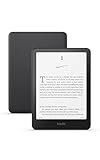
Best for most readers
Kindle Paperwhite 16GB, no lockscreen ads

Best when colour matters
Kindle Colorsoft 16GB, no lockscreen ads
On this page
- Quick answer
- Colorsoft vs Paperwhite specifications
- The display difference: colour is useful, not vivid
- Who should buy Kindle Colorsoft
- Who should buy Kindle Paperwhite
- Battery life: Paperwhite has the safer claim
- Storage: 16GB is enough for books, less roomy for audio and comics
- Size, weight, and controls
- Kindle ecosystem: this part is a tie
- Is Colorsoft worth paying more for?
- Alternatives to consider
- Common mistakes
- Final recommendation
- FAQ
- Sources
Buy the Kindle Paperwhite if you mostly read novels, biographies, or other text-heavy books. Buy the Kindle Colorsoft only when colour covers, illustrations, comics, maps, or colour highlights will change how you use the device.
The two standard 16GB models are closer than the names suggest. Both have a 7-inch glare-free display, adjustable warm light, USB-C charging, IPX8 water resistance, and the same basic Kindle ecosystem. Colorsoft adds colour at 150 ppi while retaining 300 ppi for black-and-white content. Paperwhite stays monochrome at 300 ppi and carries Amazon's longer battery claim.
This is a research-based comparison. SolderMag has not completed matched hands-on testing of these exact units, so we do not name a winner for contrast, front-light uniformity, page-turn speed, battery runtime, colour accuracy, or long-term durability. The verdict uses Amazon's current product specifications and buyer-use differences.
Quick answer
| Buyer | Better pick | Why |
|---|---|---|
| Mostly novels and plain text | Kindle Paperwhite | Colour adds little to the page, and Amazon claims longer battery life |
| Graphic novels and illustrated books | Kindle Colorsoft | The colour layer can show art, covers, diagrams, and maps in colour |
| Heavy highlighter | Kindle Colorsoft | Highlights can appear in yellow, orange, blue, and pink |
| Maximum text simplicity | Kindle Paperwhite | The display is built only around 300 ppi monochrome reading |
| Travel reader | Kindle Paperwhite | Same footprint, slightly lower listed weight, longer battery claim |
| Existing Kindle library | Either | Store, sync, Send to Kindle, and account lock-in are essentially the same decision |
The Paperwhite is the default recommendation because most books do not need colour. Colorsoft is a use-case upgrade, not an automatic quality upgrade.
Colorsoft vs Paperwhite specifications
| Feature | Kindle Colorsoft 16GB | Kindle Paperwhite 16GB |
|---|---|---|
| Exact US model checked | B0CGVSKR1G | B0DDZJS3SB |
| Display | 7-inch Colorsoft | 7-inch Paperwhite |
| Resolution | 300 ppi black and white; 150 ppi colour | 300 ppi black and white |
| Storage | 16GB | 16GB |
| Front light | Adjustable white-to-amber | Adjustable white-to-amber |
| Battery claim | Up to 8 weeks | Up to 12 weeks |
| Charging | USB-C | USB-C |
| Water resistance | IPX8 | IPX8 |
| Dimensions | 127.6 x 176.7 x 7.8mm | 127.6 x 176.7 x 7.8mm |
| Listed weight | 215g | 211g |
| Wireless charging | No | No |
| Auto-adjusting front light | No | No |
The battery figures are Amazon claims based on a half-hour of reading per day with wireless off and the light at a defined setting. Audible playback over Bluetooth and different lighting or wireless use can reduce runtime. They are not SolderMag test results.
This comparison uses the standard 16GB, no-lockscreen-ad versions for a cleaner like-for-like decision. The Signature Editions are different products with 32GB, wireless charging, and an auto-adjusting front light.
The display difference: colour is useful, not vivid
Colorsoft's reason to exist is straightforward: it can show book covers, illustrations, maps, diagrams, comics, and highlights in colour without becoming a conventional tablet. Amazon lists 150 ppi for colour and 300 ppi for black-and-white content.
That split matters. Colour E Ink is not trying to reproduce the brightness, saturation, motion, or wide colour range of an iPad or OLED phone. It is better understood as a restrained paper-like colour layer. If your source material depends on bright art, smooth zooming, video, or highly accurate colour, a tablet is the more suitable screen.
Paperwhite avoids that trade-off because it only has to display monochrome content. We have not measured the two screens side by side, so we will not claim that one has darker blacks or better front-light uniformity. The safe buying difference is functional: Colorsoft can show colour; Paperwhite cannot.
For plain novels, the colour layer spends most of its time doing nothing useful. For a cookbook with photographed ingredients, a travel guide with maps, a textbook with colour diagrams, or a graphic novel, it can make the page easier to understand.
Who should buy Kindle Colorsoft
Buy Colorsoft if several of these are true:
- You read illustrated non-fiction, comics, graphic novels, cookbooks, or travel guides.
- Colour coding makes highlights more useful for study or research.
- You care about seeing book covers and library artwork in colour.
- You already use Kindle books and do not want to change ecosystems.
- You accept Amazon's shorter battery claim in exchange for colour.
- You want colour E Ink, not the richer screen and broader apps of a tablet.
Skip Colorsoft if colour is mainly a novelty. A higher model position does not make it the better novel reader for everyone. If months pass between the books that benefit from colour, the Paperwhite is the more rational purchase.

Kindle Colorsoft 16GB
Choose Colorsoft for illustrated books, comics, maps, or colour-coded notes. Skip it when almost everything you read is black text.
Why it works
- Colour covers, illustrations, and highlights
- 7-inch display with warm light
- IPX8 water resistance
Main trade-off
- 150 ppi colour layer
- Shorter manufacturer battery claim
- No wireless charging or auto light on standard model
Who should buy Kindle Paperwhite
Buy Paperwhite if your library is mostly:
- Novels and short stories.
- Biographies, history, essays, and narrative non-fiction.
- Long text-first books read while travelling.
- Kindle Unlimited titles that rarely depend on colour.
- Documents where crisp monochrome text matters more than coloured diagrams.
Paperwhite is also the better default gift when you do not know whether the recipient reads colour-dependent content. It handles the core Kindle job without charging for a feature they may barely use.
Skip it if you regularly read comics, illustrated reference books, or study material where colour separates information. Paperwhite converts the visual decision back to grayscale, which can remove useful context.
Kindle Paperwhite 16GB
Choose Paperwhite for novels and text-heavy reading. It is the sensible default unless colour solves a specific problem.
Why it works
- 7-inch 300 ppi monochrome display
- Up to 12-week manufacturer battery claim
- Warm light and IPX8 water resistance
Main trade-off
- No colour on the device
- Touch-only controls
- No wireless charging or auto light on standard model
Battery life: Paperwhite has the safer claim
Amazon claims up to 12 weeks for the current Paperwhite and up to 8 weeks for the standard Colorsoft. Those numbers use controlled assumptions and should not be treated as a promise for every reader.
Front-light level, Wi-Fi, Bluetooth audio, indexing new books, page density, and reading time all change the result. The useful conclusion is relative rather than absolute: Amazon gives Paperwhite the longer official battery rating.
That gap matters most for travel, irregular charging, or readers who want the device to behave like a book rather than another gadget to manage. It matters less if the Kindle lives beside a USB-C cable and colour is genuinely useful.
Neither standard model includes wireless charging. Do not confuse either with a Signature Edition listing when comparing charging features.
Storage: 16GB is enough for books, less roomy for audio and comics
Both exact models in this comparison include 16GB. That is ample for a large text e-book library because ordinary novels are small files. Colour comics, illustrated books, PDFs, and Audible downloads consume more space.
Storage should not decide this comparison unless your collection is unusually media-heavy. If 32GB is required, compare the Colorsoft Signature Edition and Paperwhite Signature Edition, but remember that storage is not the only change: both Signature models add convenience features such as wireless charging and an auto-adjusting front light.
For most novel readers, paying for 32GB solves a problem they do not have. For offline audiobook collections or graphic novels, it can be justified.
Size, weight, and controls
Amazon lists both devices at 127.6 x 176.7 x 7.8mm. Colorsoft is listed at 215g and Paperwhite at 211g, a difference too small to use as a comfort verdict without matched handling.
Both use a touch-first Kindle design without physical page-turn buttons. If buttons are important, neither is the right answer. The Kobo Libra Colour adds an asymmetric grip and physical page controls, while also changing the bookstore, file, and library-loan decision.
Cases add more weight and can matter more than the four-gram device difference. Check that a case is explicitly compatible with the current 7-inch generation rather than an older Paperwhite body.
Kindle ecosystem: this part is a tie
Colorsoft and Paperwhite use the same core Kindle proposition: Amazon's store, Kindle Unlimited, Send to Kindle, account sync, highlights, and Audible support. If you already own a substantial Kindle library, either device keeps that investment in place.
The lock-in is also the same. A Colorsoft does not become an open EPUB-first reader just because its screen has colour. If library borrowing, native EPUB handling, physical buttons, or broader file control matter more than Amazon integration, compare the Kindle Paperwhite and Kobo Libra Colour before buying.
The decision between these two Kindles should therefore stay about the display and battery trade-off. Do not pay for Colorsoft expecting a different book store or a more open file workflow.
Is Colorsoft worth paying more for?
Colorsoft is worth a premium when colour improves a meaningful share of your reading. A graphic-novel reader can see the benefit on every page. A student who uses colour-coded highlights can build a clearer review system. A traveller using illustrated guides can retain colour cues that disappear on Paperwhite.
It is not worth paying more merely because it sits higher in the range. For text-only reading, the additional capability is mostly idle while the shorter battery claim remains.
Use this rule:
- If at least one in four books genuinely benefits from colour, shortlist Colorsoft.
- If colour is limited to covers and the occasional diagram, buy Paperwhite.
- If you want rich colour, fast zooming, and apps, buy a tablet rather than forcing E Ink to do the wrong job.
Check the live price gap between the exact models. We would not set a fixed dollar threshold because Kindle promotions change and Amazon configurations can include ads, subscriptions, cases, or power adapters.
Alternatives to consider
Kindle Paperwhite Signature Edition
Choose the Signature Edition when 32GB, wireless charging, and an auto-adjusting front light are worth paying for. It does not add colour, so it remains a text-first device.
Kindle Colorsoft Signature Edition
Choose the Colorsoft Signature Edition when you need the same convenience upgrades alongside colour. Do not buy it only for 32GB unless the library contains many comics, illustrated books, PDFs, or audiobooks.
Kobo Libra Colour
Choose Kobo when physical page buttons, native EPUB support, library borrowing in supported regions, or stylus annotation matter more than staying inside Amazon. Our Colorsoft vs Kobo Libra Colour comparison covers that ecosystem decision.
A conventional tablet
Choose an iPad or Android tablet for vivid colour, video, fast zooming, web access, and app-based comic services. The trade-off is a lit LCD/OLED screen, shorter device-style battery life, notifications, and more distraction.
Common mistakes
- Buying Colorsoft because “colour” sounds automatically better for novels.
- Comparing a standard model with a Signature Edition without accounting for storage, auto light, and wireless charging.
- Assuming the colour layer matches a tablet for saturation or motion.
- Treating Amazon's maximum battery claims as guaranteed personal runtime.
- Choosing either Kindle when physical page-turn buttons or native EPUB support are essential.
- Ordering a case for an older Paperwhite generation without checking dimensions.
Final recommendation
The Kindle Paperwhite is the better choice for most readers. It covers the same Kindle ecosystem, matches Colorsoft's seven-inch footprint and core reading features, and carries Amazon's longer battery claim. For novels and other text-first books, colour does not solve a real problem.
Buy the Kindle Colorsoft when colour is part of the content rather than decoration: comics, illustrated books, diagrams, maps, cookbooks, or a colour-coded highlighting system. That is a clear reason to accept the shorter battery claim. Anything vaguer is a reason to save the money and choose Paperwhite.
FAQ
Is Kindle Colorsoft better than Paperwhite for reading novels?
Not automatically. Novels are usually black text, so Colorsoft's main advantage is unused. Paperwhite is the safer default for text-heavy reading and has the longer official battery claim.
Is Colorsoft text 150 ppi or 300 ppi?
Amazon lists 300 ppi for black-and-white content and 150 ppi for colour. The lower figure applies to the colour layer, not all text on the device.
Do standard Colorsoft and Paperwhite have wireless charging?
No. Wireless charging is a Signature Edition feature. The standard 16GB models in this comparison charge by USB-C.
Which Kindle has better battery life?
Amazon claims up to 12 weeks for Paperwhite and up to 8 weeks for Colorsoft under specified test conditions. Personal runtime varies with use.
Are Kindle Colorsoft and Paperwhite waterproof?
Amazon lists both as IPX8. Water resistance is not permanent protection against every liquid or situation, so follow Amazon's care guidance.
Should I buy Colorsoft for comics?
Choose Colorsoft if paper-like colour and a focused reading device matter. Choose a tablet if you want vivid colour, fluid zooming, apps, or large-format pages.
Sources
- Amazon Kindle Colorsoft 16GB product page and technical details
- Amazon Kindle Paperwhite 16GB product page and technical details
- Amazon Help Identify Your Kindle E-Reader
As an Amazon Associate I earn from qualifying purchases.