Best USB Microphones for Calls (2026): Clear Voice, Zero Fuss
You don’t need a studio mic to sound professional on Zoom/Meet. just the right pattern, placement, and a mic that behaves. Here are the 2026 picks and the traps to avoid.
Editorial evidence review
Recommendations are checked against product documentation, availability, comparative evidence, and clearly disclosed hands-on work where it exists.
Quick picks
The short answer, with the trade-off
Best overall
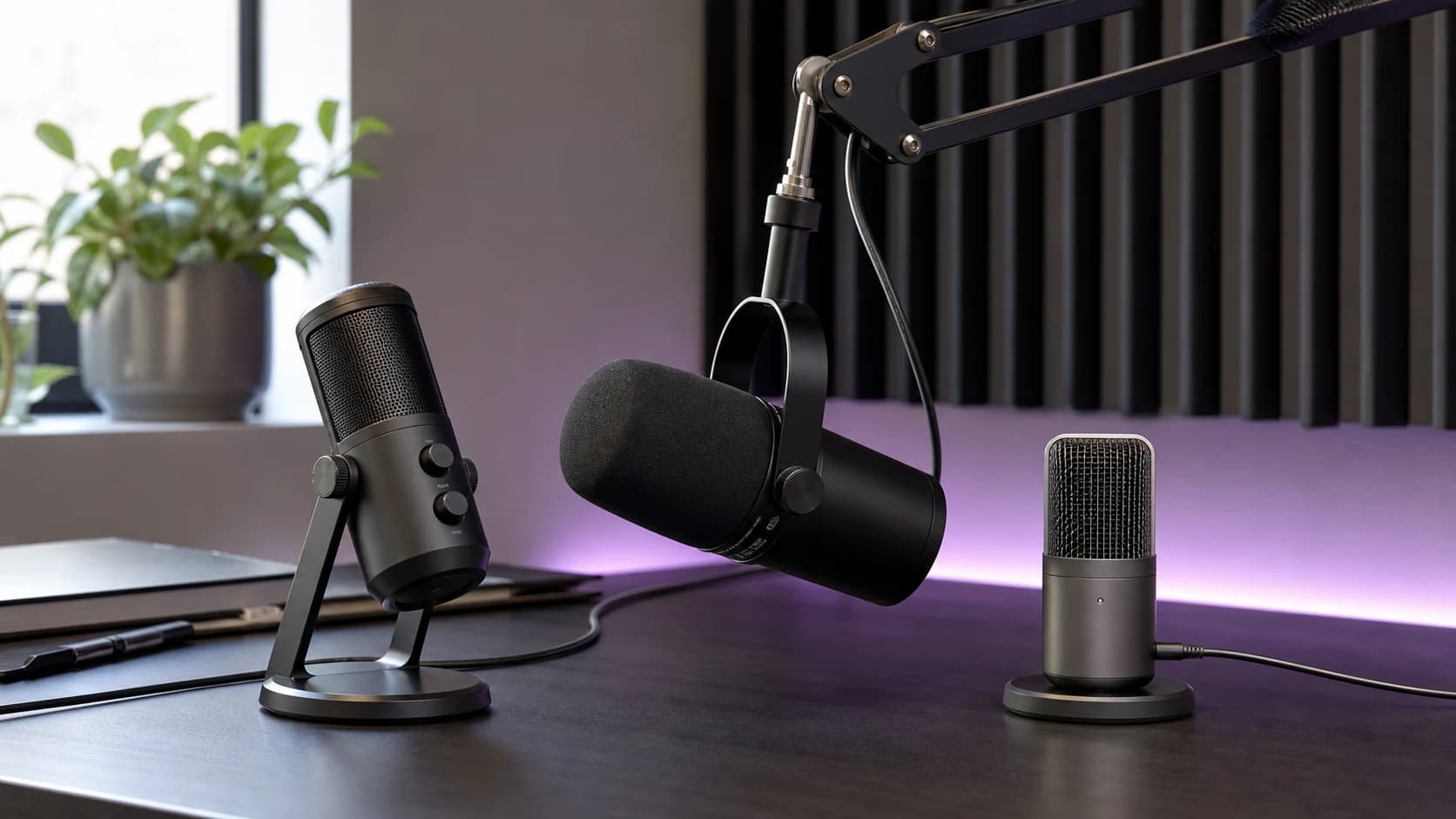
Sennheiser Profile USB Microphone
Excellent clarity
Trade-off: Sensitive to noise

Best for power users
Shure MV7 Podcast Microphone
Trade-off: Software tweaks needed sometimes

Best value
RØDE PodMic USB
Trade-off: Heavy

Best budget
Rode NT-USB+
Trade-off: No onboard controls
Most “bad mic” complaints aren’t about your voice.
They’re about room noise, keyboard clacks, and mics that turn everything into content.
A good USB mic for calls should do three boring things extremely well:
- make your voice clear at normal speaking volume
- reject the stuff you don’t want (fans, other people, echo)
- not require a PhD in gain staging to work reliably
SolderMag Take: for calls, “less sensitive” often sounds more expensive
For streaming and voiceover, super-sensitive condenser mics can be amazing.
For calls in a real home office, they’re often a mistake.
If you have any of these:
- mechanical keyboard
- hard walls / empty room reverb
- laptop fan whooshing (a good webcam helps the video side of this equation)
- kids/housemates nearby
…a dynamic USB mic or a tight cardioid condenser placed close will usually sound cleaner than a shiny “studio” mic placed far away.
The quick picks (2026)
These aren’t the only good options. these are the categories that map to real life.
Best overall (most people)
A driverless USB dynamic mic with a physical mute button
Why it wins:
- naturally rejects room noise better than most condensers
- forgiving if you don’t have acoustic treatment
- easy to keep consistent call-to-call
Look for:
- USB Audio Class (UAC) compliant (plug-and-play on macOS/Windows)
- hardware mute (not just software)
- headphone monitoring (so you can hear if you’re peaking)
Sennheiser Profile USB Microphone
Why it works
- Excellent clarity
- Onboard controls
- Metal build
Main trade-off
- Sensitive to noise
Best if your room is echoey / noisy
Dynamic USB mic + basic boom arm
The boom arm is the “cheat code” because it lets you keep the mic close to your mouth and away from the keyboard.

Shure MV7 Podcast Microphone
Why it works
- USB/XLR hybrid
- Voice isolation
- App controls
Main trade-off
- Software tweaks needed sometimes
Best small-desk pick
Compact cardioid USB condenser with auto-gain that doesn’t pump
This is for people who won’t mount a boom arm and just want something that sits nicely.

RØDE PodMic USB
Why it works
- Broadcast voice
- Pop filter
- Dual output
Main trade-off
- Heavy
Best budget upgrade from laptop mic
Simple cardioid USB mic (no DSP magic, just decent fundamentals)
At the low end, avoid features. Pay for:
- a stable capsule
- decent internal noise floor
- a stand that doesn’t transmit desk thumps
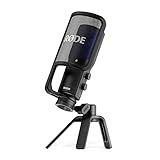
Rode NT-USB+
Why it works
- Plug-and-play
- Low noise
- Monitoring
Main trade-off
- No onboard controls
Best “I never want to think about drivers”
Plain UAC mic (USB-C or USB-A) with minimal companion software
Companion apps are fine. until a macOS update turns your mic into a paperweight five minutes before a meeting.
What actually matters (and what doesn’t)
1) Polar pattern: cardioid is the default for a reason
For calls, you almost always want cardioid (front-focused). It reduces room reflections and side noise.
Avoid omnidirectional unless:
- you’re recording multiple people around a table, and
- you accept more room sound
2) Dynamic vs condenser: pick based on your room, not the spec sheet
- Dynamic: less sensitive, better background rejection, needs close placement. Great for real rooms.
- Condenser: more detail, more room noise, more likely to pick up keyboard/fan. Great in treated spaces.
3) Mute button: must be hardware, must be obvious
If you’re buying a call mic and it doesn’t have a clear hardware mute, it’s not a call mic.
Bonus points if it has:
- a mute LED you can see in peripheral vision
- a gain knob that isn’t a tiny digital rocker
4) Monitoring: the fastest way to stop sounding bad
A headphone jack isn’t just for musicians.
Monitoring lets you catch:
- clipping (harsh distortion)
- too-low gain (thin/quiet)
- the mic being too far away (roomy)
5) USB-C doesn’t automatically mean “better”
USB-C is nicer for cables, but audio quality comes down to the capsule + internal ADC + implementation.
If a mic is USB-A but reliable and sounds good, take the win.
Setup that makes any decent mic sound better (2 minutes)
Placement (do this first)
- put the mic 15-25 cm from your mouth (closer for dynamics)
- aim it at the corner of your mouth, not straight-on breath line
- keep the mic off-axis to reduce plosives
Gain (do this second)
Target normal speech peaks around:
- -12 dB to -6 dB (if your app shows levels)
If you don’t have meters:
- set gain so you’re not constantly in the red
- if your voice sounds thin/roomy, the mic is too far. not “too quiet”
The $10 fix
Buy a pop filter or foam windscreen. It’s cheap insurance.
Red flags (skip these listings)
- No polar pattern stated (or it says “all-directional for clear pickup”). translation: room noise included.
- No mute button. you’ll regret it the first time you sneeze.
- “192kHz/32-bit for crystal calls”. calls are compressed; chasing sample rate here is marketing.
- RGB gamer mic with lots of modes. DSP modes are often worse than a properly placed mic.
- Requires always-on software for basic operation. fragile.
- Desk stand that rings like a bell. you’ll hear every bump.
Buyer checklist (print this in your brain)
Before you buy:
- Cardioid pattern (or a clear call-friendly pattern)
- Hardware mute + visible mute indicator
- Monitoring jack (ideal) or at least reliable meters in software
- Stable stand or (better) boom arm compatibility
- UAC compliant / driverless mode (especially for Mac)
- Included USB cable length is sane (or you’ll end up with a sketchy extender)
Sources
- USB Implementers Forum (USB-IF): USB Audio Class (UAC) documentation (device compatibility expectations)
- Manufacturer manuals/spec sheets for polar pattern, monitoring, and supported sample rates
- Independent mic reviewers who publish consistent tests (spoken voice demos, noise handling, plosives), e.g. Podcastage-style methodology
- General guidance on gain staging and speech recording best practices from audio engineering references
If you're also upgrading headphones for calls, our best noise-cancelling headphones guide covers the mic and call-quality angle.