Best 2TB External SSDs (2026): Fast Storage You’ll Actually Carry
The best 2TB external SSDs in 2026 for photo/video libraries, game installs, and travel backups. What to buy and what to dodge.
Research-based buying guide
Recommendations are checked against product documentation, availability, comparative evidence, and clearly disclosed hands-on work where it exists.
Quick picks
The short answer, with the trade-off
For verified 20Gbps hosts
Samsung Portable SSD T9 2TB
Up to 2,000MB/s read and 1,950MB/s write claims
Trade-off: Needs 20Gbps Gen 2x2 for its full speed tier

Best rugged
SanDisk Extreme PRO Portable SSD V2 2TB
Trade-off: Heats up during heavy use

Best USB4 option
Corsair EX400U 2TB
Trade-off: Requires a compatible USB4 host
On this page
- What matters beyond the headline speed
- Best external SSDs at a glance
- The three external SSD types (and why they’re not interchangeable)
- External SSD gotchas that ruin the experience
- How to choose the right external SSD for your use case
- External SSD buying checklist
- External SSD red flags to watch for
- External SSD setup tips (so you don’t sabotage your new drive)
- Our top external SSD picks for 2026
- Sources and methodology
Choose a 2TB external SSD to match your computer's port and the files you move. A 10Gbps model can be enough for backups and everyday storage; paying for 20Gbps only makes sense when the host explicitly supports USB 3.2 Gen 2x2.
This is a research-based buying guide, not a SolderMag comparative benchmark. Manufacturer peak speeds describe a compatible test setup; they do not establish long-transfer speed or reliability in your workflow.
Already own a drive that seems slow? Start with our external SSD speed troubleshooting checks before paying for a replacement.
If reliability is your main worry, our SSD failure rates guide explains what Backblaze drive stats can and cannot prove before you overread a single AFR number.
Micron has ended new Crucial consumer shipments while promising continued support. We now prefer a current alternative at normal pricing; see when remaining Crucial SSD stock is still worth buying.
The Samsung T9 is the current default only when the computer has a 20Gbps USB 3.2 Gen 2x2 port. Our Samsung T9 2TB review explains the compatibility check before you pay for speed the host cannot use.
What matters beyond the headline speed
Check the interface your computer supports, evidence of sustained writes on the exact capacity, and the manufacturer's operating conditions and warranty. A short benchmark cannot answer every question about a long project copy. Our picks describe useful categories; they are not proof that one drive is fastest in every workload.
Best external SSDs at a glance
Start with the type of 2TB external SSD that matches the job, then pick the specific model that fits your port, budget, and sustained-write needs.
- For everyday storage: a portable SSD whose interface and sustained performance match the host and workload
- For large creator projects: consider USB4 / Thunderbolt storage on a compatible host, with sustained-write evidence for the exact model
- Best for iPhone/iPad / on-the-go recording: a compact USB‑C SSD with stable sustained writes + short cable
- Best rugged pick (drop resistance, travel abuse): IP-rated, rubberized model with a real warranty
- Best value (not sketchy): last-year flagship portable SSD at a discount
The three external SSD types (and why they’re not interchangeable)
1) USB 10Gbps (USB 3.2 Gen 2). the default smart buy
On paper, USB 10Gbps tops out around ~1,000MB/s real-world after overhead.
In practice, it’s plenty for:
- photo libraries
- travel backups
- music/sample libraries
- general “move big stuff fast” workflows
If your laptop’s ports are a mystery, check the exact model’s documentation before paying for a faster interface. A 10Gbps drive can still be limited by a slower host.
2) USB 20Gbps (USB 3.2 Gen 2x2). faster, but compatibility is messy
USB 20Gbps can hit ~1,600-2,000MB/s if your computer supports it.
The problem: many Macs don’t support USB 3.2 Gen 2x2; plenty of PCs do, plenty don’t.
Translation: Gen 2x2 drives are great when matched correctly, but it’s easy to accidentally buy speed you can’t use.
3) USB4 / Thunderbolt. the “I want NVMe-in-a-box” tier
USB4/TB external SSDs (or a quality NVMe enclosure + a good 2TB NVMe drive) can behave more like internal storage:
- higher real throughput
- better sustained performance (depending on design)
- better for pro workflows
But you pay more, and thermals become a real design constraint.
External SSD gotchas that ruin the experience
Cache cliffs: “fast” until the SLC cache runs out
Some SSDs use a fast write buffer, and sustained throughput after that buffer fills can differ from the peak figure. The buffer size and resulting speed depend on the exact drive, capacity and conditions. Do not assume an arbitrary number of gigabytes predicts when every drive will slow down.
This matters a lot if you:
- dump camera cards
- move large Photoshop, Lightroom, or drawing tablet project files
- move project folders
- clone drives
- keep a working library on the SSD
Cables and ports silently cap speed
A surprising number of “USB‑C” cables are charging-first.
If you’re not seeing expected speeds, the top culprits are:
- cable only does USB 2.0 / low-speed data
- hub/dongle is the bottleneck
- port supports 5Gbps, not 10/20
- the front-panel port has a different data limit from the rear ports
Check sustained performance, not enclosure warmth
Heat can affect performance. Check the drive’s operating conditions and evidence from long transfers; enclosure size or warmth alone does not prove throttling.
If your use is “copy 500GB once a week,” throttling is annoying.
For editing directly from the drive, check whether sustained performance meets the actual project’s requirements.
How to choose the right external SSD for your use case
Scenario A: Travel backup + general storage
Prioritize:
- USB 10Gbps compatibility
- small, light, reliable brand
- good warranty
You can deprioritize:
- absolute peak speed
Scenario B: Creator drive (scratch, edit, large sustained writes)
Prioritize:
- sustained write behavior
- USB4/TB (or a high-quality enclosure)
- thermal behaviour documented for the exact drive or enclosure
Avoid:
- choosing a drive on peak speed alone when your work involves long writes
Scenario C: Work between Mac + Windows + iPad
Prioritize:
- exFAT or a clear formatting plan
- USB‑C cable that’s short and good
- USB 10Gbps as baseline (least drama)
For Mac and Windows file sharing, read our exFAT, APFS and NTFS format guide before setting up the drive. A shared transfer disk and an application-library or backup disk may need different arrangements.
Scenario D: Rugged / field work
Prioritize:
- strain relief (cable/port protection matters)
- IP rating if you’re around dust/water
- warranty that actually covers real use
External SSD buying checklist
-
What port do you really have?
- USB 10Gbps? USB 20Gbps? USB4/TB?
- If you do not know, check the computer manual before choosing a speed tier.
-
What’s your transfer style?
- occasional 20-50GB moves → most good drives feel fine
- 200-800GB sessions → you need sustained-write performance
-
Where will it live?
- pocket/bag → smaller is better, but watch thermals
- desk/edit station → check sustained-performance evidence for the exact model
-
Will you edit directly off it?
- if yes, prioritize USB4/TB and proven sustained behavior
-
Do you have a “known good” cable?
- if not, buy a short certified cable and treat it as part of the product
External SSD red flags to watch for
- “Up to” headline speeds with no sustained-write data anywhere
- no clear interface labeling (10Gbps vs 20Gbps vs USB4)
- frequent internal component changes without model-number distinction
- runs extremely hot in reviews (hot enough to be uncomfortable)
- weird sleep/wake disconnect complaints (especially on laptops)
- too-cheap 2TB deals from marketplaces with counterfeit/grey stock risk
External SSD setup tips (so you don’t sabotage your new drive)
- On macOS/Windows: do a real transfer test (e.g., 200GB folder). not just a tiny benchmark.
- If it’s a working drive, keep 10-20% free space for performance consistency.
- If you see random disconnects:
- try a different cable
- avoid unpowered hubs
- try a different port
- If you’re using it for backups: have two copies, ideally on two different devices. (External SSDs are not magic.)
Our top external SSD picks for 2026
For remaining-stock Crucial X9 Pro purchases, read our Crucial SSD support and warranty buying advice first. The X9 and X9 Pro are different models: check the full part number rather than buying a listing that only says X9. We are not linking an Amazon X9 Pro listing here because we could not verify the correct 2TB variant.
Samsung Portable SSD T9 2TB
Why it works
- Up to 2,000MB/s read and 1,950MB/s write claims
- Compact 122g enclosure
- AES-256 hardware encryption support
Main trade-off
- Needs 20Gbps Gen 2x2 for its full speed tier
- Peak figures do not prove sustained writes
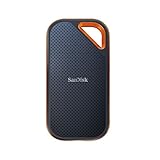
SanDisk Extreme PRO Portable SSD V2 2TB
Why it works
- Up to 2000MB/s speeds
- Durable design
- Good value
Main trade-off
- Heats up during heavy use

Corsair EX400U 2TB
Why it works
- USB4 40Gbps interface
- Compact magnetic design
- Current 2TB model
Main trade-off
- Requires a compatible USB4 host
- Check current firmware guidance before relying on it
Sources and methodology
This guide uses documented interfaces and manufacturer specifications to explain the buying choices. It does not claim comparative SolderMag transfer or durability tests.
- USB-IF USB 3.2 modes: distinguish 5Gbps, 10Gbps and 20Gbps host requirements.
- Kingston XS2000 compatibility guidance: why a Gen 2x2 drive needs explicit host support.
- SanDisk transfer-speed guidance: file size, available space and connection factors.
- Our Samsung T9 research review: exact-capacity specifications and source links.
If capacity matters more than transfer speed, compare an 8TB external hard drive with SSD storage before choosing a backup device.
As an Amazon Associate I earn from qualifying purchases.