Powerbeats Fit vs Powerbeats Pro 2: Which Should You Buy?
Powerbeats Fit is smaller and lighter. Powerbeats Pro 2 adds full earhooks, longer battery life, heart-rate tracking and Qi charging.
Research-based comparison
Recommendations are checked against product documentation, availability, comparative evidence, and clearly disclosed hands-on work where it exists.
Quick picks
The short answer, with the trade-off
Best for most workouts
Powerbeats Fit (Spark Orange)
Lighter 5.78g earbuds
Trade-off: No heart-rate monitoring

Best for full earhooks and heart rate
Powerbeats Pro 2
Trade-off: Heavier earbuds and case
On this page
- Quick answer
- Powerbeats Fit vs Powerbeats Pro 2 specs
- Who Powerbeats Fit is for
- Who Powerbeats Pro 2 is for
- Fit: wingtip or full earhook?
- Size and case: Powerbeats Fit travels better
- Battery and charging: Pro 2 wins clearly
- Heart-rate monitoring is useful only if it replaces something
- H1 vs H2 and sound features
- Controls: Pro 2 is better without a phone
- Water resistance: neither is a swimming earbud
- Price and value
- Alternatives
- Buying checklist
- FAQ
- Final recommendation
- Sources and methodology
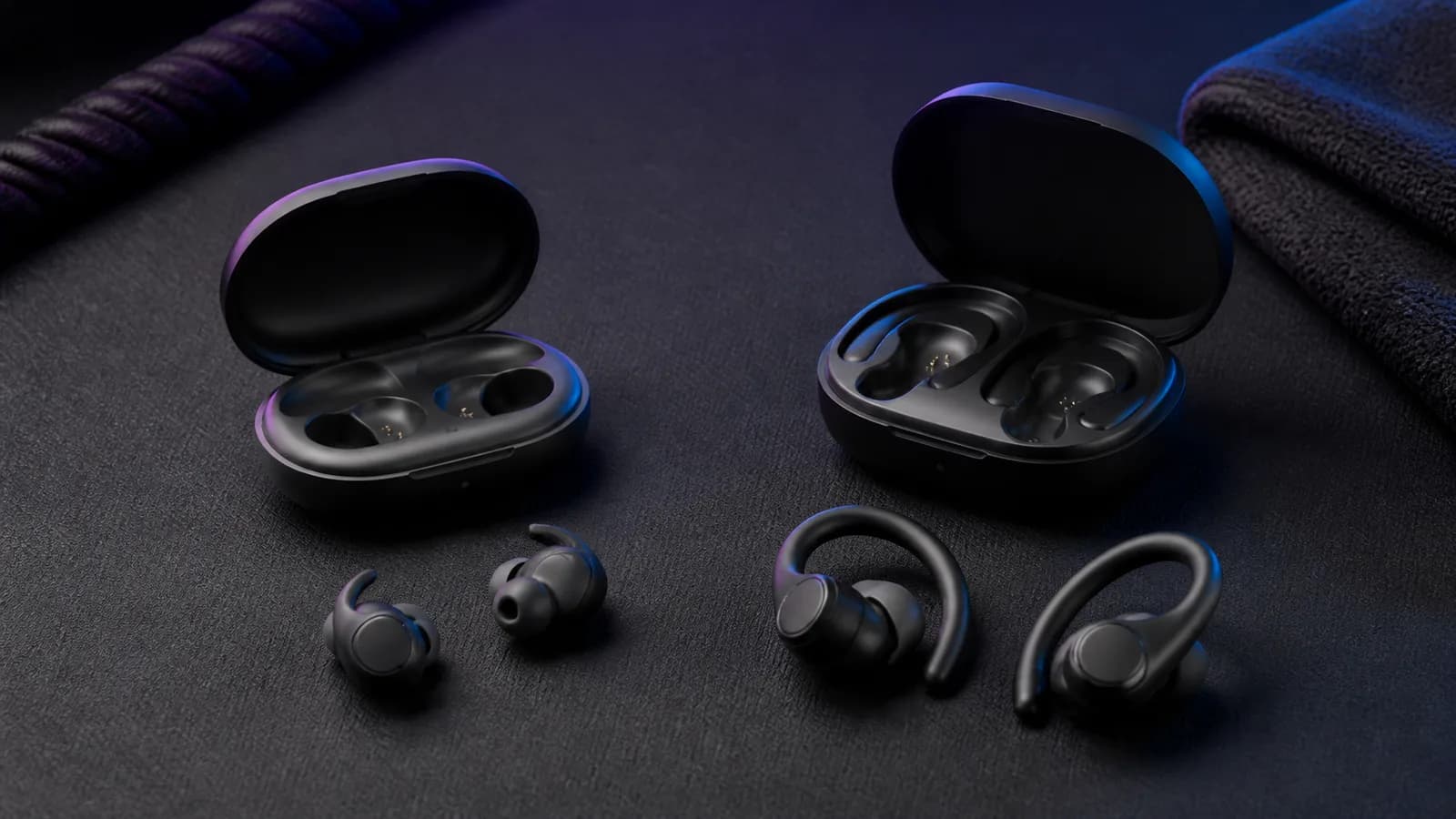
The Powerbeats Fit is the better workout earbud for most buyers. Each bud is lighter, the case is smaller and sweat-resistant, and the flexible wingtips avoid the bulk of a full over-ear hook. Buy the Powerbeats Pro 2 instead if you specifically want full earhooks, longer battery life, Qi charging, physical volume rockers, or in-ear heart-rate data.
Both have active noise cancellation, Transparency mode, Apple and Android support, and IPX4-rated earbuds. Neither is suitable for swimming. The decision is mostly about fit hardware and whether the Pro 2 extras solve a problem you actually have.
This comparison is research-based. We have not completed matched hands-on tests of comfort, retention, sound, ANC, microphones, heart-rate accuracy, battery runtime, or long-term durability. The recommendation uses current Beats and Apple specifications, exact US product validation, and the practical differences between wingtip and earhook designs.
Quick answer
- Buy Powerbeats Fit if you want a compact workout earbud that is easier to carry and less visually bulky. It uses flexible wingtips, weighs 5.78g per bud, includes four ear-tip sizes, and provides up to seven hours per charge with ANC and Transparency off.
- Buy Powerbeats Pro 2 if full earhooks are non-negotiable or you will use its extra hardware. It adds the H2 chip, optional heart-rate monitoring, tactile volume rockers, five ear-tip sizes, Qi charging, and up to ten hours per charge with ANC and Transparency off.
- Skip both if you need an earbud for swimming or repeated submersion. Both earbuds are IPX4, which covers sweat and splashes rather than water sports.
The Pro 2 is not simply “Powerbeats Fit, but better.” It is heavier and its case is larger and not water-resistant. Pay more only when its earhooks, battery, controls, charging, or heart-rate feature matter to your training.
Powerbeats Fit vs Powerbeats Pro 2 specs
| Feature | Powerbeats Fit | Powerbeats Pro 2 |
|---|---|---|
| Retention design | Flexible secure-fit wingtips | Nickel-titanium reinforced full earhooks |
| Ear-tip sizes | 4: XS, S, M, L | 5: XS, S, M, L, XL |
| Weight per bud | 5.78g | 8.7g |
| Total weight with case | 61.3g | 77.7g |
| Apple chip | H1 | H2 |
| ANC / Transparency | Yes / yes | Yes / yes |
| Heart-rate monitoring | No | Yes, optional |
| Battery, modes off | Up to 7h buds / 30h total | Up to 10h buds / 45h total |
| Battery, ANC or Transparency on | Up to 6h buds / 24h total | Up to 8h buds / 36h total |
| Fast Fuel | 5 minutes for up to 1h | 5 minutes for up to 1.5h |
| Charging | USB-C | USB-C and Qi wireless |
| Earbud water resistance | IPX4 | IPX4 |
| Case water resistance | IPX4 | Not rated as sweat- or water-resistant |
| On-device controls | Multifunction button | Multifunction button plus volume rocker on each bud |
These are manufacturer claims and published specifications, not SolderMag test results. Battery life changes with listening mode, volume, calls, device settings, temperature, and battery age.
Who Powerbeats Fit is for
Choose Powerbeats Fit if:
- a wingtip already gives you enough stability;
- you want the smaller, lighter setup for commuting and everyday use as well as exercise;
- an IPX4-rated charging case is useful around a sweaty gym bag;
- you do not need heart-rate data from the earbuds;
- USB-C charging is enough;
- you would rather avoid a full hook around the outside of the ear.
Skip it if wingtips tend to work loose in your ears, you want a dedicated volume rocker, or a ten-hour manufacturer battery claim matters for long training days.
Powerbeats Fit (Spark Orange)
Why it works
- Lighter 5.78g earbuds
- Smaller IPX4-rated charging case
- ANC, Transparency, and Apple/Android support
Main trade-off
- No heart-rate monitoring
- USB-C charging only
- Wingtip pressure and security still depend on ear shape
Who Powerbeats Pro 2 is for
Choose Powerbeats Pro 2 if:
- you trust a full earhook more than an in-ear wingtip for running, court sports, or hard intervals;
- you want heart-rate data without wearing a separate chest strap or watch during a supported workout;
- you need longer time away from the charging case;
- Qi charging is already part of your desk or bedside setup;
- physical volume controls matter when a phone is out of reach;
- the extra-large fifth ear tip improves your chance of getting a proper seal.
Skip it if you dislike over-ear hooks, wear glasses that already occupy that space, or want the smallest case. The Pro 2 is also a poor reason to duplicate heart-rate sensors you already trust on a watch or chest strap.

Powerbeats Pro 2
Why it works
- Full nickel-titanium reinforced earhooks
- Optional in-ear heart-rate monitoring
- Longer battery claims and Qi charging
Main trade-off
- Heavier earbuds and case
- Charging case is not water-resistant
- Premium features may duplicate a fitness watch
Fit: wingtip or full earhook?
The fit mechanism should decide this purchase before sound features do.
Powerbeats Fit uses a flexible wing that tucks under the ridge of the outer ear. It is a compact design with less material outside the ear, but pressure and security depend on ear shape. Four silicone tip sizes help create the acoustic seal; they do not change how the wing sits against the ear.
Powerbeats Pro 2 wraps a reinforced hook around the ear. That gives the hardware another physical anchor and makes it the more obvious choice for buyers whose normal buds loosen during running or repeated jumping. It also adds bulk around glasses, sunglasses, hair, helmets, and some headbands.
We cannot declare either universally more comfortable without matched wear testing. If your current wingtip earbuds stay put, the Fit is the simpler design. If you already know wingtips fail for you, buy the hook rather than hoping a newer wing solves your anatomy.
Fit also affects sound, ANC, and the Pro 2 heart-rate readings. A poor seal can reduce bass and noise cancellation; Beats says correct placement is important to heart-rate accuracy. Use the included tip sizes and the fit-test tools instead of assuming the factory-installed medium tip is right.
Our workout-earbuds buying guide compares these retention designs with shaped housings and higher-IP alternatives. The broader true wireless earbud guide covers seal, controls, codecs, and battery claims beyond gym use.
Size and case: Powerbeats Fit travels better
Powerbeats Fit weighs 5.78g per bud and 61.3g with its case. Powerbeats Pro 2 weighs 8.7g per bud and 77.7g in total. The difference is not enormous in a bag, but it reflects what each design is doing: the Pro 2 carries a full hook, more battery, heart-rate hardware, and a larger charging case.
The Fit is the easier everyday carry. Its case measures 6.25 × 5.54 × 2.75cm and is IPX4-rated. Beats lists the Pro 2 case at 7.5 × 6.6 × 3.4cm, and explicitly says that case is not sweat- or water-resistant.
That does not make the Pro 2 fragile. It means the earbuds and case have different exposure limits. Dry either pair before putting the buds away, and do not treat a gym-bag splash rating as permission to wash the hardware under a tap.
Battery and charging: Pro 2 wins clearly
With ANC and Transparency off, Beats rates Powerbeats Fit for up to seven hours from the buds and 30 hours including the case. Powerbeats Pro 2 extends those claims to ten and 45 hours.
With ANC or Transparency enabled, the figures fall to six and 24 hours for Fit, and eight and 36 hours for Pro 2. Those are more relevant comparisons for buyers who expect to use listening modes during every session.
Fast Fuel is also slightly stronger on the Pro 2: a five-minute charge is rated for up to 1.5 hours, versus one hour for Fit. Only the Pro 2 supports Qi charging; both accept USB-C, and neither includes a wall adapter or USB-C cable in the box.
The extra battery is worthwhile for endurance events, travel, or anyone who routinely forgets to charge. For one-hour gym sessions, it should not be the sole reason to carry the larger earhook design.
Heart-rate monitoring is useful only if it replaces something
Powerbeats Pro 2 can share real-time heart-rate data with supported Apple and Android workout apps or compatible fitness equipment. The feature is optional and can be disabled.
That is useful when you train without a watch or want one device handling audio and heart rate. It is less compelling when a trusted watch or chest strap already records every session. Two sensors do not automatically make the workout data more useful, and we have not independently checked the Pro 2 against medical or sports-lab equipment.
On iPhone, Apple documents heart-rate sharing with Fitness workouts, Health, third-party apps, and equipment. Firmware and app support matter, so confirm the exact workout workflow before buying the earbuds for this feature alone.
Powerbeats Fit has no heart-rate sensor. For many buyers, that is not a missing feature; it is hardware they would not have used.
H1 vs H2 and sound features
Powerbeats Fit uses Apple's H1 chip. Powerbeats Pro 2 uses the newer H2. Both support active noise cancellation, Transparency mode, Personalized Spatial Audio with dynamic head tracking, automatic play and pause, and Apple and Android workflows.
Do not turn the chip name into a sound-quality verdict. Beats uses different acoustic platforms, housings, vents, microphones, and fit systems across the two products. We have not run matched listening, ANC, wind, or microphone tests, so there is no credible SolderMag winner for sound here.
The Pro 2's H2 platform enables its current combination of noise control, heart-rate features, battery management, and Apple integration. The Fit's H1 platform still covers the core conveniences many iPhone buyers expect, including one-touch pairing, Automatic Switching, Audio Sharing, hands-free Siri, and Find My. Android users access extra functions through the Beats app on both products, but should not assume every Apple integration maps across identically.
If microphone quality matters more than workout retention, use our earbuds for phone calls guide. Call performance is a separate buying problem from secure fit.
Controls: Pro 2 is better without a phone
Both models have a multifunction button on each earbud. Powerbeats Pro 2 adds a tactile volume rocker to each side.
That is a small feature until you are running, lifting, or wearing gloves and do not want to reach for a phone. Physical volume adjustment is one of the clearest day-to-day advantages of the Pro 2.
Powerbeats Fit lets you customise what the main buttons do, including assigning volume controls. The compromise is that one control has to serve several jobs. Pro 2 keeps a dedicated rocker available without sacrificing the main button's normal role.
Water resistance: neither is a swimming earbud
Both sets of earbuds are IPX4-rated. That means resistance to sweat and splashing, not waterproofing for swimming, showering, or deliberate submersion.
Powerbeats Fit has the better case protection because Beats also rates its charging case IPX4. The Powerbeats Pro 2 case is not sweat- or water-resistant. That difference matters if the case sits beside a treadmill, travels in a damp running belt, or shares a bag with wet clothes.
For buyers who prioritise a higher IP rating over ANC or Apple features, see the alternatives in our best earbuds for working out roundup.
Price and value
Powerbeats Fit is the sensible value choice when you only need secure wingtips, ANC, Transparency, and normal workout battery life. Its smaller case and lower weight are benefits, not signs that you bought the lesser version.
Powerbeats Pro 2 earns its premium through tangible hardware: full earhooks, longer battery life, heart-rate sensors, Qi charging, volume rockers, and a fifth tip size. We would pay extra for two or more of those. We would not pay extra just for the H2 label or a larger maximum battery number that never changes how the earbuds are used.
Check the current price gap at the time you buy. If they are close, the Pro 2 offers more hardware. If the gap is wide and you do not need earhooks or heart rate, Fit is enough.
Alternatives
JBL Endurance Race 2: consider it when a higher IP rating and lower-cost positioning matter more than the Beats ecosystem. It uses a wing-enhancer design, offers ANC and Smart Ambient, and carries an IP68 earbud rating. Check current availability before treating it as the automatic budget answer.
Sony WF-1000XM5: a more general-purpose premium earbud for commuting, calls, and moderate exercise. Its standard in-ear shape is less mechanically secure than wings or hooks for hard movement.
A sports watch plus ordinary workout earbuds: the better split when you already want GPS, pace, distance, recovery, and training-load data. Do not buy the Pro 2 heart-rate feature as a substitute for a complete training platform.
Buying checklist
Before ordering either model:
- Decide whether wingtips have stayed secure in your ears before.
- Check whether glasses, hair, or headgear will compete with a full earhook.
- Confirm that four tip sizes are enough, or whether you need the Pro 2's XL option.
- Decide whether heart-rate data from the earbuds will replace another sensor.
- Compare the battery figures with ANC or Transparency on, not only the largest claim.
- Choose whether Qi charging and dedicated volume rockers will change daily use.
- Remember that IPX4 does not cover swimming or showering.
- Check the exact colour, model, return policy, and current availability before buying.
FAQ
Are Powerbeats Pro 2 more secure than Powerbeats Fit?
The Pro 2 has the stronger mechanical retention design because a full hook wraps around the ear. That does not prove it will be more comfortable for every person. Fit uses a smaller wing that braces inside the outer ear, and either design can work well when it matches your anatomy.
Does Powerbeats Fit have heart-rate monitoring?
No. Heart-rate monitoring is a Powerbeats Pro 2 feature. It can share data with supported apps and equipment and can be disabled when not needed.
Which one has better battery life?
Powerbeats Pro 2 has the higher manufacturer claims: up to ten hours from the buds and 45 hours with the case when ANC and Transparency are off. Powerbeats Fit is rated for up to seven and 30 hours under the corresponding conditions.
Can I swim with either model?
No. Both earbuds are IPX4-rated for sweat and splashes, and Apple says Powerbeats models are not designed for water sports such as swimming. The Fit case is also IPX4-rated; the Pro 2 case is not water-resistant.
Does Powerbeats Fit support wireless charging?
No. Powerbeats Fit charges by USB-C. Powerbeats Pro 2 supports both USB-C and Qi-compatible wireless chargers.
Are both compatible with Android?
Yes. Beats provides Android app support for pairing, controls, battery status, and device-location features. Pro 2 also exposes heart-rate functions on supported Android workflows. Exact Apple and Android integrations are not identical.
Final recommendation
Buy Powerbeats Fit if wingtips work for your ears and you want the smaller, lighter, easier-to-carry workout option. It covers the features most people use without charging extra space and weight for heart-rate sensors and full hooks.
Buy Powerbeats Pro 2 if earhooks are the reason you trust the fit, or if longer battery life, Qi charging, physical volume controls, and heart-rate data will all earn their place. Those are real advantages. They are not universal necessities.
Sources and methodology
- Beats official Powerbeats Fit product page for current design, dimensions, weights, battery claims, controls, water resistance, Apple/Android support, and box contents.
- Beats official Powerbeats Pro 2 product page for earhook design, dimensions, weights, battery claims, H2 platform, heart-rate monitoring, controls, Qi charging, water resistance, and box contents.
- Apple sweat and water resistance guidance for the limits of IPX4 and the instruction not to use Powerbeats for swimming or showering.
- Apple Powerbeats Pro 2 user guide for supported heart-rate sharing and firmware-dependent features.
- Amazon Creators API and direct-page validation for Spark Orange Powerbeats Fit (
B0FPGQMMGN) and Jet Black Powerbeats Pro 2 (B0DT2344N3) using the configuredsoldermag-20US Associate tag.
We weighted fit mechanism, weight, case size, water-resistance limits, battery conditions, charging, controls, heart-rate usefulness, and whether the premium features replace another device. We did not use fixed prices, discounts, ratings, review counts, unsupported sound claims, or unverified hands-on impressions.
As an Amazon Associate I earn from qualifying purchases.