eero Max 7 vs TP-Link Deco BE63: Best WiFi 7 Mesh System in 2026
eero Max 7 vs Deco BE63. coverage, speed, app experience, and value compared for WiFi 7 mesh in 2026.
Editorial evidence review
Recommendations are checked against product documentation, availability, comparative evidence, and clearly disclosed hands-on work where it exists.
Quick picks
The short answer, with the trade-offBest overall
Amazon eero Max 7 Mesh WiFi System (3-Pack)
Ballistic speeds over 3Gbps close range
Trade-off: Very expensive
Best value
TP-Link Deco BE63 Whole Home Mesh WiFi 7 System (3-Pack)
Trade-off: Advanced security behind subscription
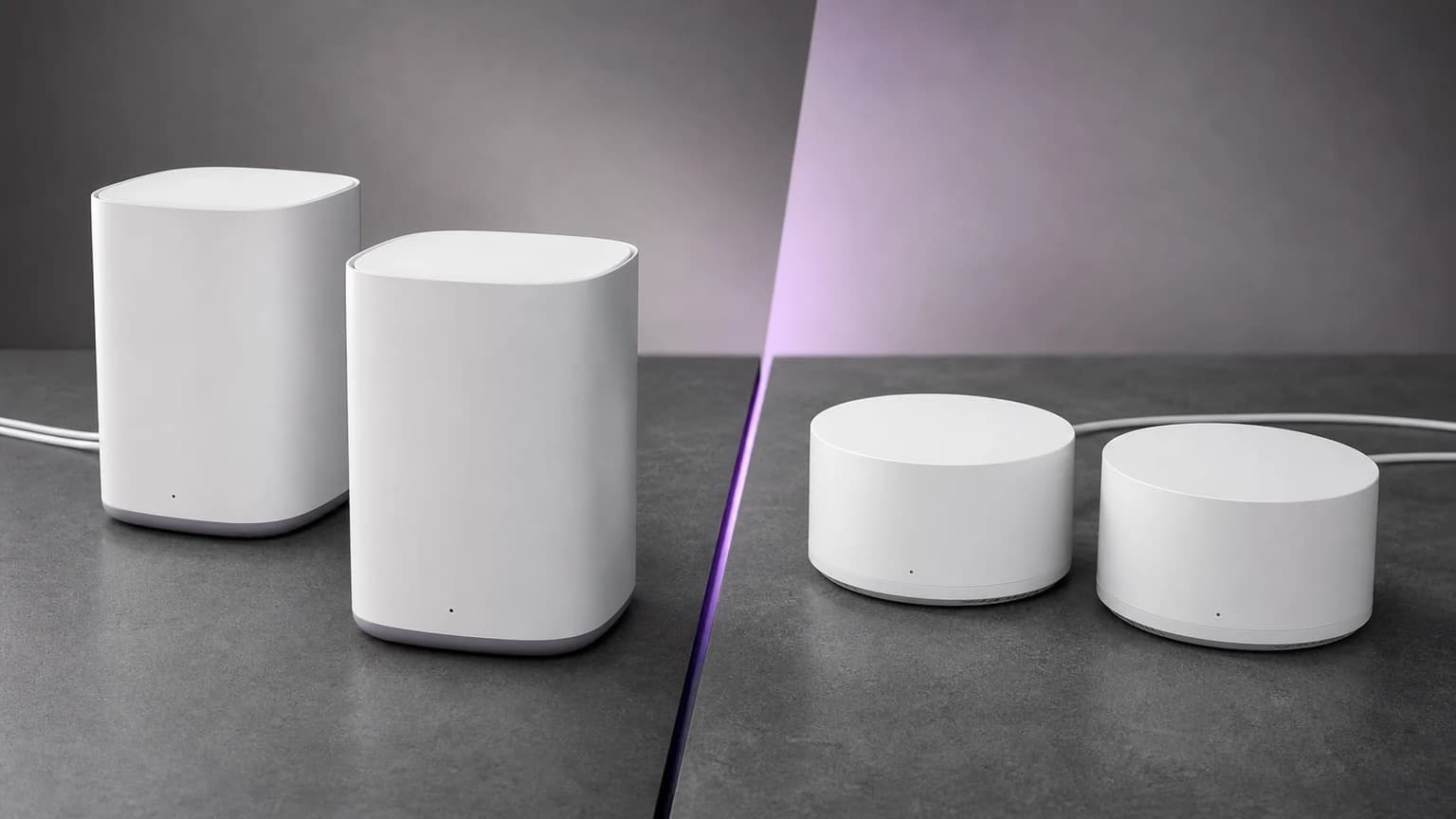
Two WiFi 7 mesh systems, two very different philosophies. The eero Max 7 is the premium "just works" option. The TP-Link Deco BE63 is the value play that punches above its weight.
If you're choosing between these two, here's everything that actually matters.
SolderMag Take: the Deco BE63 is the smarter buy for most homes
The eero Max 7 is the better product on paper. Faster close-range speeds, more Ethernet ports (including 10Gbps), and a cleaner app experience.
But the Deco BE63 costs significantly less and delivers WiFi 7 mesh coverage that's excellent for the vast majority of homes. Unless you have multi-gig internet or need 10Gbps wired ports, the price gap is hard to justify.
Buy the eero if money isn't the constraint. Buy the Deco if you want great WiFi 7 mesh without the premium tax.
Speed
eero Max 7: Ballistic. Over 3Gbps at close range on the 6GHz band, and still strong at distance. The tri-band design with a dedicated backhaul channel means satellite nodes stay fast even under heavy load. This is genuinely one of the fastest mesh systems you can buy.
Deco BE63: Fast by any normal standard. Tri-band WiFi 7 with strong speeds on all bands. You won't hit eero numbers at close range, but in real-world use across a home, the difference narrows considerably. Most households won't notice the gap.
Winner: eero Max 7, but only meaningfully if you have multi-gig internet.
Coverage
eero Max 7 (3-pack): Covers large homes comfortably. The powerful radios and dedicated backhaul mean you can space nodes further apart without losing performance. Great for multi-story homes.
Deco BE63 (3-pack): Rated for up to 7,600 sq ft, which is generous but not unrealistic. Coverage is wide and consistent. For most 2-3 bedroom homes, two nodes may be enough. the third is insurance.
Winner: Roughly tied for typical homes. The eero has an edge in very large or challenging layouts.
App experience
eero Max 7: The eero app is the gold standard for consumer mesh. Clean interface, easy setup, solid device management. The downside: advanced features like ad blocking and security are locked behind the eero Plus subscription. If you hate subscriptions on hardware, this stings.
Deco BE63: The TP-Link Deco app is good, not great. Setup is straightforward, and basic management works well. Advanced security and parental controls also sit behind a subscription (TP-Link HomeShield). The app has more clutter than eero's, but it gets the job done.
Winner: eero, by a comfortable margin. Both have the subscription problem.
Ports and wired backhaul
eero Max 7: Each node has 2x 10Gbps and 2x 2.5Gbps Ethernet ports. This is excellent. If you wire your backhaul (and you should, if you can), the 10Gbps ports future-proof you for years.
Deco BE63: Each node has 4x 2.5Gbps Ethernet ports. Perfectly fine for wired backhaul and connecting devices. No 10Gbps, but 2.5Gbps handles anything most households throw at it.
Winner: eero, if you have or plan for multi-gig networking. Deco BE63 is sufficient for everyone else.
Setup and reliability
eero Max 7: Setup is nearly effortless. Firmware updates happen automatically. Reliability is excellent. eero has years of mesh experience and it shows. The system just runs quietly in the background.
Deco BE63: Setup is similarly easy. TP-Link's mesh reliability has improved significantly, though some users report occasional firmware quirks. Overall stable, but eero has the edge in long-term "forget about it" reliability.
Winner: eero, slightly.
Smart home integration
eero Max 7: Built-in Zigbee and Thread radios. If you're building a smart home, the eero can act as a hub for compatible devices. This is a genuine differentiator. fewer boxes, cleaner setup.
Deco BE63: No built-in smart home radios. You'll need separate hubs for Zigbee/Thread devices. Not a dealbreaker if you already have hubs, but it's another box on the shelf.
Winner: eero, if smart home matters to you.
Price and value
This is where the comparison gets real. The eero Max 7 3-pack is substantially more expensive than the Deco BE63 3-pack. We're talking potentially double the price or more.
For the Deco BE63, you get WiFi 7 mesh that covers a large home with fast, reliable performance. For the eero, you get faster speeds, better ports, a nicer app, and smart home integration. but at a steep premium.
The verdict
Amazon eero Max 7 Mesh WiFi System (3-Pack)
Why it works
- Ballistic speeds over 3Gbps close range
- Great long range performance
- 2x10Gbps + 2x2.5Gbps ports per node
Main trade-off
- Very expensive
- Advanced features behind subscription
TP-Link Deco BE63 Whole Home Mesh WiFi 7 System (3-Pack)
Why it works
- Affordable WiFi 7 entry
- Fast speeds on all bands
- Excellent coverage up to 7600 sq ft
Main trade-off
- Advanced security behind subscription
- No 10Gbps ports
Decision checklist
Buy the eero Max 7 if you:
- Have multi-gig internet (or plan to)
- Want 10Gbps wired ports for NAS/servers
- Care about the best app experience
- Are building a Zigbee/Thread smart home
- Don't mind paying a premium for "best in class"
Buy the Deco BE63 if you:
- Want WiFi 7 mesh without spending a fortune
- Have standard gigabit or 2Gbps internet
- Need wide coverage for a large home
- Want solid performance without overpaying
- Prefer to spend the savings on other upgrades
Consider something else if you:
- Live in a small apartment (a single WiFi 7 router is probably enough)
- Need absolute maximum performance and have deep pockets (the Netgear Orbi 970 in our mesh roundup goes even further)
- Want power-user features like advanced QoS (check the TP-Link Deco BE85 in that same guide)
For the full ranked list including all price points, see our best WiFi 7 mesh systems and best WiFi 7 routers guides.