Best Air Purifiers for Allergies (2026): CADR, HEPA, and Quiet Picks
The best air purifiers for allergies in bedrooms, offices, pet homes, and larger rooms, with practical CADR sizing and filter-cost advice.
Editorial evidence review
Recommendations are checked against product documentation, availability, comparative evidence, and clearly disclosed hands-on work where it exists.
Quick picks
The short answer, with the trade-offBest classic value
Coway Airmega AP-1512HH
Best bedroom pick
Winix 5500-2 air purifier
Best large room
Coway Airmega 400 air purifier
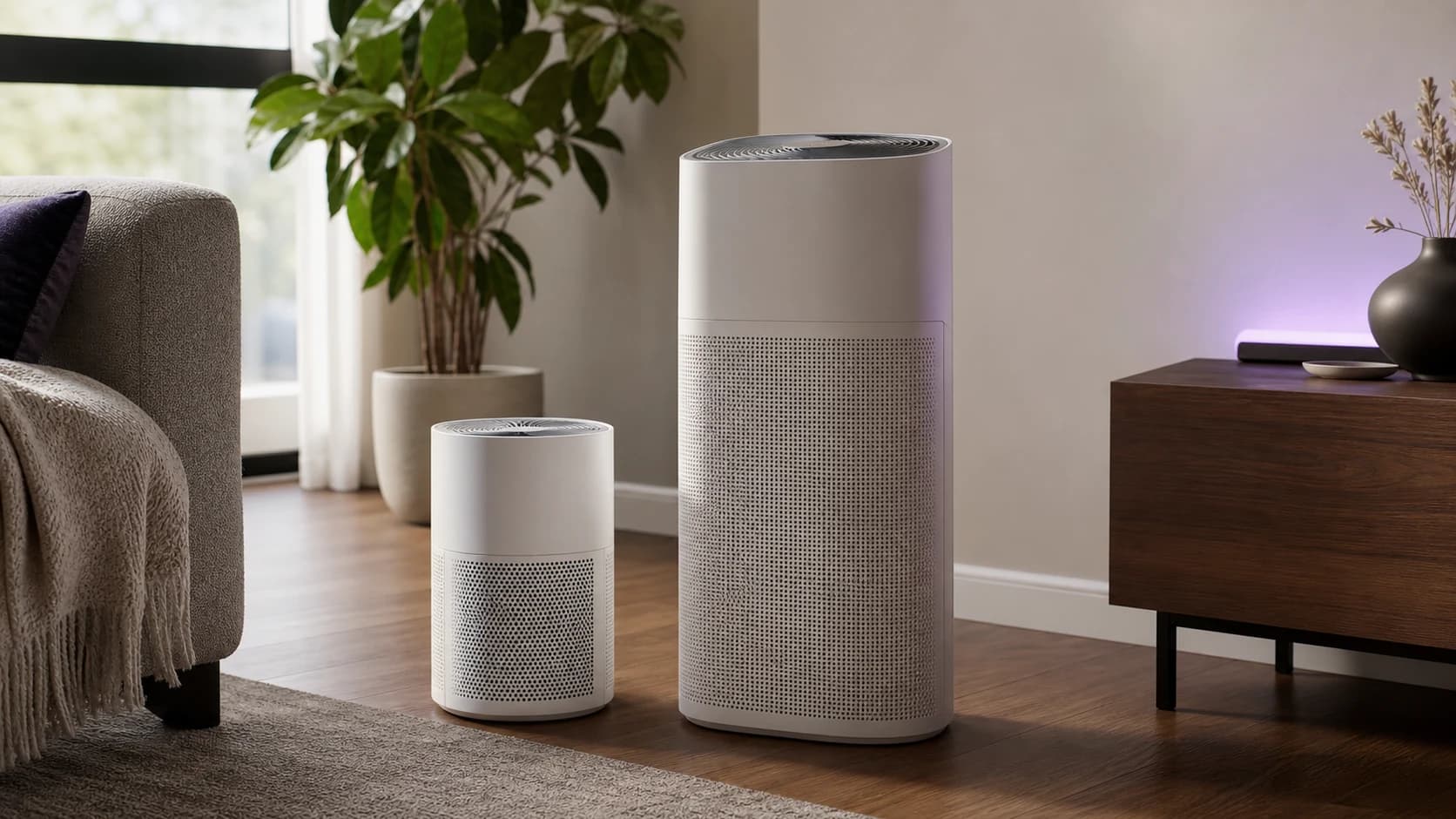
The best air purifier for allergies is not the one with the biggest room-size claim on the box. It is the one with enough CADR for your real room, a particle filter you can keep replacing, and a fan speed quiet enough that you will actually leave it running.
Allergy buyers should care about pollen, dust, pet dander, smoke particles, and filter cost. Apps and glowing sensors are useful only after the purifier can move enough clean air.
SolderMag Take: allergy relief starts with CADR and runtime
If allergies are the problem, buy for air changes, not vibes.
The simple buying path:
- Measure the room.
- Choose a purifier with enough CADR for the room size.
- Oversize slightly so you can run it on a quieter speed.
- Check filter price and availability before buying.
- Skip ozone-first or ionizer-first products.
Our broader best air purifiers guide covers smoke, dust, and general indoor air quality. This page is narrower: pollen, dander, dust mite particles, bedroom use, and all-day allergy management.
If you are comparing Blueair's mid-size smart purifiers specifically, our Blueair Blue Pure 311i Max review and Blueair Blue Pure 311i+ Max review explain the naming issue, CADR fit, and filtration caveat.
Best allergy air purifier types
Levoit Vital 200S class: best overall for most allergy rooms
The Vital 200S-style purifier is the current sweet spot for many bedrooms and home offices because it combines practical airflow, a rectangular intake shape, smart controls, and filters that are widely available.
Buy this class if you want a modern purifier for a bedroom, office, or medium living space and you care about quiet continuous operation.
Coway AP-1512HH class: best proven value
The Coway AP-1512HH-style purifier remains a sensible allergy pick because it has a long track record, strong CADR for its size, and a simple design that does not depend on an app.
It is not the newest-looking machine, but that is part of the appeal. For allergies, boring reliability is better than a prettier purifier with weaker airflow.
Winix 5500-2 class: best bedroom value with carbon help
Winix 5500-2-style purifiers are often strong value picks for bedrooms and smaller living spaces. They combine HEPA-class particle filtration with a more useful carbon filter than many budget units.
If you are sensitive to ionizer features, check whether the model lets you disable them and whether the unit meets the emissions expectations in your region.
Coway Airmega 400 class: best for large rooms
Large open rooms need more airflow. A purifier that works in a bedroom may not keep up in a living room, especially if doors stay open or pets move between spaces.
Buy a larger Airmega 400-style unit if you need quiet airflow over a bigger area. Another good approach is two medium purifiers at opposite sides of the room.
How to size an air purifier for allergies
CADR stands for clean air delivery rate. It is a practical airflow number, usually split into smoke, dust, and pollen. For allergy use, pollen and dust CADR matter, but smoke CADR is often the conservative sizing baseline.
A useful rule of thumb from AHAM is that CADR should be at least two-thirds of the room area in square feet. For wildfire smoke, the smoke CADR target is higher: roughly equal to the room area in square feet.
Example:
- 120 sq ft bedroom: look for about 80+ CADR minimum; more is better if noise matters.
- 180 sq ft office: look for about 120+ CADR minimum.
- 300 sq ft living room: look for about 200+ CADR minimum, or use two units.
If ceilings are high, doors stay open, or pets shed heavily, size up.
Use the air purifier CADR calculator to include ceiling height and compare everyday sizing with extra smoke headroom.
If outdoor smoke is the main problem, our wildfire-smoke air purifier guide uses the higher room-area-matched smoke-CADR target.
HEPA, carbon, and ionizers
HEPA-class filtration
For allergies, prioritize mechanical particle filtration. HEPA-class filters are the safest baseline for pollen, dust, and dander. Be careful with vague "HEPA-like" language if the manufacturer does not publish clear performance claims.
Carbon filters
Carbon helps with some odors, but most consumer purifiers use thin carbon sheets. They are useful for pet smell and light cooking odor, not a full solution for gases or VOC-heavy problems.
Ozone and ionizers
Avoid ozone generators in occupied rooms. EPA guidance is clear that ozone is a lung irritant, and ozone-generating devices should not be treated as normal allergy appliances.
Some purifiers include ionizer modes. If you buy one, make sure the feature can be disabled and that the unit meets relevant low-ozone certification expectations.
Allergy setup tips that matter
- Run the purifier before symptoms spike, not only after the room feels bad.
- Keep the unit in the room where you sleep or work.
- Leave doors and windows closed when you want fast cleaning.
- Keep intake and exhaust clear.
- Vacuum prefilters if the manual recommends it.
- Replace filters on schedule; a clogged filter turns good hardware into weak airflow.
- Do not hide the purifier behind a chair or curtain.
What to avoid
- Huge room-size claims with weak CADR numbers.
- Filters that are hard to buy locally.
- Tiny purifiers for large rooms.
- Auto mode that keeps the fan too low during allergy season.
- Ozone, "activated oxygen," or purifier-first marketing that avoids CADR.
- Buying one purifier for the whole house when symptoms happen in specific rooms.
The verdict
For allergy control, buy a HEPA-class air purifier with enough CADR for the room and a noise level you can live with all day. The Levoit Vital 200S class is the easiest modern pick for many rooms, the Coway AP-1512HH class is the proven value choice, the Winix 5500-2 class is strong for bedrooms, and larger Airmega-style units make more sense for open living spaces.
Related reading: Best Air Purifiers, Best Air Purifiers for Pets, Complete Smart Home Setup, Best Robot Vacuums for Pet Hair, and Best Smart Plugs.
Sources and methodology
We rank allergy purifiers by CADR sizing, filter availability, quiet sustained airflow, HEPA-class particle filtration, ownership cost, and safety posture around ozone or ionizer features.