Sony WH-1000XM6 Review: A Travel Headphone With Clear Limits
Sony WH-1000XM6 specifications, folding design, battery ratings, charging requirements, and buying trade-offs, with a clear research-based verdict.
Research-based review
Recommendations are checked against product documentation, availability, comparative evidence, and clearly disclosed hands-on work where it exists.
Quick picks
The short answer, with the trade-off
Reviewed
Sony WH-1000XM6 Wireless Noise Canceling Headphones

Original Bose alternative
Bose QuietComfort Ultra Headphones (original generation, White Smoke)
Over-ear alternative
Sennheiser Momentum 4 Wireless (Black)
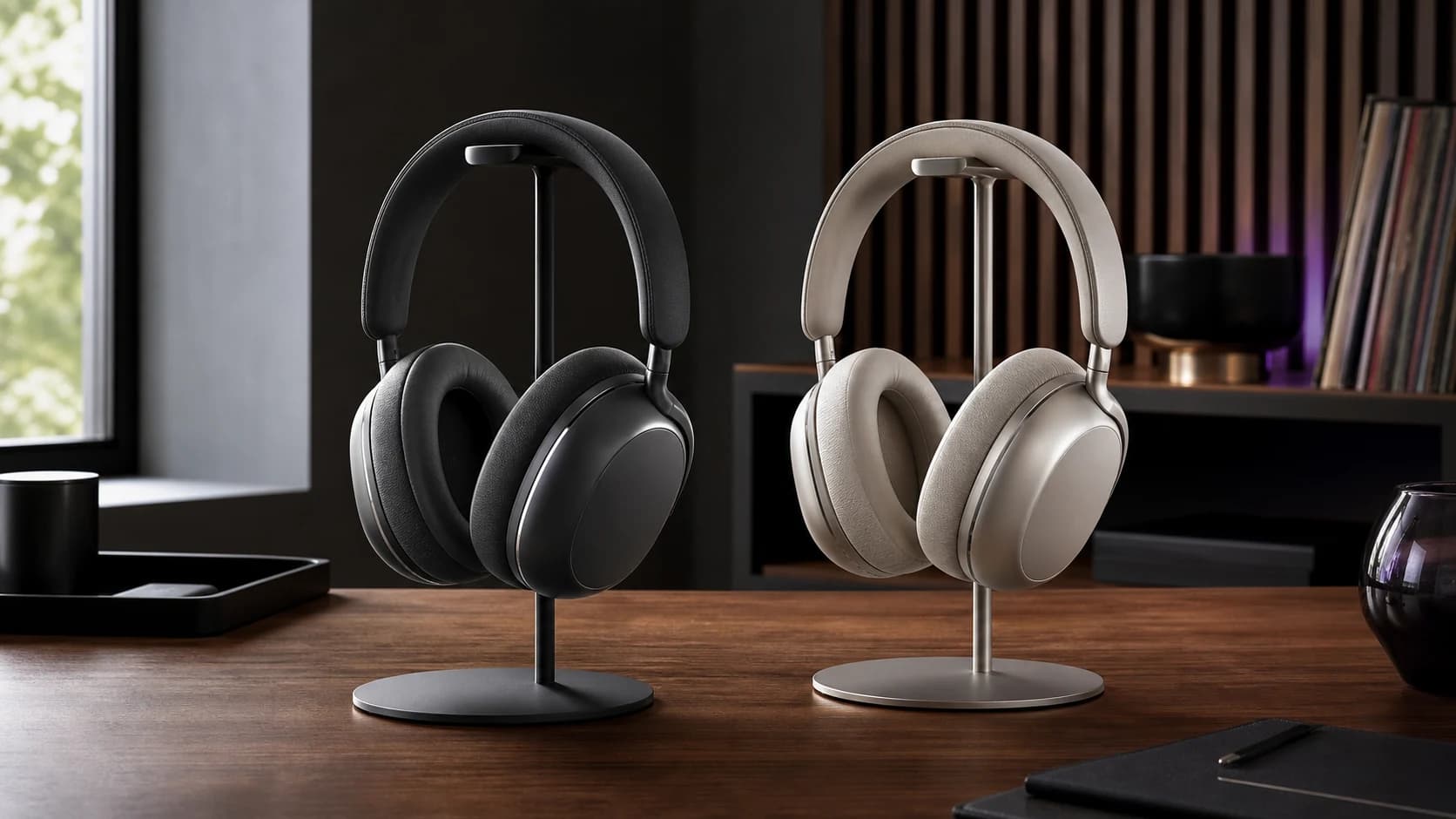
The Sony WH-1000XM6 is worth considering if you need one pair of over-ear headphones for travel, music, and calls across a phone and laptop. Its practical appeal is the folding design, multipoint support, app controls, and wired fallback. None of those features makes an upgrade compulsory if your current headphones work well.
This is a research-based review using Sony's specifications, product information, and help guide. SolderMag has not completed hands-on testing of the XM6. Comfort, cancellation strength, microphone quality, and real battery runtime are not presented here as our measured results.
SolderMag Take
Start with the XM6 if your existing headphones fail a specific requirement: they do not pack down conveniently, cannot handle your device switching, or lack the controls you want. Keep a working pair if the case size and feature set already suit you.
The point of comparison is the complete routine. A headphone that fits comfortably and works with your meeting setup is worth more than a specification advantage you never use. Our noise-cancelling headphone buying guide explains how to choose around those requirements.
Key specifications
| Feature | Sony's specification | Buying implication |
|---|---|---|
| Driver | 30mm | Driver diameter is not a sound-quality ranking |
| Weight | Approximately 254g | Try the fit with your glasses and normal hairstyle |
| Battery | Up to 30 hours ANC on; 40 hours ANC off | Manufacturer maximums, not measured SolderMag runtime |
| Bluetooth | Version 5.3; multipoint | Confirm behaviour with your phone and laptop |
| Listed codecs | SBC, AAC, LDAC, LC3 | Source and connection-mode support still matter |
| Wired input | Stereo mini jack, with passive operation | Useful when a wired source is the simpler choice |
| Included accessories | Carrying case, connection cable, USB cable | Check whether the retailer includes a charging adapter |
Source: Sony WH-1000XM6 specifications. Weight in grams also appears in Sony's regional specification sheet.
What the design buys you
Sony documents a folding mechanism and magnetic case closure. Those are tangible reasons to consider the XM6 for a bag used every day. Check the folded case against your available space rather than assuming any over-ear headphone will fit a small front pocket. Sony design interview.
Comfort cannot be resolved from weight alone. During a return window, wear the headphones for the length of a normal meeting and look for pressure around your ears or at the headband. Do this with glasses if you wear them. A brief shop demo can miss the pressure that builds during longer sessions.
Noise cancellation and sound: what is established
Sony identifies the noise-cancelling processor as QN3, working with 12 microphones. Its documented features include adaptive optimisation and ambient sound controls. These establish what the headphone offers, but do not establish that it cancels more noise than every competitor. Sony XM6 product page.
Our recommendation is to evaluate it against the noise you actually want to reduce. Train rumble, nearby speech, and wind are different problems. Use a return policy that allows a normal trial; do not turn a manufacturer's superlative into a substitute for checking your use case.
The same applies to sound. EQ and codec choices are useful controls. We have no listening-panel results or frequency-response measurements to call this model the best sounding, or to promise an audible improvement from LDAC with every source.
Battery and quick charging
Sony's quick-charge claim needs the right power adapter. Its help guide specifies about three hours of playback from three minutes with a USB PD adapter supporting at least 9V/2.3A; a 5V/1.5A adapter has a lower stated quick-charge result. Check the charger you carry. Sony charging guide.
Do not turn the 30-hour ANC figure into a guaranteed week between charges. Calls, settings, volume, and battery age change the result. If you depend on headphones for a long travel day, leave a reserve instead of scheduling around the maximum rating.
Calls and device switching
Multipoint gives the XM6 a reason to be on a phone-and-laptop shortlist. Set it up through Sony's Sound Connect app and confirm the call and audio routes on both devices. Sony support and app links.
Make a recording or a short test call in the software you use for work. Check whether the intended microphone is selected and whether incoming phone calls interrupt the laptop as expected. We cannot promise it replaces a dedicated microphone in a noisy office without comparable recordings.
Who should buy, and who should skip
Consider it for travel and mixed phone/laptop use when the folding design and control options solve a daily inconvenience. It is also worth comparing if your current headphone battery no longer lasts through normal use.
Skip the upgrade if your current pair already meets those needs. For mostly desk-based listening, compare wired headphones before paying for travel features. For workouts, choose a product designed for that environment: Sony states that the XM6 is not waterproof. Sony care guidance.
Alternatives and value
Compare the original Bose QuietComfort Ultra Headphones and Sennheiser Momentum 4 Wireless if their delivered prices are lower. Check the exact generation, warranty, and condition before treating a discount as a saving. Try the fit where possible: an uncomfortable alternative is poor value even at a lower price.
Use our Sony XM6 versus Bose QC Ultra comparison for a separate comparison, then check the broader best noise-cancelling headphones guide. A price gap is worth paying only for a feature you expect to use.
Verdict
Shortlist the XM6 if you travel regularly and switch between a phone and laptop. Its folding design, multipoint connection, and wired input address those jobs directly. Buy with a return window for comfort and call checks, and keep a working older pair if those features would make little difference to your routine.
Should an XM5 owner upgrade?
A working pair does not need replacing solely because another model exists. Consider the XM6 when its folding design or another documented feature fixes a problem you actually have.
Is every USB-C charger enough for the three-minute quick-charge claim?
No. Sony specifies a compatible USB PD adapter at 9V/2.3A or above for the three-hour playback claim. Check its charging guide rather than assuming all USB-C outputs are equivalent.
As an Amazon Associate I earn from qualifying purchases.